Is the king rat snake actually a protected animal? Read on and you will understand
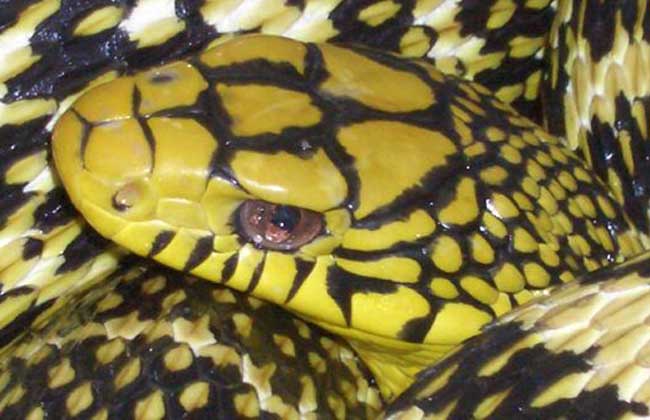
The main feature of the king rat snake is the black markings on its head that resemble the character "king," which is why it is called the "king snake." The edges of the scales on its head and back are black, with yellow in the center, resembling a rapeseed flower pattern. The color markings of adult snakes and young snakes differ greatly; young snakes do not have the "king" character pattern on their heads and are often mistaken for other snake species. Now let us take a look at whether the king rat snake is actually a protected animal!
Is the king rat snake a protected animal?
The king rat snake is a protected animal. In China, all snake species are included in the national wildlife protection list. Snake protection is divided into protection measures formulated by the State Forestry Administration and protection regulations formulated within provinces. Some provinces have also listed the king rat snake as a provincially key protected snake species, because wild resources are too scarce, and coupled with the high price of the king rat snake, many snake catchers try every means to capture king rat snakes for sale.
Is the king rat snake's bite venomous?
The king rat snake bites, but it is not venomous. The king rat snake is a typical non-venomous snake. It likes to appear near farmhouses, mainly to hunt house mice to satisfy its hunger. It does not have the fangs of a venomous snake, only two rows of serrated teeth. Being bitten by a king rat snake will not cause symptoms of envenomation, but often after being bitten on the hand, due to the self-protective reflex, the hand is immediately pulled back, which causes the king rat snake's serrated teeth to tear open a very long wound. In such cases, although detoxification treatment is not needed, to be on the safe side, it is still better to get a tetanus vaccine.
The living habits of the king rat snake
1. Environment: The king rat snake is the fastest-growing and larger-bodied snake among non-venomous snakes (excluding pythons). It inhabits mountainous, plain and hilly areas, and is active by riversides, pond edges, reservoir areas and other places near water. It is agile in movement, fierce in temperament, fast in crawling and able to climb trees.
2. Diet: The king rat snake is a generalist feeder, preying on frogs, birds, rodents and various bird eggs. When food is scarce, it will even swallow its own young snakes or members of its own species.
3. Toxicity: The king rat snake is non-venomous and relies on its own strong body and powerful constricting force to capture prey.
4. Reproduction: The king rat snake reproduces by laying eggs, laying eggs from June to July each year, with 8-15 eggs per clutch, and the incubation period is about 40-45 days.