What is the difference between a pangolin and an anteater? This article teaches you to tell them apart
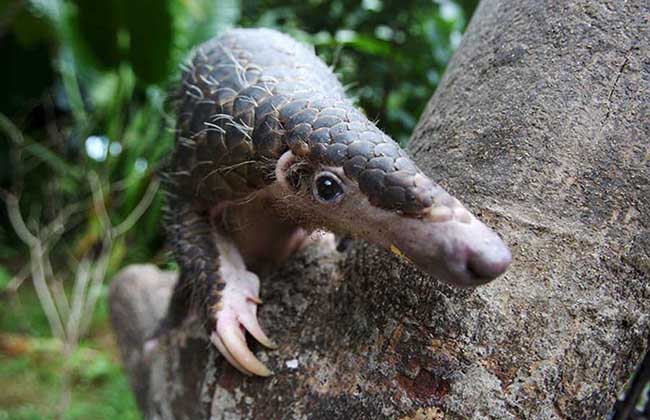
Pangolin is the collective name for the genus Manis in the family Manidae, mostly living in subtropical deciduous forests; the anteater is a mammal of the family Myrmecophagidae, distributed in the Americas, feeding on ants, termites and other insects. Pangolins and anteaters have somewhat similar feeding habits, so let's take a look together at what their differences are!
Differences in family and genus between pangolins and anteaters
1. Pangolin: The pangolin is a ground-dwelling mammal of the animal kingdom, phylum Chordata, subphylum Vertebrata, class Mammalia, subclass Eutheria, order Pholidota, family Manidae, genus Manis.
2. Anteater: The anteater is a mammal of the animal kingdom, phylum Chordata, subphylum Vertebrata, class Mammalia, order Pilosa, family Myrmecophagidae.
Differences in appearance between pangolins and anteaters
1. Pangolin: The pangolin has an elongated body, with scales covering its whole body, short and thick limbs, a flat and long tail, and a slightly raised back. Its head is cone-shaped, with small eyes, a pointed snout, a long tongue, no teeth, and underdeveloped ears. Its feet have 5 toes with strong claws, and the front feet have long claws. The scales all over its body are arranged like roof tiles, from the top of the forehead to the back, the outer sides of the limbs, and the upper and lower surfaces of the tail. The scales are arranged from the center of the ridge of the back toward both sides in longitudinal rows, and the scales are dark brown, with very little fur.
2. Anteater: The anteater has a long, pointed snout, a tubular mouth, and a retractable tongue that is rich in mucus, suitable for licking up insects. Its ears are small and round, its forelimbs are strong, and the third finger has a particularly well-developed, sickle-shaped claw; the 4-5 toes of the hind limbs also have claws. The skull is slender and fragile, with no teeth.
Differences in distribution between pangolins and anteaters
1. Pangolin: The pangolin lives in grass at the foot of mountains or in relatively humid hilly mixed thickets, digs burrows to live in, mostly building burrows in muddy ground, and is mainly distributed in parts of Southeast Asia and Africa.
2. Anteater: The silky anteater is arboreal; the giant anteater mainly inhabits humid forests and swamps; the tamandua mostly hides by day in dense forest or in tree holes, and comes out at night to forage, often using the claws of its forelimbs to destroy ant nests. It is mainly distributed in Central America and South America, across a vast area from the southernmost tip of Mexico to Brazil and Paraguay.
Differences in diet between pangolins and anteaters
1. Pangolin: The pangolin's main food is termites; in addition, it also eats ants and their larvae, bees, wasps and the larvae of other insects. It has a very large appetite: the stomach of one adult pangolin can hold up to 500 grams of termites.
2. Anteater: The anteater eats ants, termites and other insects. Its tongue can astonishingly extend to 60 cm long and can extend and retract at a frequency of 150 times per minute. The tongue is covered with small spines and has a large amount of mucus; once ants are stuck, they cannot escape. It has a very large appetite and can eat 454 grams of ants at one time.