What are the differences between pangolins and armadillos?
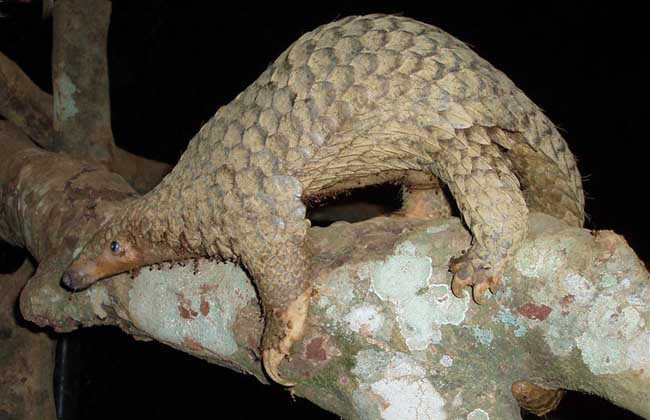
Pangolin is a general term for the genus Manis in the family Manidae, mostly living in subtropical deciduous forests. The armadillo is an endangered species living in the tropical forests, grasslands, semi-deserts and warm plains and forests of Central and South America. Pangolins and armadillos are both armored animals. Let's take a look at what their differences are!
Differences in family and genus between pangolins and armadillos
1. Pangolin: The pangolin is a ground-dwelling mammal in the animal kingdom, phylum Chordata, subphylum Vertebrata, class Mammalia, subclass Eutheria, order Pholidota, family Manidae, genus Manis.
2. Armadillo: The armadillo is a mammal in the animal kingdom, phylum Chordata, subphylum Vertebrata, class Mammalia, subclass Eutheria, order Cingulata, family Dasypodidae, comprising nine genera.
Differences in appearance between pangolins and armadillos
1. Pangolin: The pangolin has a narrow, elongated body covered with scales all over, short thick limbs, a flat and long tail, a slightly raised back, a conical head, small eyes, a pointed snout, a long tongue, no teeth, underdeveloped ears, feet with 5 toes and strong claws, with the front feet having long claws. The scales all over the body are laid like roof tiles, extending from the top of the forehead to the back, the outer sides of the limbs, and both the dorsal and ventral surfaces of the tail. The scales are arranged in longitudinal rows from the center of the spine toward both sides, and the scales are dark brown, with very little fur.
2. Armadillo: The armadillo is closely related to anteaters and sloths, and protects itself with armor-like bony plates. The bony plates cover the head, body, tail and outer sides of the legs. The bony plates on the head, front half and rear half are separate, and the bony plates in the middle of the body form bands that allow flexible movement. Where there is no bony plate on the body, sparse hair grows. It has small ears and a long, pointed snout, and powerful claws on the front feet used for digging burrows.
Differences in distribution between pangolins and armadillos
1. Pangolin: The pangolin lives in the grass of foothill areas or in the relatively humid shrub thickets of hills, digs burrows to live in, and mostly builds burrows in muddy ground. It is mainly distributed in Southeast Asia and some countries in Africa.
2. Armadillo: The armadillo is distributed in the tropical forests, grasslands, semi-deserts and warm plains and forests of Central and South America, and has also appeared in southern Africa (Botswana).
Differences in diet between pangolins and armadillos
1. Pangolin: The pangolin's main food is termites. In addition, it also eats ants and their larvae, bees, wasps and other insect larvae. It has a very large appetite. The stomach of an adult pangolin can hold up to 500 grams of termites.
2. Armadillo: The armadillo is an omnivorous animal. It mostly eats beetles, worms, termites, black ants, locusts, small lizards, bird eggs, nuts and snakes, and is especially fond of eating rotting animal carcasses. On the grasslands, wherever there are rotting carcasses of dead cows, dead horses and other animals, there the armadillo digs burrows, and they can obtain this food with ease.