What does "Golden Cicada Sheds Its Shell" mean? A detailed explanation of the idiom's meaning and origin
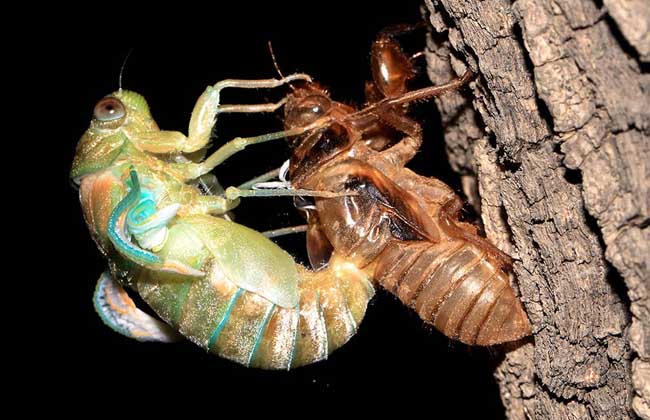
The original meaning of the story of "Golden Cicada Sheds Its Shell" is that when a winter cicada molts, its body leaves the shell behind and goes away, leaving only the cast-off shell still hanging on the branch. It is usually used as a metaphor for creating or using a false appearance to escape, so that the other party cannot notice in time (it is one of the "Thirty-Six Stratagems"), or as a metaphor for a fundamental change in something. Now let's take a look together at what "Golden Cicada Sheds Its Shell" means!
The source of "Golden Cicada Sheds Its Shell"
Preserve its form, complete its posture, so that allies do not doubt and enemies do not move; through compliance, bring the disorder to a stop.
The meaning of "Golden Cicada Sheds Its Shell"
Preserve the original appearance of the position, create the impression of still defending in place, so that allied forces do not become suspicious and the enemy does not dare to attack rashly; when the enemy is confused and puzzled, secretly shift the main force.
The story of "Golden Cicada Sheds Its Shell"
During the Kaixi era of the Song Dynasty, Jin soldiers repeatedly invaded the Central Plains. The Song general Bi Zaiyu faced the Jin army and won several victories. The Jin soldiers then gathered tens of thousands of elite cavalry to decisively battle the Song army. At this time, the Song army had only a few thousand men. If they fought a decisive battle with the Jin army, they would certainly be defeated. In order to preserve his strength, Bi Zaiyu prepared to retreat temporarily. The Jin army was already at the city walls. If they knew the Song army was retreating, they would certainly pursue and kill. In that case, the Song army would certainly suffer heavy losses. Bi Zaiyu thought hard about how to deceive the Jin soldiers and move his troops. Just then, he heard the sound of horse hooves outside the tent, and Bi Zaiyu was inspired and hit upon a plan.
He secretly made arrangements for retreat. At midnight that day, he ordered the soldiers to beat the war drums. When the Jin army heard the drums, they thought the Song army was taking advantage of the night to raid the camp, so they hurriedly assembled their troops and prepared to meet the attack. Unexpectedly, they only heard the rumbling war drums from the Song camp, but not a single Song soldier came out of the city. The Song army beat the drums continuously, disturbing the Jin soldiers so that they could not rest all night. The Jin army's leader seemed to realize something: so the Song army was using a strategy of exhausting the soldiers, using war drums to make us restless. Fine, you beat your drums, I will not fall for your trick again. The sound of drums from the Song camp continued for two days and two nights, and the Jin soldiers simply ignored it. By the third day, the Jin soldiers noticed that the sound of the drums from the Song camp was gradually weakening. The Jin army leader concluded that the Song army was already exhausted, so he sent troops in several routes to surround them, cautiously approaching the Song camp, and saw that the Song camp showed no reaction. At the Jin army leader's command, the Jin soldiers swarmed forward and rushed into the Song camp, only then discovering that the Song army had already safely withdrawn completely.
It turned out that Bi Zaiyu had used the stratagem of "Golden Cicada Sheds Its Shell." He ordered his soldiers to tie the hind legs of several dozen sheep firmly to trees, causing the suspended sheep to kick desperately with their front legs, and placed several dozen drums under the sheep's legs. The sheep kicked desperately with their legs, and the drums rumbled without stopping. This is the story of "Golden Cicada Sheds Its Shell." Bi Zaiyu used the tactic of "hanging sheep to beat the drums" to confuse the enemy army, and used two days to complete a safe transfer.