What are the characteristics of a fly's living habits?
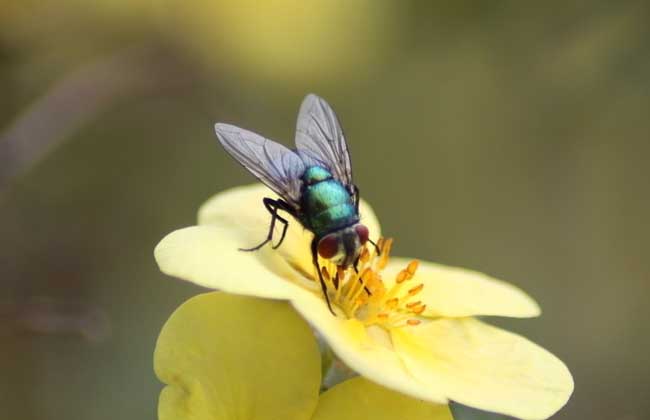
Flies are insects that are frequently active during the day and have a pronounced phototaxis, while at night they rest motionless. Their activity is greatly affected by temperature: at 9-10°C they can only crawl, at 12°C they can fly, and only above 15°C can they feed, mate and lay eggs, and they are especially active at 30-35°C. Let's take a look below at the living habits of flies!
Mating
Flies have the physiological characteristic that a single mating allows them to lay eggs for life. At a suitable temperature, male house flies reach sexual maturity and can mate 18-24 hours after eclosion, and female house flies 30 hours after eclosion, with mating usually taking place in the early morning from 5:00 to 7:00.
Egg laying
The peak egg-laying period for flies is from 17:00 to 19:00 each day. The length of the female fly's pre-oviposition period (that is, the time from eclosion to the first egg laying) is closely related to the ambient temperature. Their reproductive capacity is astonishing; by the most conservative estimate, each female fly can produce 200 offspring, and after just 10 generations of reproduction the total number of flies would reach 2 trillion trillion.
Feeding habits
A fly's feeding habits depend on its species. Some feed exclusively on nectar and plant sap, some feed specifically on the blood of humans and livestock, or on blood from animal wounds and on eye and nasal secretions, while the commonly seen house fly, Chrysomya megacephala, Lucilia sericata, blow fly and flesh fly belong to the omnivorous flies, that is, they widely feed on human food, secretions and excreta of livestock and poultry, kitchen scraps and organic matter in garbage, and they have a very strong attraction to sugar, vinegar, ammonia odors and fishy smells.
Development
Biologically, flies are typical holometabolous insects, and their life cycle must go through four stages: egg, larva, pupa and adult.
Lifespan
The factors affecting a fly's lifespan include temperature, humidity, food and water, with 25-33°C and 60-70% air humidity being optimal. The adult lifespan of an ordinary fly is 15-25 days, and if the larval and pupal stages are included, the lifespan is 25-70 days. Female flies live longer than male flies, with a lifespan of 30-60 days, and under low-temperature overwintering conditions, flies can live as long as half a year.