How Fast Do Flies Reproduce? A Detailed Guide
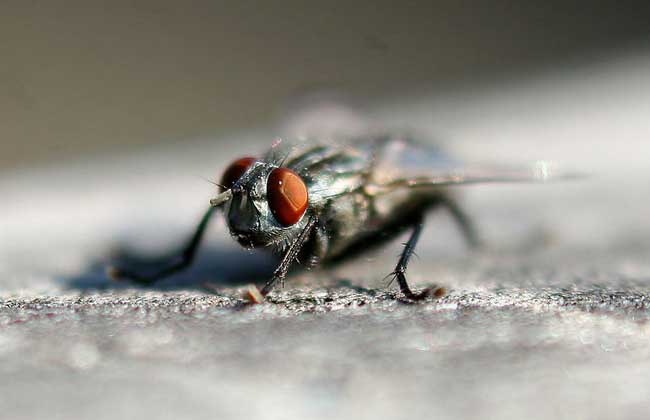
Flies are important vector pests that spread disease, capable of transmitting a variety of diseases to humans and livestock. Their reproductive capacity ranks first in the insect world, with their dry matter doubling every 9.8 minutes. Without interference from external factors, a single pair of flies can produce 266 billion offspring in one summer. Let's take a closer look below!
How Fast Do Flies Reproduce
Flies have the physiological trait of being able to lay eggs for life after a single mating. A single female fly can lay eggs 5-6 times in her lifetime, with about 100-150 eggs per clutch, and up to around 300 at most, and can reproduce 10-12 generations in a year. According to the most conservative estimate, if each female fly can produce 200 offspring, then a single female fly needs only 11 generations to produce 2 trillion trillion flies, and this takes only one year!
How Long Do Flies Live
A fly can live for about 1 month in the midsummer season, but at lower temperatures, its lifespan can be extended to 2-3 months. Below 10°C, it can hardly move about, and its lifespan is even longer. The adult lifespan of an ordinary fly is 15-25 days. If the larval and pupal stages are included, the lifespan is 25-70 days. The main influencing factors are temperature, humidity, food and water.
What Are the Natural Enemies of Flies
1. Predatory natural enemies: including frogs, dragonflies, spiders, mantises, ants, lizards, geckos, robber flies and birds, etc. Chicken manure is the breeding medium for house flies and stable flies, but it often contains the ferocious Macrocheles mites and earwigs, which prey on fly eggs and maggots in the manure.
2. Parasitic natural enemies: such as ichneumon wasps, chalcid wasps and other parasitic wasps, which often lay their eggs inside fly maggots or pupae, and after hatching, the larvae feed on the fly maggots and pupae. It has been found that among flesh fly pupae dug up in spring, 60.4% were killed by parasitic wasps.
3. Microbial natural enemies: Japanese scholars have found that Bacillus moritai can inhibit fly breeding.