Detailed Explanation of the Fly's Growth Process: Developmental Changes from Egg to Adult
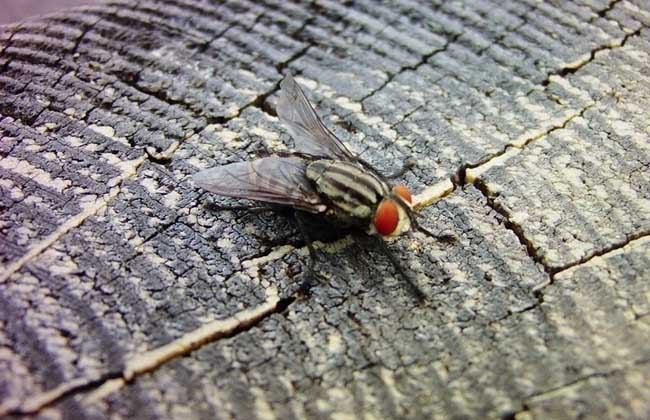
Biologically, the fly is a typical holometabolous insect belonging to the class Insecta, order Diptera. It harms humans by carrying and transmitting various pathogenic microorganisms, and is one of the Four Pests. Its life goes through four stages: egg, larva, pupa and adult. Let's take a look at the fly's growth process together!
Egg Stage
The fly's eggs are milky white, banana-shaped or oval, about 1 mm long. There are two ridges on the back of the eggshell, and the membrane between the ridges is the thinnest; when hatching, the larva emerges from this spot. The development time of the egg stage is 8-24 hours, depending on ambient temperature and humidity. Eggs do not develop below 13°C, and die below 8°C or above 42°C. Humidity also affects the egg hatching rate: at a relative humidity of 75-80%, the hatching rate is highest; below 65% or above 85%, the hatching rate drops significantly.
Larva
The fly's larva is commonly known as a maggot and has three instars. The 1st-instar larva is 1-3 mm long and has only posterior spiracles. After molting it becomes the 2nd instar, 3-5 mm long, with anterior spiracles and posterior spiracles with 2 slits. After molting again it becomes the 3rd instar, 5-13 mm long, with posterior spiracles with 3 slits. The body color changes from transparent and milky white to milky yellow, until it matures and pupates. The 3rd-instar larva is long and conical, with a pointed, slender front end and a truncated rear end, and no eyes or legs. Maggots like to burrow, fear strong light, and spend all day hidden in the dark, light-shaded places of their breeding material. They are polyphagous, and all kinds of decaying and fermenting organic matter are their delicacies.
Pupal Stage
The pupa is the third metamorphic stage in the fly's life history. It is barrel-shaped, that is, a coarctate pupa. Its body color changes from light to dark, finally becoming chestnut brown, and it is 5-8 mm long. Metamorphosis proceeds continuously inside the pupal shell. Once the fly's rudimentary form is complete, it enters the eclosion stage. During eclosion, the fly alternately inflates and contracts the ptilinum on its head to push open the head end of the pupal shell and crawl out, passing through loose sandy soil or other culture material to reach the ground surface.
Adult Fly
The adult fly has a pair of large compound eyes on its head, containing about 4,000 ommatidia, with keen vision. Its sense of smell is located on the antennae, and its taste organs are mainly on the feet, which helps it find food while crawling.