What is the best way to eliminate flies
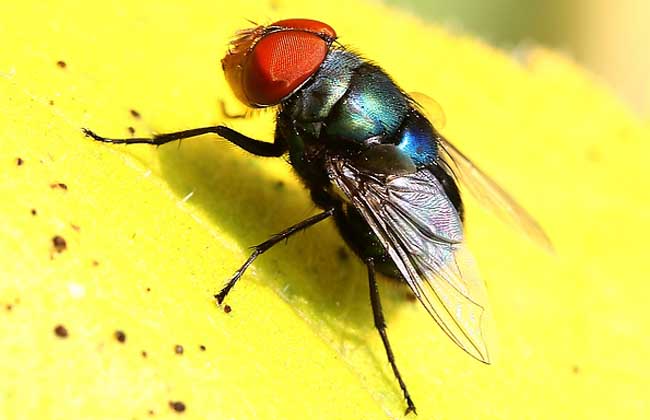
Flies love to feed on rotting, stinking filth. Almost any food they crawl over or bite can be contaminated with germs and viruses, and if people or livestock eat it, they can easily catch diseases. The key measures for eliminating flies are mainly to take good care of the environmental sanitation of livestock and poultry farms, and to eliminate them at different developmental stages. Let's take a look below at the best ways to eliminate flies!
Common effective tricks for repelling flies
1. Put some chopped scallions, onions, and garlic in the kitchen.
2. Burn dried orange peel indoors, spray vinegar, or place a pot of tomatoes; this can both repel flies and remove odors.
3. Flies dislike blue, so door curtains, window screens, and the like can be swapped for blue ones.
4. There are more flies in summer. If washed food is given even slight neglect, flies will land on it and contaminate it. If you place a few washed scallions on washed fish, meat, or soy products, flies will avoid biting them.
The best ways to eliminate flies
1. Eliminate breeding grounds: To eliminate flies, you must control their breeding grounds. The important thing is to take good care of sanitation inside and outside livestock sheds, not raise livestock and poultry in free range, pile manure in manure storage pits, remove it promptly, and give it harmless treatment. Do not dump livestock manure casually. Strict management and elimination of breeding sites, so that flies have no chance to breed, are the fundamental measures for fly control.
2. Eliminate fly maggots: Fly maggots are the larvae of flies. The simplest way to eliminate fly maggots is to use a 1% trichlorfon solution and spray it regularly. Heat killing is also very effective: cover livestock manure with very hot rice-hull ash, but it must be sealed tightly, which can suffocate the maggots in the manure pit.
3. Eliminate fly pupae: The first method is water killing. Dig a small water ditch around the maggot breeding site; when the maggots crawl out after pupating, they will fall into the water and drown. The second method is digging out pupae. At a place 65 cm to 1 m outside the maggot breeding site, loosen the soil to a depth of 15 cm, then use small wooden tongs to pick out the pupae and burn them to death or crush them with a stone roller. Then press the loosened soil back firmly with lime and water added, so that the pupae do not turn into flies and emerge again, thus eliminating future trouble.
4. Eliminate adult flies: A more suitable method is to use flypaper or mix 2% trichlorfon into sugared rice or stinking fish and rotting vegetables as bait. Keep it moist to enhance the poison's effect, but do not expose it directly to the sun or let rain fall on it. Trichlorfon, fly-tox phosphorus, or similar substances can also be sprayed directly to kill flies. In summer when it is hot, when using an electric fan for ventilation, you can add a few drops of essential balm to the fan blades, which can also effectively kill flies.
What natural enemies do flies have?
1. Predatory natural enemies: These include frogs, dragonflies, spiders, mantises, ants, lizards, geckos, robber flies, and birds. Chicken manure is a breeding medium for house flies and stable flies, but it often contains the ferocious macrochelid mites and earwigs, which prey on fly eggs and fly maggots in the manure.
2. Parasitic natural enemies: Such as ichneumon wasps, chalcid wasps, and other parasitic wasps. They often lay eggs in fly maggots or pupae, and after the larvae hatch they feed on the fly maggots and fly pupae. Some people found that among the flesh fly pupae dug out in spring, 60.4% were attacked by parasitic wasps and died.
3. Microbial natural enemies: Japanese scholars found that Bacillus moritai can inhibit fly breeding.
What plants are flies afraid of?
1. Night-blooming jasmine: Also known as night jessamine, native to tropical America. Its leaves are heart-shaped with fine hairs along the edges. Between summer and autumn, clusters of yellow-green bell-shaped small flowers bloom in the leaf axils. When the moon rises above the treetops, it gives off waves of delicate fragrance. This scent frightens mosquitoes, making it an excellent mosquito repellent.
2. Lavender: A small blue-purple flower native to the Mediterranean. Its flower shape resembles a wheat ear and it usually blooms in June. Lavender itself has insecticidal effects, which is why people make it into sachets and put them in wardrobes, and some also place them in bedrooms to repel mosquitoes.
3. Pitcher plant: A carnivorous plant and a master at catching mosquitoes.
4. Orange jasmine: Orange jasmine is a small evergreen shrub that stays green all year round. Its outer form is corymb-like, its leaves are small and glossy, its flowers are white and densely clustered, and it bears red fruit. If you touch its leaves, you will smell a rich sweet fragrance. Its mosquito-repelling effect is very good.
5. Carnivorous grass: A herbaceous plant in the Asteraceae family with small yellow flowers. A single plant can have hundreds of flower heads, and the outer part of each flower head has sticky fluid. As long as small mosquitoes land on it, they are stuck. The insect corpses are slowly digested and used as nutrients for its growth. If dust falls on it, after a few days it is also digested without a trace. Placing a pot of carnivorous grass at home catches insects and absorbs dust.
6. Lantana: Its branches, leaves, and flowers give off an odor that mosquitoes and flies are sensitive to. It has a strong mosquito-repelling effect and does no harm to the human body.