What are the characteristics of termites' living habits?
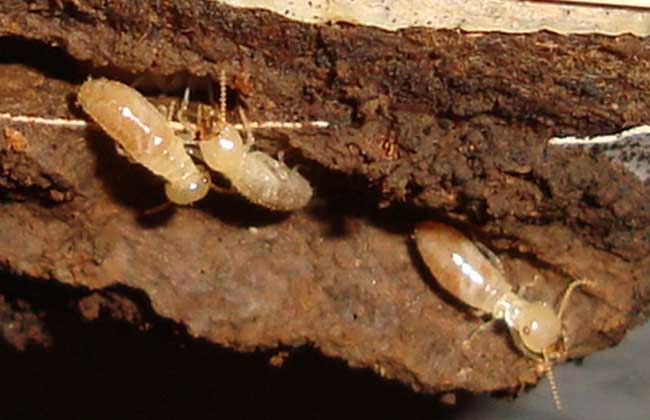
Termites, also known as chongwei, are insects of the order Isoptera in the class Insecta of the phylum Arthropoda. They live socially in a manner similar to ants, and their social castes are the queen, king, soldier termites, worker termites, and so on. They are highly organized insects with a high degree of division of labor, and their lives are always inseparable from the surrounding natural environment. In order to adapt to the environment and survive, they have certain patterns of life. Let us take a look below at the living habits of termites!
Colonial living
Termites are insects that live in nests. Regardless of the species, they all build nest colonies and treat the nest as their base. However, because termite species differ, nest structures range from simple to complex. In a huge nest, although tunnels crisscross in all directions, they all connect several main passages leading to the main nest, forming a whole. The king and queen in the colony live permanently in the royal chamber. The sexual organs of winged reproductive termites are not mature, and unless startled, they will not leave the heart of the nest. Worker termites and soldier termites have specialized functions and must frequently go outside. They do not leave and never return; during their activity outside, the longest period is generally four to seven days. Their internal connections are extremely close, and they appear as a single integrated entity.
Attraction to darkness
Termites fear light and tend toward darkness, living a concealed life. When going out to forage and take in water, they tunnel underground or inside wood. Even when leaving an object and going to another feeding site, they must first build mud-tube or mud-sheet passages in advance, isolated from outside light.
Attraction to moisture
Water is extremely important to termite life. If separated from water, they cannot survive. The black-winged subterranean termite itself has a water content of 79%.
Cleanliness
Termites have a cleanliness trait. When individuals meet, they clean each other, licking one another. Not only do they lick and suck each other, but they also feed each other, and they also devour the corpses of their own kind and promptly carry away excrement, shed skins, and other waste.
Attraction to warmth
Like other insects, termites are poikilothermic animals and are warmth-loving insects. Air temperature is the main factor affecting termite distribution, and different termite species also have significantly different temperature requirements. For example, the species Reticulitermes speratus, which can live in the north, can adapt to low temperatures in the northern provinces.
Sensitivity
Termite activity is extremely sensitive in response to external disturbance.
Dietary preference
In the termite diet, cellulose accounts for a very large proportion.
Colony division
The spread of termites mainly depends on eclosion and colony division. For the black-winged subterranean termite to develop from a young nest to an adult nest, it must go through a development process of more than five years before a mature nest can be formed and the phenomenon of winged adult differentiation appears.