What is the difference between termites and ants? A quick guide to telling them apart
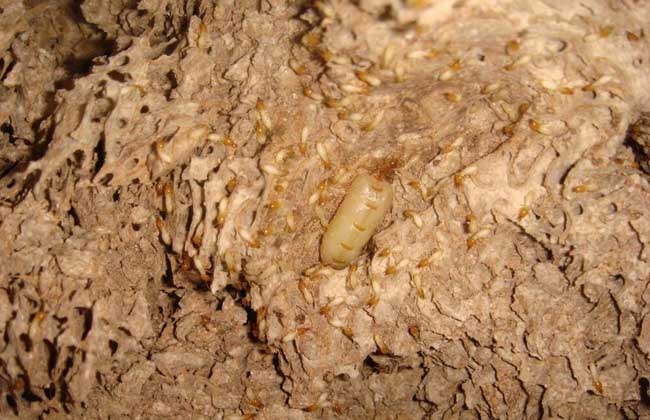
Termites have a social life similar to that of ants, with social castes consisting of the queen, king, soldiers and workers. Although they are generally both called "ants," termites' social system belongs, in taxonomic terms, to the lower, hemimetabolous insects, while ants belong to the higher, holometabolous insects. Let's take a look below at the differences between termites and ants!
Termites belong to the order Isoptera; in winged adults, the forewings and hindwings are almost equal in length, and the wings are far longer than the body. Ants belong to the higher order Hymenoptera; in their winged adults, the forewings are larger than the hindwings.
Termite workers and soldiers are mostly pale white, while winged adults are mostly brown or dark brown, with a barrel-shaped waist, that is, a thick waist. Ants are mostly brown, reddish-brown and black, with a dumbbell-shaped waist, that is, a narrow waist.
Termites are hemimetabolous insects: from egg to adult they pass through a young termite or nymph stage, with no pupal stage. Ants are holometabolous: from egg to adult they pass through a larval stage and a pupal stage.
Termites (except winged adults) are afraid of light, and when active and feeding they are covered by termite galleries or termite shelters. Ants are not afraid of light, and apart from a few species, they generally do not build trails when active.
Termites mainly feed on wood and cellulose-containing materials (they eat plants); apart from a few species, they generally do not store food. Ants have a very broad diet, eat meat, and have the habit of storing food.
Termite adults can only pair up, mate and reproduce after swarming, landing and shedding their wings, and the male and female live together for a long time and mate frequently. Ants mate in flight, and after mating the male and female separate, and the male ant no longer plays any role.