How Are Termite Queens Produced? A Detailed Explanation of the Formation Process
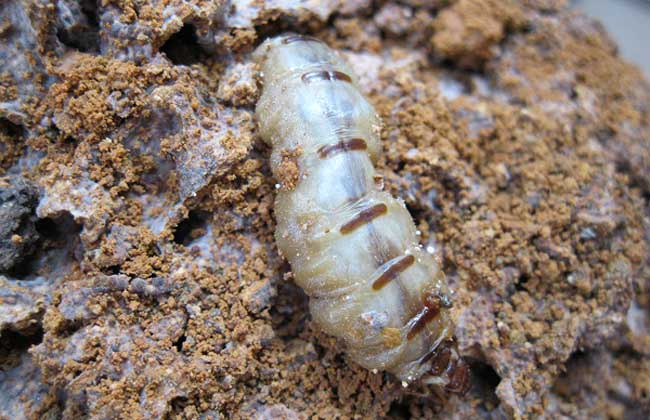
A termite queen is a female with fertilizing and reproductive capacity, also called the mother ant; she is the largest in the colony, especially with a large abdomen, well-developed reproductive organs, short antennae, small thoracic legs, and may be winged, dealate, or wingless. Her main duties are laying eggs, reproducing offspring, and overseeing this large colony family. Let's take a look below!
How Fast Does a Termite Queen Lay Eggs
The termite queen's only task is laying eggs. Her body is as big as a finger. During the stable breeding period, she can lay eggs all day long, one egg per second, 80,000 eggs in 24 hours - truly an egg-laying machine in the truest sense.
How Long Does a Termite Queen Live
The termite queen is like a huge egg-laying machine, producing 30,000 eggs per day, equivalent to one-third of her own body weight. In a termite colony, the queen determines the existence and demise of the colony; once captured, the colony ceases to exist. At the same time, she is also a long-lived matriarch. In higher families, the initial queen can live 60-70 years; generally they can live 15-30 years, and at most more than 100 years.
How Termite Queens Are Produced
1. Reproduction: When the old queen is about to die, she lays some eggs. These eggs are all individuals that can grow into "queens" in the future, but because some individuals die during growth, or are eliminated by the colony due to poor innate nutritional conditions, in the end the colony selects the one most capable of "continuing the family line" to inherit the position of the new "queen."
2. Nest Building: As the founder of the colony, after gloriously completing the mating task, the queen descends from the air to the ground, breaks off her four wings from the base, then digs a vertical shaft about ten-plus millimeters in diameter by herself, going straight underground, and at a depth of about 30 cm opens up a small chamber about 6 cm wide for herself. Then, inside, she reproduces her offspring.
3. Survival: Hidden in an isolated hole, the queen must not only guard against invasions by other animals, but also worry about whether she can breed enough termites before her body weakens. According to research, among the many queens that complete their nuptial flight and want to establish a kingdom, most pass away before they can establish their own kingdom. To create her own kingdom, the queen must endure extreme loneliness and danger, busy racing against time. During this period, the queen's energy comes entirely from the muscles of her broken-off four wings and from decomposition and metabolism within her body, and her weight grows lighter day by day. Standing at the crossroads between starvation and rebirth, she must still carefully lay eggs and tend the fungus garden.
4. Reproduction: Only after the first batch of adult worker ants has grown will the queen's food have a new source. The worker ants will dig through tunnels, go outside the nest to retrieve fresh leaves, chew them into a paste, stuff it into the fungus garden, and complete the entire fungus cultivation work. After the fungus grows, they take it out and feed it to the queen. The growth of the first batch of worker ants depends entirely on the energy carried by the queen. In the sealed nest, there is no energy replenishment, so the queen must control the body size of the first batch of worker ants well. If she cultivates a soldier ant, or even a larger "food-storing ant," the limited resources will be completely exhausted. At this time, the queen is completely like a person just starting a business, who must fully and effectively use every bit of limited resources and cannot allow any mistake. Otherwise, not only will she be unable to create a huge ant kingdom, but even her own life will be destroyed in an instant.