What are the natural enemies of termites? These several animals are termite nemeses
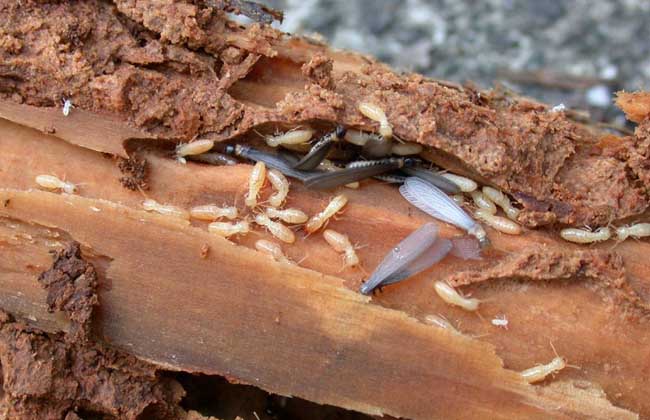
Termites live socially in a manner similar to ants. Their natural enemies in nature can be divided into parasitic natural enemies and predatory natural enemies. Parasitic natural enemies mainly include fungi, bacteria, viruses and mites, etc. Predatory natural enemies mainly include spiders, ants, dragonflies, anteaters, pangolins, etc. Let's take a look below at what the natural enemies of termites are!
Parasitic natural enemies of termites
In the nests of many kinds of termites, fungi, bacteria and viruses are parasitic, and many of these microorganisms can cause diseases in termites, ultimately leading to the death of the termites, until the entire nest is wiped out. In addition, mites parasitic in the nest can sometimes also kill termites.
Predatory natural enemies of termites
1. Natural enemies that cannot break into the nest: Natural enemies of termites that cannot break into the nest mainly prey on the winged adults of termites during their dispersal flight, on termites exposed outside, or they enter the nest to prey by not destroying the termite nest and feed after luring the termites out, such as spiders, ants, dragonflies, frogs, birds, chimpanzees, etc.
2. Natural enemies that can break into the nest: Natural enemies of termites that can break into the nest can destroy the termite nest and prey directly on termites from inside the nest, such as pangolins, echidnas, giant anteaters, aardvarks, armadillos, platypuses, anteaters, etc.
Living habits of termites
1. Colonial living: Termites are insects that live in nests. Regardless of the species, all termites build nest colonies and treat the nest as their base. However, because termite species differ, nest structures range from simple to complex. In a huge nest, although tunnels run in all directions and are densely distributed, they all connect to several main passages leading to the main nest, forming a whole. The king and queen in the colony live year-round in the royal chamber. The sexual organs of winged reproductive termites are not mature, and unless alarmed, they will not leave the heart of the nest. Worker termites and soldier termites have specialized functions and must frequently go outside; they do not leave and never return. During their activity outside, the longest period is generally four to seven days. Their internal connections are very close, and they appear as a single integrated organism.
2. Tendency toward darkness: Termites fear light and tend toward darkness, living a concealed life. When going out to forage for food and water, they tunnel underground or inside wood. Even when leaving an object and then going to another feeding point, they must first build mud-tube or mud-sheet passages to isolate themselves from outside light.
3. Tendency toward moisture: Water is extremely important to termite life. If separated from water, they cannot survive. The black-winged subterranean termite itself has a water content of 79%.
4. Cleanliness: Termites have a cleanliness characteristic. When individuals meet, they clean each other, licking one another. Not only do they lick and suck each other, but they also feed each other, and they also devour the corpses of their own kind, promptly carrying away excrement and molted skins and other waste.
5. Tendency toward warmth: Termites, like other insects, are poikilothermic animals, warmth-loving insects. Air temperature is the main factor affecting termite distribution. Different species of termites also have significant differences in temperature requirements; for example, the species able to live in the north, the black-breasted Reticulitermes, can adapt to low temperatures in the northern provinces.
6. Sensitivity: Termite activity is extremely sensitive in response to external disturbance.
7. Preference: In the termite diet, cellulose accounts for a very large proportion.
8. Colony dispersal: The spread of termites mainly relies on eclosion and colony dispersal. For the black-winged subterranean termite, the development from a young nest to an adult nest must go through a development process of more than five years before a mature nest can be formed and the phenomenon of winged adult differentiation appears.