What Is the Difference Between an Eel and a Rice Field Eel? Main Differences Explained
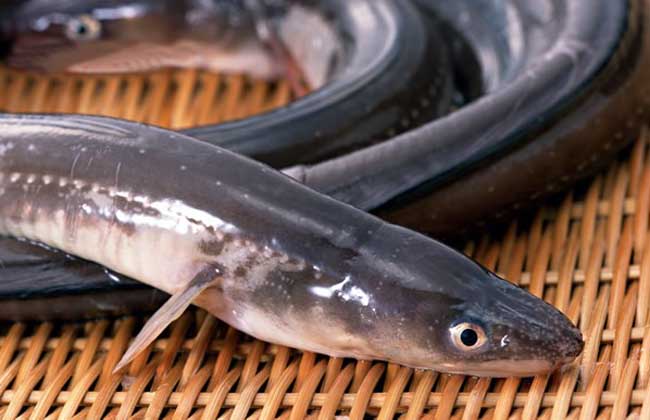
Eel is the general term for species classified under the order Anguilliformes, a type of fish with a long, snake-like appearance. The rice field eel, also known as yellow eel, shan fish, luo shan, snake fish, blood eel, chang fish, long fish, and so on, is a type of fish whose body resembles a snake but has no scales. Eels and rice field eels look very similar in appearance, so let's take a look at what their differences are!
Difference in Family and Genus Between Eels and Rice Field Eels
1. Eel: The eel is a fish of the animal kingdom, phylum Chordata, subphylum Vertebrata, class Osteichthyes, subclass Actinopterygii, order Anguilliformes, suborder Anguilloidei.
2. Rice field eel: The rice field eel is a tropical and warm-temperate fish of the animal kingdom, phylum Chordata, subphylum Vertebrata, class Osteichthyes, subclass Actinopterygii, order Synbranchiformes, family Synbranchidae, genus Monopterus.
Difference in Appearance Between Eels and Rice Field Eels
1. Eel: The larval eel has a body length of about 6 cm and a weight of 0.1 g. Its head is narrow and small, and its body is tall, thin, and transparent like a leaf, so it is called the willow leaf fish. Its body fluids are almost the same as seawater, so it can drift long distances with ocean currents with very little effort. The largest adult individual reaches 45 cm and weighs 1600 g.
2. Rice field eel: The rice field eel has a body length of about 20.70 cm. It is scaleless or has very small scales. Its dorsal and anal fins are very low and continuous around the tail end. The gills usually have only one external gill opening at the throat. The front section is tubular, gradually becoming laterally compressed toward the tail, with the tail end flat and slender. The whole body is bare and scaleless, with a large, conical head and a pointed snout. The body is slender and snake-shaped, round at the front and laterally compressed at the rear, with a slender, pointed tail and a long, round head.
Difference in Distribution Between Eels and Rice Field Eels
1. Eel: In China, eels are mainly distributed in the Yangtze River, Min River, and Pearl River basins, Hainan Island, and rivers and lakes. Worldwide, eels mainly grow in the waters of tropical and temperate regions. Apart from the European eel and the American eel, which are distributed in the Atlantic Ocean, the rest are distributed in the Indian Ocean and Pacific Ocean regions.
2. Rice field eel: Rice field eels come in green and yellow types. The large ones are two to three chi long. They like quiet, generally lying still at the bottom of the water, living in mud holes and rock crevices near the water's edge. They come out in summer and hide in holes in November and December. They are distributed throughout Sichuan, Yunnan, Guizhou, Chongqing, Hunan, Hubei, Anhui, Henan, and other places.
Difference in Benefits Between Eels and Rice Field Eels
1. Eel: Eel is sweet in taste and neutral in nature, and enters the liver, kidney, and spleen meridians. It has the benefits of nourishing and strengthening the body, dispelling wind and killing parasites, replenishing deficiency and nourishing blood, and strengthening essence and the kidneys. It has therapeutic effects on physical weakness caused by long-unhealed pulmonary tuberculosis, tuberculous fever, red and white vaginal discharge, rheumatism, bone pain, and general weakness.
2. Rice field eel: Rice field eel is sweet in taste and warm in nature, and enters the liver, spleen, and kidney meridians. It has the benefits of tonifying the middle and boosting qi, nourishing blood and stopping prolapse, warming yang and strengthening the spleen, and strengthening essence. It is suitable for conditions such as physical weakness, insufficient qi and blood, malnutrition, uterine prolapse, diabetes, cardiovascular and cerebrovascular diseases, bleeding hemorrhoids, kidney-deficiency lumbago, weakness of the limbs, and rheumatism and numbness.