What is the difference between Anemarrhena asphodeloides and Phellodendron amurense? A quick guide to telling the two apart
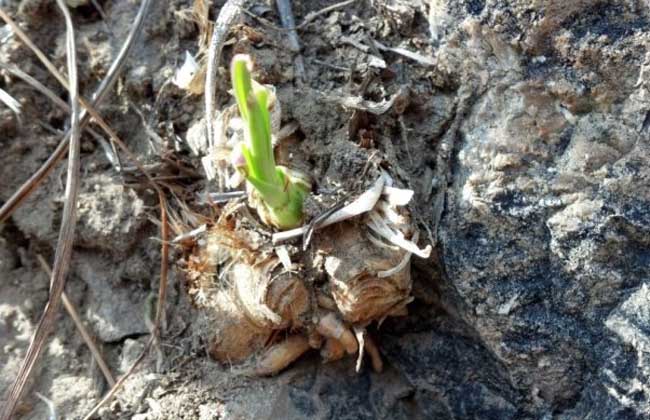
Anemarrhena asphodeloides, also called Mao Zhi Mu, is a perennial herb of the genus Anemarrhena in the Liliaceae family. It is cultivated throughout the country, with Hebei as the main producing area. Phellodendron amurense is the dried bark of Phellodendron chinense, a plant in the Rutaceae family, and is mainly produced in Sichuan, Guizhou, Hubei, Yunnan and other places. Let us take a look below at what the differences between Anemarrhena asphodeloides and Phellodendron amurense are!
Anemarrhena asphodeloides and Phellodendron amurense belong to different families and genera
1. Anemarrhena asphodeloides: Anemarrhena asphodeloides is a perennial herb in the plant kingdom, Angiosperms, Monocotyledons, Liliales, Liliaceae, genus Anemarrhena.
2. Phellodendron amurense: Phellodendron amurense is a tree in the plant kingdom, Angiosperms, Dicotyledons, Rutales, Rutaceae, genus Phellodendron.
Anemarrhena asphodeloides and Phellodendron amurense differ in morphology
1. Anemarrhena asphodeloides: Anemarrhena asphodeloides has a rhizome; the leaves grow in clumps from the base, are slender and lanceolate; the flower stem grows out from the leaf clump, is cylindrical and upright, with a raceme in clusters, forming a spike at the top; the flowers are pink, light purple to white; the fruit is oblong-elliptical and contains many black seeds; the flowering and fruiting period is June to September.
2. Phellodendron amurense: Phellodendron amurense is 10-12 m tall, with cracked bark, no cork layer, a yellow inner layer, and stickiness; the branchlets are thick, smooth and hairless; the odd-pinnate compound leaves are opposite, with 7-15 leaflets, oblong-lanceolate to oblong-ovate, 9-15 cm long and 3-5 cm wide; the flowers are unisexual, with male and female flowers on separate plants, arranged in terminal panicles; the berry-like drupe is spherical, 1-1.5 cm in diameter, densely clustered, black, with 5-6 stones.
The difference in effects between Anemarrhena asphodeloides and Phellodendron amurense
1. Anemarrhena asphodeloides: Anemarrhena asphodeloides is bitter in taste and cold in nature, entering the Lung, Stomach and Kidney meridians. It has the effects of clearing heat and purging fire, and nourishing yin and moistening dryness. It mainly treats fever with thirst, dry cough due to lung heat, steaming bone tidal fever, internal heat wasting-thirst, and constipation due to intestinal dryness. However, because it is cold in nature and moistening in quality, it has a laxative effect, so it is contraindicated for those with deficiency-cold of the spleen and stomach or loose stools.
2. Phellodendron amurense: Phellodendron amurense is bitter in taste and cold in nature, entering the Kidney and Bladder meridians. It has the effects of clearing heat and drying dampness, purging fire and eliminating steaming, and removing toxin and healing sores. It is used for damp-heat diarrhea and dysentery, jaundice with dark urine, vaginal discharge and genital itching, painful strangury due to heat, flaccid and weak legs due to beriberi, steaming bone consumptive fever, night sweats, spermatorrhea, sores and swellings, and eczema and damp sores. Salt-processed Phellodendron amurense nourishes yin and reduces fire, and is used for syndromes such as deficiency of yin with hyperactive fire, and night sweats with steaming bone fever.