Which five poisonous creatures are commonly referred to in folk tradition as the Five Poisons?
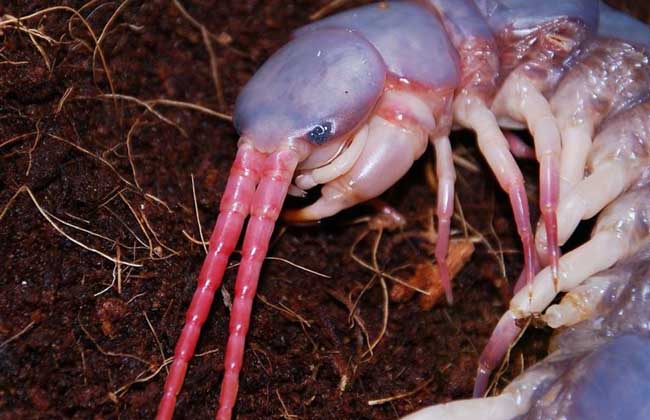
In Han Chinese folklore, the “Five Poisons” are five animals: the snake, the centipede (also called the thunder god worm), the scorpion, the gecko and the toad. Han folk custom holds that at noon on the Dragon Boat Festival, the fifth day of the fifth month of the lunar calendar, the Five Poisons begin to breed. Before noon on that day, lime is scattered in corners and dark places, realgar wine is sprayed and medicinal smoke is burned to destroy the Five Poisons and drive out foul air. At the same time, dust and rubbish are swept outside to purify the rooms.
Snake
Snakes are the general name for reptiles with degenerated limbs and belong to the suborder Serpentes, order Squamata, class Reptilia. Like all reptiles, snakes have bodies covered in scales, and all snakes are carnivorous. At present there are more than 3,000 species of snakes worldwide. They have slender bodies, degenerated limbs, no movable eyelids, no ear openings, no limbs and no pectoral girdle. Their body surface is covered with scales. Some are venomous, but most are non-venomous.
Centipede
The centipede is also called Tianlong, Baijiao Chong, Shaoyi centipede and so on. It is a terrestrial arthropod whose body is made up of many segments, each bearing walking legs, which is why it is a many-legged creature. It is generally more common in rural areas, often found in damp wall corners, under bricks, under rotting leaves and in old, damp houses, and is more commonly seen in summer. It is a carnivorous animal with a fairly broad diet and is especially fond of preying on various insects. It has venom glands that secrete venom, can itself be used as medicine, and is suitable for artificial rearing.
Scorpion
The scorpion is an arachnid. The earliest scorpions on land appeared about 430 million years ago in the Silurian period. There are more than 800 species of scorpions in the world, and 15 species in China. The one commonly used as medicine and for soaking in liquor is the East Asian scorpion. All scorpions are venomous, though the potency of the venom varies.
Gecko
The gecko is a kind of lizard, also known as Shougong, climbing gecko, climbing wall tiger, four-legged snake, Babihu, Xiehu, Tianlong, eaves snake, eaves dragon and so on. Its body is flat on the back and belly, and its body is arranged with granular scales or mixed with tubercular scales. The tips of its fingers and toes are expanded, and below them skin folds are formed, densely covered with glandular hairs, giving it adhesive ability, so it can quickly crawl on walls, ceilings or smooth surfaces. Since ancient times, folk tradition has held that gecko urine is extremely toxic: it causes blindness if it gets into the eyes, deafness if it gets into the ears, and causes ulceration if dripped onto a person's body; eating food that a gecko has crawled over will cause poisoning and death. Therefore, in ancient times it was included among the “Five Poisons” (scorpion, snake, centipede, gecko, toad).
Toad
The toad is also known as Jie Hama, Lai Hama, Hama and so on. It is an amphibian with many warts on its body surface that contain venom glands. In China it is divided into two species, the Chinese giant toad and the black-spectacled toad. The toad venom and toad skin extracted from it are medicinal materials in short supply in China. Toads are not uncommon in ancient decorative patterns; toad motifs also appear on Shang dynasty bronzes. From the Warring States period to the Wei and Jin dynasties, the toad was always regarded as a sacred creature with the function of warding off evil, and it is also considered one of the Five Poisons.