What is the difference between loofah and cucumber? A quick guide to telling them apart
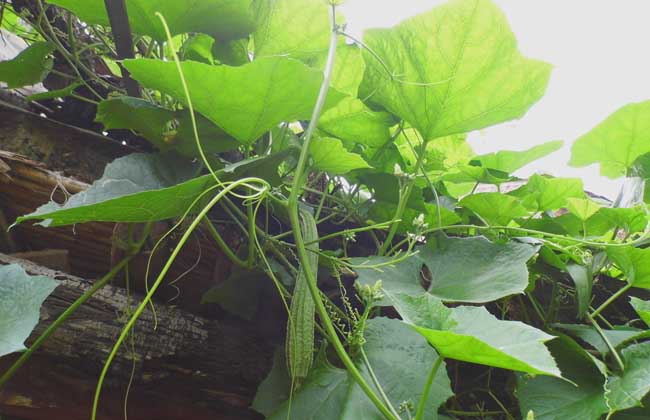
Loofah, also known as sheng gua, cai gua and so on, originated in India and is a climbing herbaceous plant of the genus Luffa in the Cucurbitaceae family. Cucumber, also known as hu gua, qing gua and so on, was first brought back to the Central Plains by Zhang Qian when he was sent on a mission to the Western Regions during the Western Han dynasty, and is a plant of the genus Cucumis in the Cucurbitaceae family. Loofah and cucumber are both common vegetables in daily life, but do you know what their differences are? Let's take a look below!
Differences in family and genus between loofah and cucumber
1. Loofah: Loofah is an annual climbing herbaceous plant in the plant kingdom, Angiosperms, Dicotyledoneae, Sympetalae, Cucurbitales, Cucurbitaceae, Benincaseae tribe, genus Luffa.
2. Cucumber: Cucumber is an annual trailing or climbing herbaceous plant in the plant kingdom, Angiosperms, Dicotyledoneae, Sympetalae, Cucurbitales, Cucurbitaceae, Cucurbiteae tribe, genus Cucumis.
Differences in morphology between loofah and cucumber
1. Loofah: The stem of loofah is vining, the branches are rough, with ridges and grooves, covered with fine soft hairs; the leaves are simple and alternate, with long petioles, and the leaf blade is palmately heart-shaped; it is monoecious, with male flowers in racemes that open first and female flowers solitary with long pedicels; the corolla is pale yellow; the gourd fruit is long and cylindrical, drooping, generally 20-60 cm long and up to more than 1 m at the longest; the seeds are flat, oblong-ovate, about 1.5 cm long, black; the flowering and fruiting period is summer and autumn.
2. Cucumber: The stem and branches elongate, with ridges and grooves, covered with white stiff bristles; the petiole is slightly rough; the leaf blade is broadly ovate-heart-shaped, membranous; the male flowers are often several in clusters in the leaf axils, and the female flowers are solitary or rarely clustered; the fruit is oblong or cylindrical, yellow-green when ripe, with a rough surface and spiny-tipped tuberculate protrusions; the seeds are small, narrowly ovate, white, without margins; the flowering and fruiting period is summer.
Different alternative names for loofah and cucumber
1. Loofah: Loofah is also known as bu gua, mian gua, xu gua, shui gua, tian diao gua, tian luo gua, tian si gua, dao yang cai, da ku lou and so on. It originated in India and is commonly cultivated throughout southern and northern China, and is also widely cultivated in temperate and tropical regions of the world. There are wild plants in southern Yunnan, but the fruits are rather short and small.
2. Cucumber: Cucumber is also known as hu gua, ci gua, wang gua, qin gua, qing gua, tang gua, diao gua and so on. It was brought back to the Central Plains by Zhang Qian when he was sent on a mission to the Western Regions during the Western Han dynasty. It is commonly cultivated throughout China and is now widely grown in temperate and tropical regions.
Differences in effects between loofah and cucumber
1. Loofah: Loofah is sweet in taste, cold in nature, non-toxic, and enters the liver and stomach meridians. It has the effect of clearing heat and promoting bowel movement, and is mainly used for conditions such as failure of smallpox to erupt and insufficient lactation.
2. Cucumber: Cucumber is sweet in taste, cool and bitter in nature, non-toxic, and enters the spleen, stomach and large intestine meridians. It has the effects of clearing heat, promoting water metabolism and urination, and clearing heat and detoxifying, and is mainly used for conditions such as thirst, sore and swollen throat, eye inflammation and burns, and also has a weight-loss effect.