Cultivation and Management Methods for Orchids from Flower Bud to Bloom
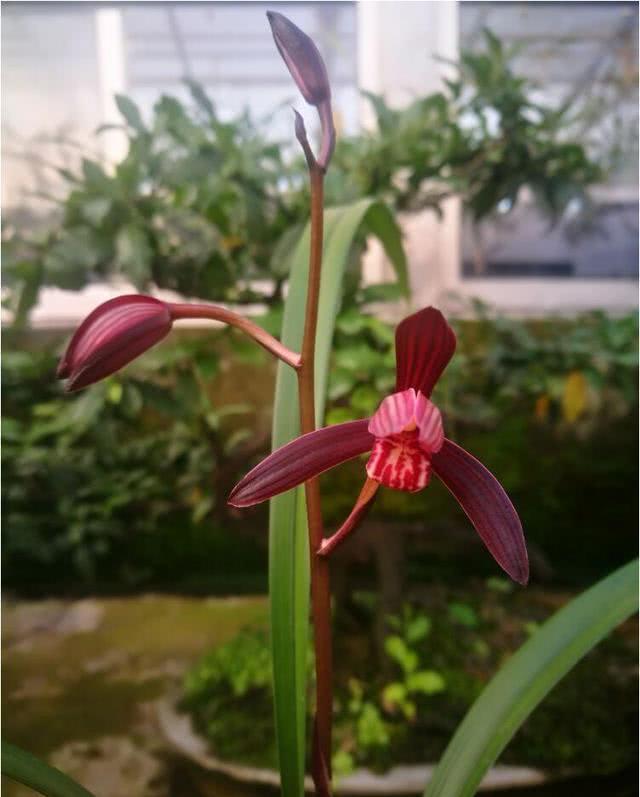
Orchids, with their fresh and elegant delicate fragrance, their leaf clusters combining strength and gentleness, and their dignified and refined charm, have always been admired and cherished by people. Before an orchid blooms, it is no different from ordinary grass, but once it flowers, it perfumes the garden it grows in and the room it occupies. Tang dynasty poet Li Bai wrote: "A lone orchid grows in a secluded garden, amid the weeds all choked and hidden. Though bathed in the spring sun's glow, it mourns the high autumn moon. Early frost falls with a rustling sound, its green beauty fears it will fade. If not for the clear breeze blowing, for whom would its fragrance rise?" As Confucius said, it is the 'fragrance of kings' grass, or what successive dynasties have praised as 'national fragrance,' 'ancestor of fragrance,' 'the finest fragrance under heaven.' Confucius mentioned "the orchid is the fragrance of kings" and "the iris and orchid grow in deep valleys, and even with no one around, they are fragrant on their own." Cheng Fan of the Qing dynasty wrote: "The orchid is the fragrance of kings, its sweet scent within the clear breeze, always growing in rocky crevices, not competing with the beauty of profuse flowers." This poem expresses the true meaning of the orchid. It means that the orchid has the most noble fragrance, tucked within the clear breeze so that if you are not careful you cannot even smell it; it has always grown in rock crevices, not competing in beauty with the flowers of the marketplace. And there is also Confucius's "the orchid is the fragrance of kings," which speaks to the lofty status of the orchid among flowers; this also shows the position of fragrance among all kinds of flowers, and fragrance is the soul of the orchid. If an orchid lacks fragrance, it lacks the orchid's unique cultural connotation and humanistic spirit, and can only be reduced to an ordinary flowering plant!
Orchids: you cultivate orchids for a hundred days, but enjoy the flowers for only a moment. Orchid growers pour in long-term emotion and sweat, treating orchids as treasures, and while delighting body and mind, they can also bring considerable economic benefits. Every year when the orchid blooming season arrives, it is the most exciting, happiest and most active time for orchid enthusiasts. However, to get orchids to bloom smoothly is not an easy matter; you need to master some methods and techniques to let orchids bloom easily. Therefore, during the period from flower bud formation to blooming, you must carefully control and manage the orchids and carry out necessary manual adjustments; otherwise, it is hard to achieve upright blooms with beautiful form and appearance. Moreover, the same variety, due to improper management of light, temperature and humidity, can produce coarse and inferior flowers at full bloom, with abnormal spirit, charm and color, or because the flowers remain open too long and consume too many nutrients, affecting the normal development of leaf buds and flower buds later on. Here, it involves not only issues of daily cultivation methods and management techniques, but also a kind of artistic skill.
First, after "Start of Autumn" on August 7 each year, most orchid varieties begin to form flower buds. Although it is Start of Autumn, most regions of our country are still in a high-temperature period, with daytime temperatures generally around 32-35°C, what we often call the "autumn tiger." During this period, humidity is high, it is unusually muggy, and it is still a time of high incidence of orchid pests and diseases. Therefore, during this period, work such as shading, ventilation, cooling and heat protection for orchids cannot be neglected. Jianlan will welcome its second to third wave of blooming during this period. For other orchid varieties, if flower buds are found emerging from the surface of the potting medium, they should be sprayed once or twice with insecticide to prevent pests such as thrips and snails from gnawing on the flower buds. If weak or diseased orchid plants are found to have flower buds emerging, it is recommended that such orchid flower buds should not be kept and should be removed; otherwise, after blooming they will seriously affect the normal growth of the orchid plant. For flower buds emerging from the back pseudobulbs of old plants, it is only suitable to select and keep one robust and plump flower bud. If both new shoots and old shoots have flowers beside them, keep the flower bud beside the new shoot and remove the flower bud beside the old shoot. Flower buds that are crowded and crooked, or that emerge on one side along the rim of the pot, should also not be kept. If an orchid produces too many flower buds, only the strong buds should be kept and the remaining thin and small flower buds removed, with 2-3 flower buds per pot being appropriate. If there are too many flower buds, it will not only affect the flower quality but also consume a large amount of the orchid plant's own nutrients, affecting the next year's blooming. We also need to treat the question of whether to keep or remove flower buds dialectically.
Second, after "White Dew" in early September each year, the weather gradually turns cooler, and most of the orchid's new growth has already grown into mature seedlings. The orchid's flower buds are still in the stage of accumulating nutrients and will not elongate and grow, and only Jianlan will send up stems and bloom. At this time, the orchid plant can receive more sunlight, and a little more phosphorus and potassium fertilizer and multi-element organic fertilizer can be applied, so that the orchid plant accumulates more nutrients, promoting plump flower buds, and giving the flowers full spirit and good fragrance when they bloom. The fragrance of orchids comes from sugar substances in the plant body, and sugar substances come from elements such as phosphorus and potassium. Therefore, note that in this season, fertilization should not be biased toward nitrogen; spray and water more with phosphorus and potassium fertilizer. This is more conducive to the orchid plant growing sturdy rather than leggy, and at the same time lays a solid foundation for the growth period in the coming spring.
Third, in winter, orchids must be protected against freezing. Below 0°C, they should be placed indoors for cultivation. The flower buds of Chunlan, Huilan, Chunjian and Lianbanlan are still continuing to accumulate nutrients and will not grow. The flower stems of Molan and Hanlan will begin to gradually elongate and bloom. Hanlan blooms somewhat earlier than Molan. Molan generally blooms around New Year's Eve each year. The room temperature of the orchid site should be controlled at 5-15°C. If the room temperature is too low, it will not serve the purpose of protecting against cold and keeping warm. If too high, it will also affect the orchid's dormancy. But for Molan, the room temperature should be kept slightly higher, yet it must not exceed 15°C. If the room temperature is too high, the flower stem grows slowly and flower bud development is poor, making it easy for already formed flower buds to shrivel and even die. For the more cold-tolerant Chunlan and Huilan, about 20-30 days at around 0-10°C of low-temperature vernalization is needed to complete spring dormancy and vernalization and to bloom well. Chunjian has a low requirement for vernalization, and Lianbanlan can bloom without vernalization. Therefore, for overwintering Chunlan and Huilan, controlling room temperature at 3-8°C is most suitable. All potted orchids with flower buds should be placed on stands near glass windows so they can receive more sunlight.
Fourth, from December to March each year, at the end of winter and beginning of spring, is the blooming period for Lianbanlan, Chunjian and Chunlan. At this time the temperature is still relatively low, so attention must be paid to protecting the flower buds from freezing. After freezing, the flower buds will quickly turn grayish brown and rot and shrivel. During daily watering, especially avoid water droplets intruding into the bud sheaths; otherwise, it can very easily cause rot. During this period the air is still relatively dry, so we should increase air humidity. We can mist the orchids. If air humidity is too low, flower buds easily fall off. Also please note that for Chunlan and Huilan that need vernalization, the temperature should not be too high when they bloom, and they should not be exposed to the sun; otherwise, the buds will scorch and they will not be able to bloom.
Fifth, when the temperature is above 15°C, orchids can be moved out of the room and enter normal management. Indoors, ventilation and light transmission should be maintained, and windows can be opened at night. For any small buds that show close to the plant and are about to open, place them under a shade frame during the day, and before nightfall move them to a place sheltered from dew; otherwise, when blooming, the petals are prone to wrinkling. Around Qingming each year is the blooming period of Huilan. When the orchid is found to begin sending up stems, increase light and humidity to help the flower stem elongate, and the petal base constriction and corner release as well as petal width can all increase and open fully, with the flower color becoming lovely. If encountering rainy days or long periods of rain, they should be moved to a place sheltered from rain, and after the rain, shade screens should be put up in time. If subjected to prolonged rain or long exposure to sunlight, the three outer petals are prone to reflexing backward, dropping at the shoulders, having scorched petal edges, and the petals of the column opening apart, with the flower color turning yellowish; plain lip petals are even more susceptible to this. When they are about to bloom, humidity should be lowered, reducing environmental humidity, controlling humidity between 50-60% and withholding water, watering as little as possible or not at all, because if the potting medium is too wet and air humidity too high, it will promote the elongation and wavy curling of the outer three petals of Huilan, and if water droplets accumulate at the tips of the petals, the flower scape will bear weight and droop, affecting the charm and spirit of the flower posture. Author: Mei Fei. I publish orchid knowledge and pictures every day, taking you to understand orchids in depth and teaching you to grow orchids easily. If you have questions about orchids, you can ask me anytime or leave a comment below. If you like it, you can click the top right corner to save or forward it to help others!