What is the difference between the stone frog and the frog? Learn quick ways to tell them apart
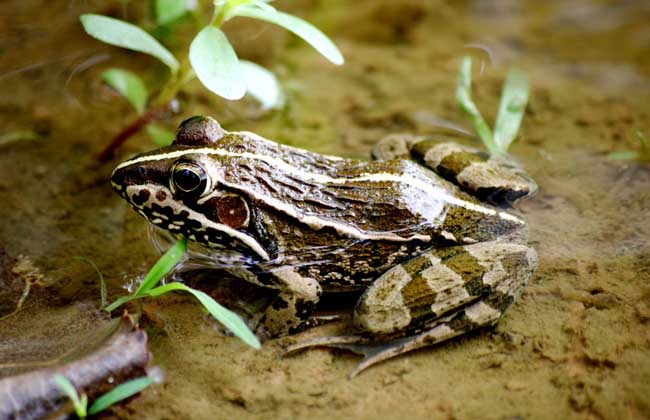
StoneFrogThe standard name is Quasipaa spinosa, also known as stone clam, stone chicken, mountain chicken, etc. It is an animal of the class Amphibia, order Anura, family Ranidae. The frog belongs to the phylum Chordata, class Amphibia, order Anura, family Ranidae, and is distributed in waters, wetlands and other areas on every continent. Let us take a look below at what differences there are between the stone frog and the frog!
The stone frog and the frog belong to different families and genera
1. Stone frog: The stone frog is an amphibian of the kingdom Animalia, phylum Chordata, subphylum Vertebrata, class Amphibia, subclass Lissamphibia, order Anura, family Ranidae, tribe Dicroglossini, genus Quasipaa.
2. Frog: The frog is an amphibian of the kingdom Animalia, phylum Chordata, subphylum Vertebrata, class Amphibia, subclass Lissamphibia, order Anura, suborder Neobatrachia, family Dicroglossidae, genus Hoplobatrachus.
Differences in the alternative names of the stone frog and the frog
1. Stone frog: The stone frog is also called stone clam, stone chicken, mountain chicken, stone jelly, flying fish, stone scale, stone toad, stone shrimp toad, stone pit frog, stone luan, wood locust (southern Sichuan), etc. It is widely distributed in our region, especially with large numbers in the mountainous areas of Jinggangshan, Ninggang and Anfu in the west, and is distributed in Hubei, Anhui, Jiangsu, Zhejiang, Jiangxi, Hunan, Fujian, Guangdong, Hong Kong and Guangxi, among other places.
2. Frog: The frog is also called frog, toad, froglet, etc. It is distributed in waters, wetlands and other areas on every continent. Because its skin is bare, it cannot effectively prevent the evaporation of water from its body, and it cannot live without water or a moist environment throughout its life. It fears drought and cold, and most live in rainy tropical and temperate regions, with very few species distributed in the frigid zone.
Differences in the morphology of the stone frog and the frog
1. Stone frog: The stone frog is large and stout, with a body shape similar to the black-spotted frog or the tiger frog. Its body color varies, its head is flat and broad, its snout is bluntly rounded and protrudes beyond the lower jaw, its trunk is relatively short and flat, it has no tail, and its neck is not obvious. The male frog has peculiar forelimbs and narrow, long warts of varying length on its back. Its belly is pale yellowish white. The forelimbs of the female are less developed than those of the male, there are no narrow, long warts on its back, and its ventral surface is smooth and white.
2. Frog: The frog has a flat head, slightly triangular, with a somewhat pointed snout and a wide mouth. The male frog has a light brown membranous fold at the inner rear of each corner of the mouth, which is the vocal sac, and it puffs up into a bubble shape when calling. Its trunk is short and wide, its forelimbs are short and small, and its hind limbs are long and well developed. Its back is green, very smooth and very soft, and also patterned; its belly is white. It catches food with its tongue, and the tongue has mucus on it.
Differences in the effects of the stone frog and the frog
1. Stone frog: Stone frog meat is sweet in taste and neutral in nature. It is rich in protein, calcium and other components, low in fat, easy to digest, and very high in nutritional value. Eating it has the effects of clearing internal heat, improving eyesight, resolving sores, and nourishing and strengthening the body.
2. Frog: The frog is sweet in taste and cool in nature. Both have the effects of tonifying deficiency and benefiting the stomach, promoting diuresis and reducing swelling, and clearing heat and detoxifying. They are often used for malnutrition, physical weakness, or infantile malnutrition, emaciation, poor appetite, edema, distention, consumptive fever and other conditions.