What is the difference between Bei Shashen (Glehnia littoralis) and Nan Shashen (Radix Adenophorae)?
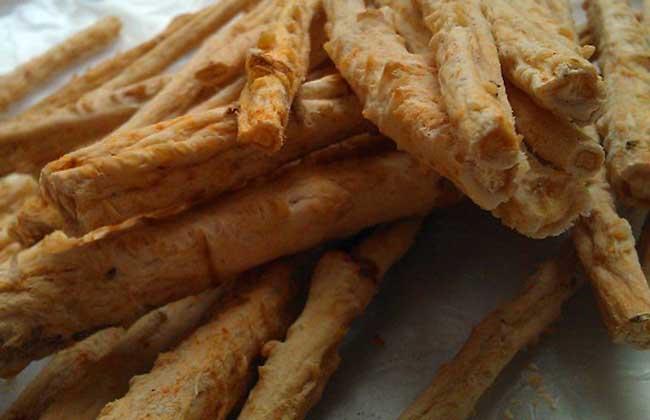
According to ancient literature records, the Shashen used by predecessors was Nan Shashen. It was not until the Qing Dynasty that records noted Shashen was divided into two types, Nan and Bei. Both types of Shashen are widely used in daily life and are popular health and wellness products loved by many people. Many friends are not clear about the difference between Bei Shashen and Nan Shashen, so let us take a look together below!
The difference in family and genus between Bei Shashen and Nan Shashen
1. Bei Shashen: Bei Shashen is a perennial herbaceous plant in the plant kingdom, Angiosperms, Dicotyledons, Apiales, Apiaceae, Peucedaneae, Glehnia genus.
2. Nan Shashen: Nan Shashen is the dried root of Adenophora tetraphylla or Adenophora stricta in the plant kingdom, Angiosperms, Dicotyledons, Campanulales, Campanulaceae, Adenophora genus.
The difference in origin between Bei Shashen and Nan Shashen
1. Bei Shashen: Bei Shashen is also known as Laiyang Shen, Hai Shashen, Yin Shashen, Liao Shashen, Su Tiao Shen, Tiao Shen, Bei Tiao Shen, etc. It is mainly produced in Shandong, Hebei, Liaoning, Inner Mongolia and other places.
2. Nan Shashen: Nan Shashen is also known as Shashen, Pao Shen, Pao Shashen, etc. Adenophora tetraphylla is produced in Northeast China, Inner Mongolia, Hebei, Shanxi, Shandong, East China, Guangdong, Guangxi, Yunnan, Sichuan, Guizhou and other places. Adenophora stricta is produced in Jiangsu, Anhui, Zhejiang, Jiangxi, Hunan and other places.
The difference in morphology between Bei Shashen and Nan Shashen
1. Bei Shashen: Bei Shashen is 5-20 cm tall, the whole plant is hairy, the main root and lateral roots are clearly distinguished, the above-ground part of the stem is relatively short, and the underground part is elongated. The basal leaves are thick in texture and have long petioles. The stem leaves are similar in shape to the basal leaves. The compound umbel is terminal, densely covered with grayish-brown long soft hairs, the petals are white, and the schizocarp is spherical to elliptical. The flowering period is May to July, and the fruiting period is June to August.
2. Nan Shashen: The stem of Adenophora tetraphylla is tall, reaching up to 1.5 m, unbranched. The leaves are ovate to linear-lanceolate. The cyme is a cyme, and the capsule is spherical-conical or ovate-conical. The seeds are yellow-brown. The flowering period is July to September. The stem of Adenophora stricta is 40-80 cm tall, the basal leaves are heart-shaped, large and have long petioles. The inflorescence is often unbranched and forms a false raceme. The capsule is ellipsoid-spherical, and the seeds are brownish-yellow and slightly flattened. The flowering period is August to October.
The difference in effects between Bei Shashen and Nan Shashen
1. Bei Shashen: Bei Shashen is sweet in taste, slightly bitter, cool and slightly cold in nature, and enters the lung and spleen meridians. It has the effects of nourishing yin and clearing the lungs, benefiting the stomach and promoting fluid production. It is used for symptoms such as dry cough due to lung heat, phlegm and blood in chronic cough, and thirst due to fluid damage in febrile diseases.
2. Nan Shashen: Nan Shashen is sweet in taste, slightly cold in nature, and enters the lung and stomach meridians. It has the effects of nourishing yin and clearing the lungs, benefiting the stomach and promoting fluid production, resolving phlegm and benefiting qi. It is used for symptoms such as dry cough due to lung heat, yin deficiency chronic cough, dry cough with sticky phlegm, insufficient stomach yin, poor appetite and vomiting, insufficient qi and yin, and irritability, heat and dry mouth.