What is the difference between tuna and salmon? The main differences explained in one article
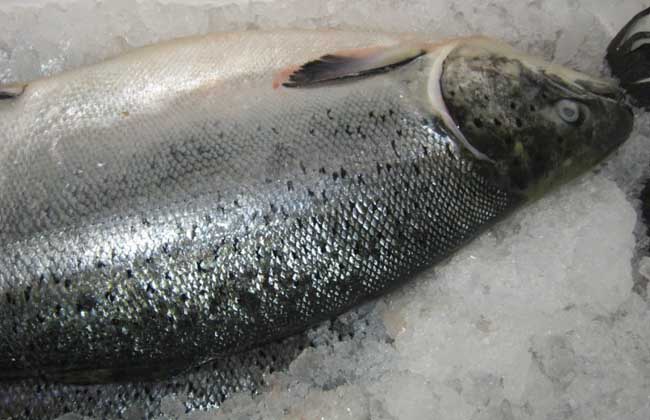
The difference between salmon and tuna is quite significant. Tuna is a saltwater fish, also known as tunny, tongna fish, etc., and is currently not artificially farmed. Salmon is a freshwater fish, with nutritional value roughly lower than tuna, and artificial farming is very common. Let's take a look below at exactly what the differences between tuna and salmon are!
The taxonomic difference between tuna and salmon
1. Tuna: Tuna belongs to the animal kingdom, Chordata, Vertebrata, Osteichthyes, Perciformes, Scombroidei, Scombridae, Thunnus, and is a large oceanic commercially important food fish.
2. Salmon: Salmon belongs to the animal kingdom, Chordata, Vertebrata, Actinopterygii, Neopterygii, Salmoniformes, Salmonidae, Salmo and Oncorhynchus, and is an anadromous migratory fish.
The distribution difference between tuna and salmon
1. Tuna: Tuna is also known as tunny, tongna fish, yadong fish, etc., and is distributed in the Indian Ocean, the central Pacific Ocean and the central Atlantic Ocean, among other places. The main species include skipjack, bluefin tuna, southern bluefin tuna, albacore, yellowfin tuna, bigeye tuna, etc.
2. Salmon: Salmon is also known as northern trout, chum salmon, luoguo fish, humpback salmon, magao fish, etc., and is mainly distributed in the northern Pacific Ocean and the northern regions of Europe, Asia and the Americas. The main types include Norwegian salmon, Finnish salmon, American salmon, chum salmon, etc.
The morphological difference between tuna and salmon
1. Tuna: Tuna has a relatively long body, thick and round, streamlined, gradually tapering backward to a slender tail base, with a forked or crescent-shaped caudal fin, obvious ridges on both sides of the caudal peduncle, and a row of finlets behind the dorsal and anal fins. It has a torpedo-shaped body, with a cross-section that is slightly circular.
2. Salmon: Salmon has a laterally compressed body, an arched back, sharp teeth, small scales, and is silver-gray. During the spawning season it has orange stripes. Its flesh is firm and delicious, pink in color and elastic, with small scales and few bones.
The functional difference between tuna and salmon
1. Tuna: Tuna is sweet in taste and neutral in nature, entering the liver and kidney meridians. It has the effects of strengthening liver function and preventing arteriosclerosis. It is suitable for cardiovascular and cerebrovascular diseases, and is also a healthy food for women's beauty and weight loss.
2. Salmon: Salmon is sweet in taste and warm in nature, entering the stomach meridian. It has the effects of replenishing deficiency and fatigue, strengthening the spleen and stomach, and warming the stomach and harmonizing the middle. It is suitable for symptoms such as emaciation, edema and indigestion.