What is the difference between salmon and chum salmon?
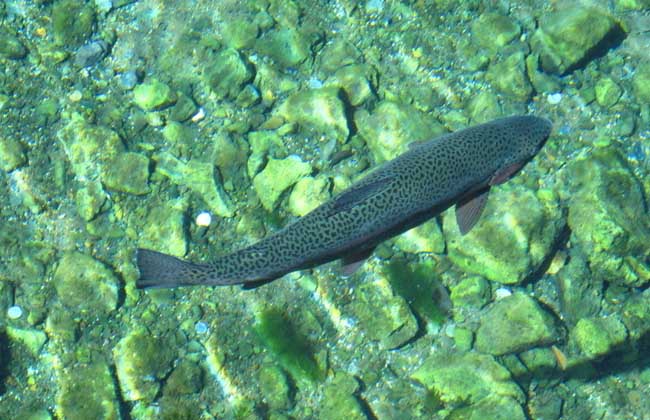
Salmon and chum salmon both belong to the family Salmonidae, but salmon belongs to the genus Oncorhynchus (trout), while chum salmon belongs to the genus Oncorhynchus (chum salmon). In a broad sense, chum salmon is actually a type of salmon; both are salmonids. But in reality, there are still great differences between them. Let us take a look below at exactly what the differences between salmon and chum salmon are!
Salmon and chum salmon differ in family and genus
1. Salmon: Salmon is an anadromous migratory fish of the animal kingdom, phylum Chordata, subphylum Vertebrata, class Actinopterygii, subclass Neopterygii, order Salmoniformes, family Salmonidae, genus Salmo and genus Oncorhynchus.
2. Chum salmon: Chum salmon is a cold-water anadromous spawning migratory fish of the animal kingdom, phylum Chordata, subphylum Vertebrata, class Osteichthyes, subclass Actinopterygii, order Salmoniformes, family Salmonidae, genus Oncorhynchus (chum salmon genus).
Salmon and chum salmon differ in place of origin
1. Salmon: Salmon is also known as northern trout, chum salmon, humpback fish, chum fish, hemp cake fish, etc. It is mainly distributed in the northern Pacific Ocean and the northern regions of Europe, Asia and America. The main types include Norwegian salmon, Finnish salmon, American salmon, chum salmon, etc.
2. Chum salmon: Chum salmon is also known as northern trout, large chum salmon, humpback fish, chum fish, hemp cake fish, dog salmon, etc. It is distributed in the northern Pacific Ocean and the Arctic Ocean. The main types include chum salmon, humpback salmon, sockeye salmon, chinook salmon, masu salmon, coho salmon, etc.
Morphological differences between salmon and chum salmon
1. Salmon: The body of salmon is laterally compressed, with a raised back, sharp teeth, small scales, and a silver-gray color. During the spawning season it has orange stripes. The flesh is firm and delicious, pink in color and elastic, with small scales and few bones.
2. Chum salmon: Chum salmon generally has a body length of about 60 cm and is laterally compressed, slightly spindle-shaped. From behind the head to the front of the dorsal fin base it gradually rises; the starting point of the dorsal fin is the highest point of the body, and from there it gradually slopes down and curves toward the tail. The head is laterally compressed, the tip of the snout protrudes and is slightly curved, and the mouth opening is large, shaped like a bird's beak. The upper and lower jaws each have a row of sharp teeth. The eyes are small, and the scales are also small, arranged in an imbricate pattern. The adipose fin is small and located far back, and the caudal fin is deeply forked.
Differences in effects between salmon and chum salmon
1. Salmon: Salmon is sweet in taste and warm in nature, entering the stomach meridian. It has the effects of tonifying consumptive disease, strengthening the spleen and stomach, and warming the stomach and harmonizing the middle. It is suitable for symptoms such as emaciation, edema and indigestion.
2. Chum salmon: Chum salmon is pungent and sweet in taste and slightly warm in nature, entering the spleen and stomach meridians. It mainly treats symptoms such as disharmony of the spleen and stomach, abdominal distension and fullness, frequent belching, and loose stools.