What is the difference between ginseng and codonopsis? Mainly look at these aspects
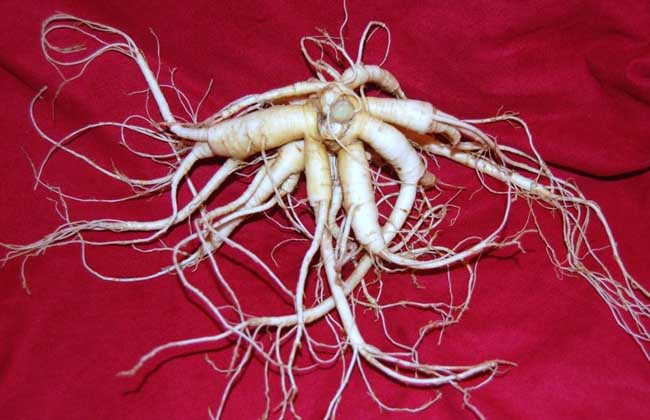
Ginseng is a perennial herbaceous plant, mainly produced in Northeast China, Korea, South Korea, etc. It has the effects of nourishing yin and promoting vitality, and strengthening the constitution. It is often used to regulate blood pressure, restore heart function and other conditions. Codonopsis, like ginseng, also has good medicinal value. Many people are familiar with ginseng, but the concept of codonopsis is very unfamiliar. Below let us take a look at the difference between ginseng and codonopsis!
Ginseng and codonopsis differ in family and genus
1. Ginseng: Ginseng is a perennial herbaceous plant in the plant kingdom, Angiosperms, Magnoliopsida, Rosidae, Apiales, Araliaceae, Paniceae, Panax, also known as round ginseng, yellow ginseng, bangchui, renxian, guigai, shencao, tujing, dijing, haiyu, renshen, king of a hundred herbs, etc.
2. Codonopsis: Codonopsis is a plant in the plant kingdom, Angiosperms, Dicotyledoneae, Sympetalae, Campanulales, Campanulaceae, Campanuloideae, Platycodoneae, Codonopsis, also known as Fangfeng Codonopsis, yellow ginseng, fangdangshen, shangdangshen, shitou ginseng, zhonglingcao, huangdang, etc.
Ginseng and codonopsis differ in origin
1. Ginseng: Ginseng mostly grows between 40-45 degrees north latitude and 117.5°-134° east longitude, distributed in eastern Liaoning, the eastern half of Jilin and eastern Heilongjiang, and has been introduced in Hebei, Shanxi and Shandong; it is also widely cultivated in the Soviet Union, Korea and Japan.
2. Codonopsis: Codonopsis is mostly produced in southeastern Tibet, western Sichuan, northwestern Yunnan, eastern and southern Gansu, southern Shaanxi, Guizhou, Ningxia, eastern Qinghai, Henan, Shandong, Shanxi, Hebei, Inner Mongolia and Northeast China and other regions; it is also found in Korea, Mongolia and the Far East region of the Soviet Union.
Morphological differences between ginseng and codonopsis
1. Ginseng: The main root of ginseng is 30-60 cm tall, the stem is upright, cylindrical, unbranched, with palmately compound leaves, 3-5 leaflets, the middle 3 nearly equal in size, with petiolules, a single terminal umbel in the leaf cluster, the peduncle up to 30 cm long, the berry oblate, bright red when mature, containing two semicircular seeds.
2. Codonopsis: The stem base of codonopsis has many tumor-like stem scars, the root is often thick and spindle-shaped or spindle-shaped cylindrical, the stem twines about 1-2 m long, 2-4 mm in diameter, with many branches, flowers solitary at the branch tips, alternate or nearly opposite with the petioles, stalked, seeds numerous, ovate, wingless, small, brownish yellow, smooth and hairless.
Differences in effects between ginseng and codonopsis
1. Ginseng: Ginseng is sweet and slightly bitter in taste, warm and neutral in nature, enters the spleen, lung and heart meridians, and has the effects of tonifying qi, securing collapse, promoting fluid production, calming the mind and improving intelligence. It is suitable for regulating blood pressure, restoring heart function, neurasthenia and physical weakness and other conditions, and also has the effects of removing phlegm, strengthening the stomach, promoting urination and stimulating.
2. Codonopsis: Codonopsis is neutral in nature and sweet in taste. It has the effects of tonifying the middle and benefiting qi, strengthening the spleen and benefiting the lungs, anti-cancer, lowering blood pressure, anti-hypoxia and anti-aging. It can also enhance human immunity, increase the activity of superoxide dismutase, and strengthen the ability to eliminate free radicals. It has the effects of regulating gastrointestinal movement, anti-ulcer, inhibiting gastric acid secretion and reducing pepsin activity. It is suitable for weakness of the spleen and lungs, shortness of breath and palpitations, poor appetite and loose stools, ulcers, anemia, asthmatic cough due to deficiency, internal heat and diabetes-like thirst and other conditions.