What is the difference between Ophiopogon japonicus and Asparagus cochinchinensis? A quick guide to telling them apart
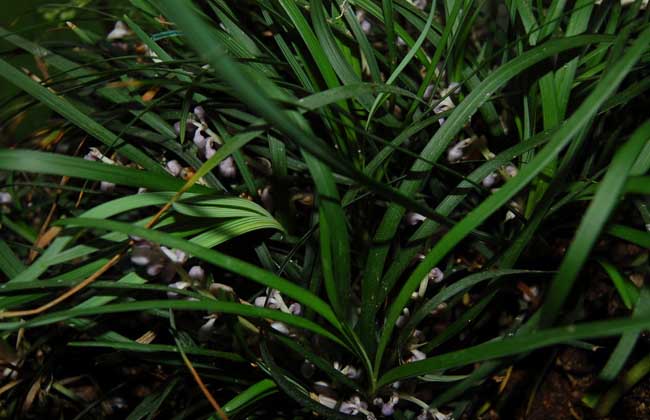
Ophiopogon japonicus, also known as dwarf lilyturf, ribbon grass, maidong and cundong, is a perennial evergreen herbaceous plant of the genus Ophiopogon in the family Liliaceae, and its tuberous roots are used as medicine. Asparagus cochinchinensis, also known as tiandong, is the tuberous root of the Liliaceae plant Asparagus cochinchinensis and is a herbal medicine listed in the Chinese Pharmacopoeia. Both Ophiopogon japonicus and Asparagus cochinchinensis use their tuberous roots as medicine, and the tuberous roots look very similar in appearance. Let's take a look below at what the differences between Ophiopogon japonicus and Asparagus cochinchinensis are!
The family and genus differences between Ophiopogon japonicus and Asparagus cochinchinensis
1. Asparagus cochinchinensis: Asparagus cochinchinensis is a climbing plant of the plant kingdom, Angiosperms, Monocotyledoneae, Liliales, Liliaceae, genus Asparagus. It grows on shady, damp mountain forest edges, in grass or thickets, and is also cultivated. It is distributed in East China, Central South China, Southwest China, as well as Hebei, Shanxi, Shaanxi, Gansu, Taiwan, China and other places.
2. Ophiopogon japonicus: Ophiopogon japonicus is a perennial evergreen herbaceous plant of the plant kingdom, Angiosperms, Monocotyledoneae, Liliales, Liliaceae, genus Ophiopogon. It is distributed in Jiangxi, Anhui, Zhejiang, Fujian, Sichuan, Guizhou, Yunnan, Guangxi and other places.
The different alternative names of Ophiopogon japonicus and Asparagus cochinchinensis
1. Asparagus cochinchinensis: The alternative names of Asparagus cochinchinensis include mingtiandong, qiangmi, mandong, mandongmu, tianwendong, dimendong, feiwudong, datiantong, dadangmen root, duoermu, wansuiteng root, poluoshu root, shangji root, tianji root, dianle, dianji root, bailuoshan root, babazai, sidong, niling, gantiaoshe, duozipo, tiger tail root, jiuzishidi, huancao root, nvmu root, yanmendong, mendong, runt iandong, yanmendong, wubuyu, guancheng, huancao, shier root, sanbaibang and so on.
2. Ophiopogon japonicus: The alternative names of Ophiopogon japonicus include maimendong, maidong, hangmaidong, zhemaidong, cundong, cunmaidong, zhimaidong, zhumaidong, zhucundong, chenmaidong, chencundong, xianmaidong, zhushab an maimendong and so on. In prescriptions, maimendong, maidong and cundong refer to raw Ophiopogon japonicus.
The appearance differences between Ophiopogon japonicus and Asparagus cochinchinensis
1. Asparagus cochinchinensis: Asparagus cochinchinensis is a climbing plant, mostly branched, growing in clumps and drooping, 80-120 cm long. Its leaves are clustered, flat and pine-needle-like, green and glossy. Its leaf-like branches are usually in clusters of 3, flat or slightly sharply triangular due to the keeled midrib, slightly sickle-shaped. The scale-like leaf bases on the stem extend into hard spines 2.5-3.5 mm long, while the spines on the branches are shorter or inconspicuous. The flowers are mostly white or pale green, and the berries turn red when ripe.
2. Ophiopogon japonicus: Ophiopogon japonicus grows in clumps, about 30 cm tall, with clustered, slender, dark green leaves shaped like chives. The flowers are pale purple, and the berries turn dark green or blackish blue when ripe.
The medicinal property differences between Ophiopogon japonicus and Asparagus cochinchinensis
1. Similarities: Both are sweet and bitter in taste, cold in nature, and enter the lung and stomach meridians. They can nourish lung yin, moisten lung dryness and clear lung heat, and can also nourish stomach yin, clear stomach heat, promote fluid production and quench thirst. For constipation due to intestinal dryness caused by heat pathogen damaging fluids, they can also increase fluids and moisten the intestines to relieve constipation. When treating dryness-heat of the lung and stomach, they are often used together to enhance the therapeutic effect. However, people with diarrhea due to deficiency-cold of the spleen and stomach and cough caused by externally contracted wind-cold should avoid using these two.
2. Differences: Asparagus cochinchinensis is more strongly bitter and cold in nature, and its ability to tonify the yin of the lung and stomach is stronger than that of Ophiopogon japonicus. For those with cough and difficult expectoration, it can also relieve cough and expel phlegm. It can also enter the kidney meridian to tonify kidney yin and reduce kidney fire, and can treat syndromes of kidney yin deficiency and. Recently it is also often used to treat breast tumors, with relatively good efficacy for breast lobular hyperplasia, but its cloying and greasy nature is relatively strong, so caution is needed when using it. Ophiopogon japonicus is slightly bitter and cold, and although its power to nourish stomach yin and clear stomach heat is weaker, its relatively low cloying and greasy nature is its strength. It can also enter the heart meridian to tonify heart yin, clear heart fire and relieve restlessness, and calm the mind, and can treat syndromes of heart yin insufficiency and exuberant heart fire.