What Are the Differences Between a Horse, a Donkey and a Mule? A Quick Guide to Telling Them Apart
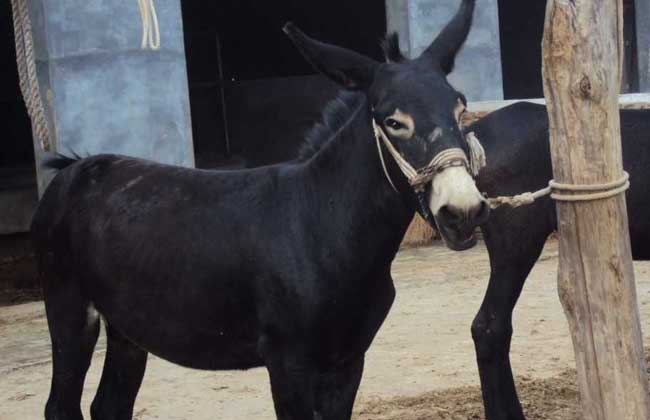
Horses, donkeys and mules are all common domestic animals. The horse is a herbivorous animal of the genus Equus in the family Equidae, order Perissodactyla. The donkey is the general name for the three species of mammals in the subgenus Asinus of the genus Equus, family Equidae, order Perissodactyla; it resembles a horse and is mostly grayish-brown. The mule is a hybrid of the horse and the donkey, mostly the offspring of a male donkey and a female horse. Many people cannot tell horses, donkeys and mules apart, so let us take a look together below!
Horse
The horse is a herbivorous animal that was domesticated by humans 4,000 years ago. In ancient times it was the main source of power for agricultural production, transportation and military activities. There are about 200 breeds worldwide, with an average lifespan of 30 to 35 years, and a maximum of over 60 years.
The body size of different horse breeds varies greatly. Heavy breeds reach a body weight of 1,200 kg and a height of 200 cm; small breeds weigh less than 200 kg and stand only 95 cm tall; the so-called miniature pony is only 60 cm tall. The head and face are straight and rather long, the ears are short, the limbs are long, and the bones are solid, with well-developed tendons and ligaments. They have chestnuts (commonly called night eyes), remnants of the carpal pad, and hard hooves that allow them to gallop quickly over hard ground. Coat colors are complex, mostly bay, chestnut, brown, black and black; the coat is shed once each in spring and autumn. The sweat glands are well developed, which helps regulate body temperature; they fear neither severe cold nor intense heat and adapt easily to new environments.
Donkey
The donkey resembles a horse and is mostly grayish-brown. It is not imposing or majestic: the head is large, the ears are long, the chest is somewhat narrow, the limbs are thin and weak, and the torso is relatively short, so the height at the withers and the body length are roughly equal, forming a square shape. The skin of the neck is thin, the hooves are small and solid, and the constitution is robust. It has very strong resistance, is very sturdy, tolerates rough management, and rarely falls ill. It also has the advantages of a docile temperament, hard work and endurance, and obedience to work.
Donkeys can be divided by body size into large, medium and small types. China's five excellent donkey breeds are the Guanzhong donkey, Dezhou donkey, Guangling donkey, Biyang donkey and ** donkey. The large donkeys include the Guanzhong donkey and the Dezhou donkey; these two stand over 130 cm tall. The medium donkey includes the Biyang donkey, which stands between 110-130 cm tall. The small type is commonly called the maoluzi, and is mostly found in North China, Gansu, **, Yunnan and other places, where these donkeys stand between 85-110 cm tall.
Mule
The mule is an animal with male and female sexes, but it has only very weak fertility. It is the offspring produced by mating a horse and a donkey, and is divided into the donkey mule and the horse mule. A male donkey can mate with a female horse, and the offspring is called a "horse mule"; if a male horse mates with a female donkey, the offspring is called a "donkey mule". The horse mule is large and has the donkey's load-bearing capacity and resistance plus the horse's agility and running ability; it is a very good draft animal but cannot reproduce. The donkey mule is small and is generally not as good as the horse mule; there are only very few records of it reproducing, and most have extremely weak fertility.
Mules are more stubborn than donkeys and more docile than horses. Mule foals are more gregarious than horse foals, bold, lively and curious, with very strong herd behavior; especially at night, they always stay in the middle of the horse herd. Although newborn mule foals like to rest alone, they are rarely lost. Mule foals like to live in groups but are unwilling to mix with horse foals. They are bold, alert and brave, and dare to fight wild beasts. They are lively and active, especially at sunrise and sunset, when they love to run and frolic wildly. They are very curious, and whenever they encounter something novel they always like to gather around and look at it.