What is the difference between longan and lychee? A quick guide to telling them apart
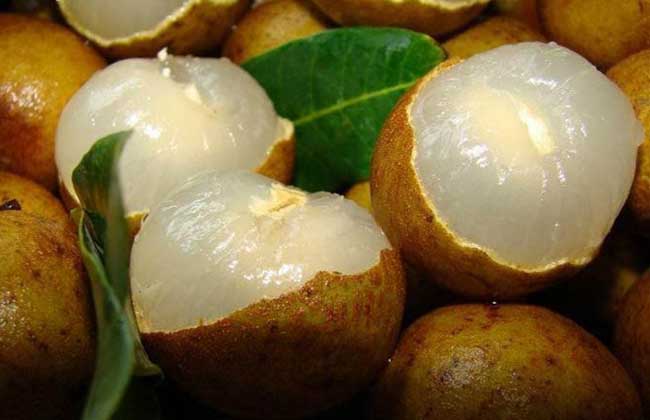
Longan, also known as guiyuan, originated in southern and southwestern China, and is cultivated in many countries and regions around the world. Lychee originated in southern China and is a subtropical fruit tree; together with banana, pineapple and longan, it is known as one of the "four great fruits of the south". Many people cannot tell the difference between lychee and longan, so let us take a look together at exactly what the differences between longan and lychee are!
Longan and lychee have different alternative names
1. Longan: Longan is also known as guiyuan, yizhi, sheep eye (Yunnan dialect), cow eye (some Hakka dialects), and so on.
2. Lychee: Lychee is also known as danli, lizhi, lizhi, huoshanli, leli, lizhi, liguo, and so on.
The difference in family and genus between longan and lychee
1. Longan: Longan is an evergreen large tree in the plant kingdom, phylum Angiospermae, class Dicotyledoneae, order Sapindales, family Sapindaceae, genus Dimocarpus, mainly distributed in Guangxi, Guangdong, Fujian and Taiwan, China, and other places.
2. Lychee: Lychee is an evergreen tree in the plant kingdom, phylum Angiospermae, class Dicotyledoneae, order Sapindales, family Sapindaceae, genus Litchi, produced in southern, southwestern and southeastern China, with the most extensive cultivation in Guangdong, Guangxi and southern Fujian (the Xiamen, Zhangzhou and Quanzhou areas).
The morphological differences between longan and lychee
1. Longan: Longan is an evergreen tree, usually more than 10 m tall; the leaves including the petiole are 15-30 cm long or longer, with 4-5 pairs of leaflets that are thinly leathery, oblong-elliptic to oblong-lanceolate, often asymmetrical on the two sides; the inflorescence is large, much branched, terminal and nearly axillary near the branch tips, densely covered with stellate hairs; the pedicels are short; the petals are milky white and lanceolate; the fruit is nearly spherical, 1.2-2.5 cm in diameter, usually yellowish brown or sometimes grayish yellow, somewhat rough on the outside, or rarely with slightly convex small tubercles; the flowering period is between spring and summer, and the fruiting period is summer.
2. Lychee: Lychee is an evergreen tree, usually not more than 10 m tall; the leaves including the petiole are 10-25 cm long or more, with 2 or 3 pairs of leaflets, rarely 4 pairs, thinly leathery or leathery; the inflorescence is terminal, broad and large, much branched; the pedicels are slender; the fruit is ovoid to nearly spherical, 2-3.5 cm long, usually dark red to bright red when ripe; the seeds are entirely enclosed by the fleshy aril; the flowering period is spring, and the fruiting period is summer.
The difference in effects between longan and lychee
1. Longan: Longan is sweet in taste and warm in nature, entering the heart and spleen meridians. It has the effects of stimulating the appetite, nourishing the blood and benefiting the spleen, tonifying the heart and calming the mind, and replenishing deficiency and improving intelligence. It is suitable for anemia, insomnia, neurasthenia, insufficient qi and blood, postpartum weakness, malnutrition, memory decline and other conditions. Modern medical practice has shown that it also has the effects of beautifying the appearance and prolonging life.
2. Lychee: Lychee is sweet and sour in taste and warm in nature, entering the heart, spleen and liver meridians. The flesh has the effects of tonifying the spleen and benefiting the liver, regulating qi and nourishing the blood, warming the middle and relieving pain, and tonifying the heart and calming the mind. The seed has the effects of regulating qi, dissipating nodules and relieving pain, can stop hiccups and stop diarrhea, and is an excellent food therapy for people with intractable hiccups and diarrhea before dawn; it also has the effects of nourishing the brain and strengthening the body, stimulating the appetite and benefiting the spleen, and promoting appetite.