When Does Wintersweet Bloom? A Detailed Guide to Its Flowering Period
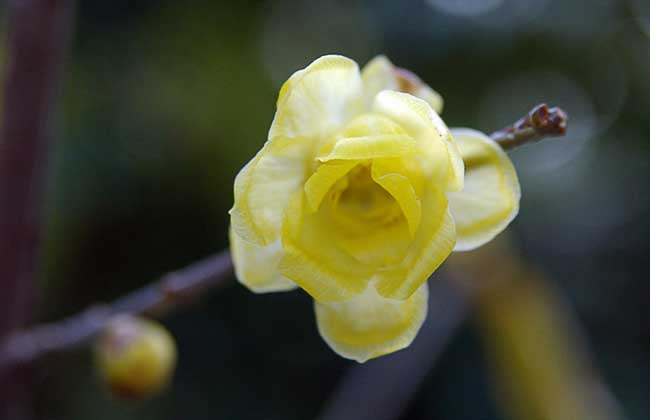
Wintersweet (Chimonanthus praecox) is native to central China. It likes sunlight but also tolerates slight shade, is fairly cold-hardy and drought-tolerant, hence the saying "a wintersweet that cannot be killed by drought." It is not picky about soil, but light loam with good drainage is best. It usually blooms in the depths of winter when all other flowers have withered, braving the cold and defying the frost, growing in mountain forests. Now let us take a look together at when wintersweet blooms!
When Does Wintersweet Bloom
In southwest China, wintersweet blooms from December to January of the following year; in central China, from February to March; and in north China, from March to April. Generally, it takes 4 to 7 days from the first flowers to full bloom, and 15 to 20 days to the end of blooming.
Reasons Why Wintersweet Does Not Bloom
1. Too much nitrogen fertilizer: Some wintersweets, due to uncontrolled water and fertilizer, especially excessive nitrogen fertilizer, produce rampant growth of branches and leaves, which affects flower bud differentiation and leads to failure to bloom. Therefore, wintersweet should be given nitrogen fertilizer in spring, and in early summer and autumn, more phosphorus and potassium fertilizer should be applied and less or no nitrogen fertilizer, to promote flower bud differentiation as early as possible.
2. Excessive shade and dampness: Wintersweet likes light, and insufficient light will affect flower bud differentiation. Waterlogged pot soil or an overly shady and damp location is also unfavorable to flower bud differentiation. For this reason, at the end of summer and beginning of autumn, water should be withheld, and the plant should always be kept in a sunny spot, which greatly helps the formation and swelling of flower buds.
3. No topping or pinching: For wintersweet that has entered the blooming stage, if it is allowed to sprout branches freely during the vegetative growth period in spring and summer without the necessary topping to control the shoots, vegetative growth will likewise run out of control and affect flower bud differentiation and growth. Generally, when 3 to 5 pairs of leaves have emerged at the tip of a shoot, the top 1/3 should be pinched off in time to promote the sprouting of lower lateral buds and normal flower bud differentiation. At the end of summer and beginning of autumn, topping and pinching must not be neglected.
How to Grow Wintersweet
1. Soil: For potted wintersweet, choose loose, fertile sandy loam rich in humus.
2. Watering: Wintersweet is by nature drought-tolerant and afraid of waterlogging. If moisture is too high and the soil is too wet, the plant grows poorly and flower bud differentiation is affected. Therefore, potted wintersweet should keep the soil on the dry side; ordinarily, do not water until the soil is dry, and when watering, water thoroughly. But during the "dog days" of high temperature, water more to maintain normal plant growth and allow normal flower bud development.
3. Temperature: Wintersweet likes sunlight and also tolerates partial shade. It fears wind and is fairly cold-hardy; it can overwinter safely when the temperature is not below -15°C. It can be grown outdoors in areas south of Beijing. If it encounters a low temperature of -10°C during the flowering period, the flowers suffer cold damage.
4. Pruning: Wintersweet has strong branching ability, hence the saying "wintersweet never lacks branches." Pruning at the right time makes it sprout more strong flowering branches and bloom more. Generally, prune at the right time after the flowers fade and before leaves emerge, cutting out dead branches, overly dense branches, crossing branches, and diseased or pest-infested branches, and leaving 2 to 3 pairs of buds at the base of one-year-old branches while cutting off the upper part of the branch to encourage branching.
5. Fertilizing: Wintersweet is a flowering plant that likes fertilizer. Timely fertilizing can promote flower bud differentiation and more blooms. Fertilizing wintersweet is mainly with phosphorus and potassium, with less nitrogen; the approximate ratio of phosphorus, potassium and nitrogen is 2:1:0.5. Fertilized this way, wintersweet produces large, abundant and fragrant flowers.
6. Pests: Wintersweet has relatively few diseases but many pests, commonly including aphids, scale insects, stinging caterpillars, and leaf-rolling moths. Aphids suck sap on young shoots, young leaves and flower buds; scale insects suck sap on branches; and stinging caterpillars and leaf-rolling moths bite and eat leaves, new buds and flower buds. To reduce pollution of the flower-growing environment, folk methods can also be used to kill pests: for example, scale insects can be killed with a vinegar solution, aphids can be killed with washing powder water, and if there are only a few, they can be caught by hand.