What is the difference between carnations and roses? A quick guide to telling them apart
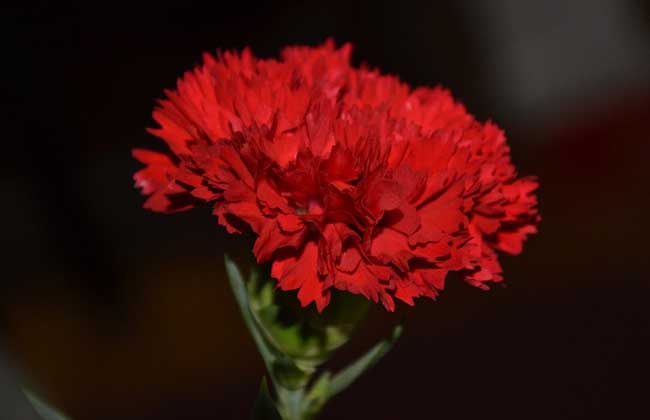
The rose originated in China and belongs to the order Rosales, family Rosaceae, a deciduous shrub; the carnation was originally named Xiangshizhu, also known as lion-head shizhu, musk shizhu, large-flowered shizhu, etc., and is a perennial herb of the family Caryophyllaceae, genus Dianthus. Carnations and roses are both among the most common flowers, but do you know how they differ? Let us take a look together below!
Carnations and roses belong to different families and genera
1. Carnation: kingdom Plantae, phylum Angiospermae, class Dicotyledoneae, subclass Archichlamydeae, order Centrospermae, family Caryophyllaceae, subfamily Caryophylloideae, tribe Caryophylleae, genus Dianthus, a perennial herbaceous plant.
2. Rose: kingdom Plantae, phylum Angiospermae, class Dicotyledoneae, order Rosales, suborder Rosineae, family Rosaceae, subfamily Rosoideae, genus Rosa, a deciduous shrub.
Morphological differences between carnations and roses
1. Carnation: carnations are 40-70 cm tall, the whole plant hairless, powdery green, stems clustered, erect, woody at the base, sparsely branched above, leaves linear-lanceolate, apex long acuminate, base slightly forming a short sheath, midrib obvious, concave above, slightly raised below, flowers often solitary at the branch tips and fragrant, pink, purplish red or white, pedicel shorter than the calyx, broadly ovate, apex shortly mucronate, calyx cylindrical, calyx teeth lanceolate, margin membranous, petal limbs obovate, apex margin with irregular teeth, stamens reaching as far as the throat, style exserted beyond the flower. Capsule ovoid, slightly shorter than the persistent calyx, flowering period May-August, fruiting period August-September.
2. Rose: rose branches and stems have many prickles, odd-pinnate compound leaves, leaflets 5-9, elliptical, with marginal prickles. Petals obovate, double to semi-double, flowers purplish red or white, fruiting period August-September, oblate.
Carnations and roses have different flower meanings
1. Carnation: the flower meaning of the carnation is passion, charm, love that makes one gentle, true affection, mother I love you, warm blessings, loving you, kindness, motherly love given without asking for anything in return, tolerance, flower of mothers, deep family affection, longing for family, pure admiration, passionate love, warm-heartedness, sadness and regret, pain, greatness, sacredness, sympathy, spiritual connection, sincerity, good fortune, longing.
2. Rose: the flower meaning of the rose is love, love and beauty, radiant glory, bravery.
Differences in the effects of carnations and roses
1. Carnation: the carnation is slightly cool in nature, sweet in taste, enters the lung and kidney meridians, has the effects of soothing the liver and nourishing the lungs to beautify the complexion, and is suitable to be paired with forget-me-not, violet, rose tea, and wintersweet for effects such as beautifying the complexion.
2. Rose: the rose is sweet and slightly bitter in taste, warm in nature, returns to the liver and spleen meridians, has the effects of promoting the flow of qi and relieving depression, harmonizing the blood, and relieving pain, and is often used for conditions such as liver-stomach qi pain, poor appetite and vomiting, irregular menstruation, and bruises and injuries.