What is the difference between Coptis chinensis, Scutellaria baicalensis, and Phellodendron amurense?
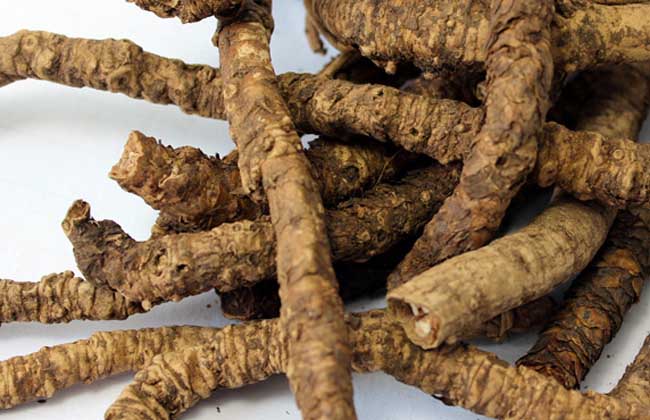
Scutellaria baicalensis, Coptis chinensis, and Phellodendron amurense are commonly used in traditional Chinese medicine clinical practice for clearing heat, removing toxins, and drying dampness. All three are bitter in flavor and cold in nature, with the effects of clearing heat and drying dampness, purging fire and removing toxins. For jaundice and dysentery caused by accumulated damp-heat, or fever, constipation, and mouth and tongue sores caused by excessive heat-toxin, the three are often used in combination to enhance the power of clearing heat and removing toxins. But although all three share the surname "Huang" (yellow), there are still many differences. Let us take a look below!
Scutellaria baicalensis
Scutellaria baicalensis, also known by the aliases shancha root and tujincha root, is a perennial herbaceous plant of the genus Scutellaria in the Lamiaceae family. It is bitter in flavor and cold in nature, entering the Heart, Lung, Gallbladder, and Large Intestine meridians. It has the effects of purging excess fire, eliminating damp-heat, stopping bleeding, and calming the fetus. It is produced in Heilongjiang, Liaoning, Inner Mongolia, Hebei, Henan, Gansu, Shaanxi, Shanxi, Shandong, Sichuan, and other places.
Coptis chinensis
Coptis chinensis, also known by the aliases weilian, chuanlian, and jizhualian, is a perennial herbaceous plant of the genus Coptis in the Ranunculaceae family. It is bitter in flavor and cold in nature, entering the Heart, Spleen, Stomach, Liver, Gallbladder, and Large Intestine meridians. It has the effects of clearing heat and drying dampness, purging fire and removing toxins. It is produced in Sichuan, Guizhou, Hunan, Hubei, Shaanxi, and other places.
Phellodendron amurense
Phellodendron amurense, also known by the alias chuanhuangbai, is the dried bark of Phellodendron chinense, a plant of the Rutaceae family. It is bitter in flavor and cold in nature, entering the Kidney and Bladder meridians. It has the effects of clearing heat and drying dampness, purging fire and eliminating steaming, and removing toxins and healing sores. It is mainly produced in Sichuan, Guizhou, Hubei, Yunnan, and other places.
The differences between Coptis chinensis, Scutellaria baicalensis, and Phellodendron amurense
1. Coptis chinensis: Coptis chinensis tends to enter the Heart, excels at clearing fire and removing toxins, and is drying in nature. It is a formula for the Heart and Stomach. It mainly treats vexation in the heart, and also treats stuffiness below the heart and diarrhea. It can regulate the Stomach and thicken the Intestines, treat dampness obstruction generating heat, stop wasting-thirst, and counteract croton toxicity. It is especially good at eliminating diseases caused by the conflict of water and fire and prolonged lingering conditions.
2. Scutellaria baicalensis: Scutellaria baicalensis excels at clearing Lung heat. Although cold in nature, it is not drying. It can treat heat damaging yin and generating dampness. It mainly treats those with vexing heat and bleeding, treats bleeding patterns caused by qi heat attacking the blood, and treats lower abdominal colic or abdominal pain in children. It can calm the fetus and treat burns and fire sores, etc. The clinical antibacterial activity of Scutellaria baicalensis is better than that of Coptis chinensis, and it does not produce drug resistance.
3. Phellodendron amurense: Phellodendron amurense specifically enters the lower-jiao Kidney and Bladder meridians. It excels at clearing and disinhibiting lower-jiao damp-heat, and can restrain hyperactive ministerial fire (fire of the lower-jiao). It can treat not only excess fire but also deficiency fire. It is suitable for acute and chronic nephritis, urethritis, prostatitis, and cervicitis caused by damp-heat pouring downward, as well as bone-steaming tidal fever, five-center vexing heat, frequent spermatorrhea, menopausal syndrome, and so on caused by deficiency heat.