What is the difference between littleleaf boxwood and bigleaf boxwood?
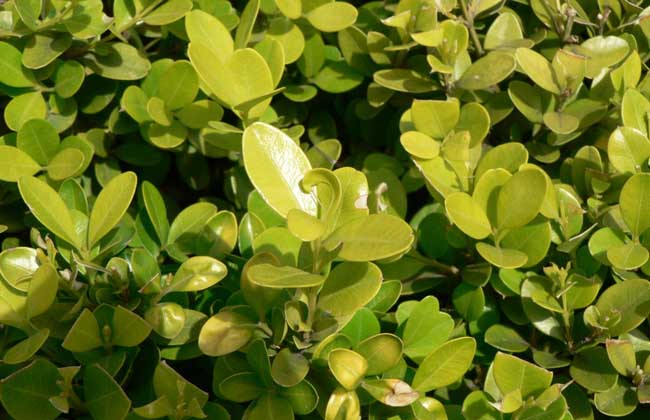
We often assume that bigleaf boxwood and littleleaf boxwood differ only in leaf size, but this understanding is actually wrong, because they do not even belong to the same plant family and genus. Littleleaf boxwood is a plant of the Buxaceae family, Buxus genus, while bigleaf boxwood is a plant of the Celastraceae family, Euonymus genus. Let us take a look below at exactly what differences they have!
Littleleaf boxwood and bigleaf boxwood belong to different families and genera
1. Littleleaf boxwood: Littleleaf boxwood is an evergreen shrub or small tree of the plant kingdom, Angiosperms, Dicotyledoneae, Archichlamydeae, Sapindales, Buxineae, Buxaceae, Buxus genus.
2. Bigleaf boxwood: Bigleaf boxwood is a shrub of the plant kingdom, Angiosperms, Dicotyledoneae, Archichlamydeae, Sapindales, Celastrineae, Celastraceae, Celastroideae, Euonymeae, Euonymus genus.
Littleleaf boxwood and bigleaf boxwood have different alternative names
1. Littleleaf boxwood: Littleleaf boxwood is also called guazi boxwood, and its main producing areas are Anhui, Zhejiang, Jiangxi and Hubei in China.
2. Bigleaf boxwood: Bigleaf boxwood is also called changye boxwood, dongqing weimao, zhengmu, fufangshu, sijijing, qilixiang, Japanese euonymus and so on, and it is cultivated in all provinces and regions of northern and southern China.
Littleleaf boxwood and bigleaf boxwood have different habits
1. Littleleaf boxwood: Littleleaf boxwood prefers fertile and moist soil, avoids acidic soil, has strong stress resistance, tolerates water and fertilizer, resists pollution, can absorb toxic gases such as sulfur dioxide in the air, and has many characteristics such as cold resistance, salt-alkali resistance and resistance to pests and diseases.
2. Bigleaf boxwood: Bigleaf boxwood is a heliophilous tree species, likes light and tolerates shade, requires a warm and humid climate and fertile soil, can adapt to acidic soil, neutral soil or slightly alkaline soil, has strong sprouting ability, strong adaptability, is relatively cold-resistant, tolerates drought and barrenness, and is extremely tolerant of pruning and shaping.
Morphological differences between littleleaf boxwood and bigleaf boxwood
1. Littleleaf boxwood: Littleleaf boxwood is a shrub, 2 m tall, with four-angled, smooth, dense stems and branches, small branch internodes 3~5 mm long, small leaves, opposite, leathery, elliptical or obovate, 1~2 cm long, apex rounded-obtuse, sometimes slightly concave, base cuneate, widest at the middle or above the middle, with short petioles, dark green on the surface, yellow-green on the back, pubescent on the surface, hairless on the back, glossy on both sides, flowers mostly clustered at the branch tips, pale yellow-green, without petals, fragrant.
2. Bigleaf boxwood: Littleleaf boxwood is a shrub, up to 3 m tall, with four-angled branchlets bearing fine wrinkles and protrusions, leathery, glossy leaves, obovate or elliptical, cymes with 5-12 flowers, inflorescence peduncles 2-5 cm long, branched 2-3 times, capsules nearly spherical, about 8 mm in diameter, pale red, seeds 1 per locule, terminal, elliptical, about 6 mm long, about 4 mm in diameter, aril orange-red, fully covering the seed, flowering period June-July, fruit ripening period September-October.
Differences in effects between littleleaf boxwood and bigleaf boxwood
1. Littleleaf boxwood: The medicinal parts of littleleaf boxwood are the roots, branches and leaves. It tastes bitter and is neutral in nature. It has the effects of dispelling wind-dampness, regulating qi and relieving pain, and clearing heat and detoxifying. It is used for symptoms such as wind-dampness arthralgia, toothache, distension and gas in the chest and abdomen, hernia pain, traumatic injuries, and heat boils.
2. Bigleaf boxwood: The medicinal part of bigleaf boxwood is the root. It tastes bitter and pungent and is warm in nature. It has the effect of regulating menstruation and relieving pain. It is used for symptoms such as irregular menstruation, dysmenorrhea, traumatic injuries, fractures, and painful strangury.
Well, that is where the editor will introduce the differences between littleleaf boxwood and bigleaf boxwood. Everyone should stop naively thinking that they differ only in leaf size. Of course, if placed together, they can also be distinguished simply by looking at the leaves. The leaves of bigleaf boxwood are about the size of a one-jiao coin (possibly a bit larger), while the leaves of littleleaf boxwood are about the same size as pumpkin seeds.