What is the difference between Huanglian (Coptis chinensis) and Yanhuanglian (Corydalis saxicola)? How to tell them apart
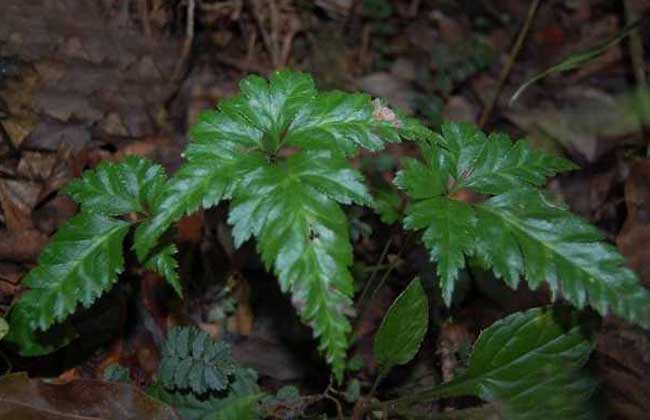
Huanglian, also known as Weilian, Chuanlian, Jizhualian, etc., is a perennial herb of the genus Coptis in the family Ranunculaceae. Yanhuanglian, also known as Yanhu, Yanlian, Juhua Huanglian, Tuhuanglian, Shisheng Huangjin, etc., is a perennial herb of the family Papaveraceae in the order Papaverales. Do you know what their differences are? Let's take a look below!
Huanglian and Yanhuanglian belong to different families and genera
1. Huanglian: Huanglian is a perennial herb of the plant kingdom, Angiosperms, Dicotyledons, Archichlamydeae, Ranunculales, Ranunculaceae, Thalictroideae, Coptideae, genus Coptis.
2. Yanhuanglian: Yanhuanglian is a perennial herb of the plant kingdom, Angiosperms, Dicotyledons, Archichlamydeae, Papaverales, Papaverineae, family Papaveraceae.
Huanglian and Yanhuanglian differ in morphology
1. Huanglian: The rhizome of Huanglian is yellow, often branched, densely covered with numerous fibrous roots. The leaves are basal, firm-papery, ovate-triangular, ternately parted; the central segment is ovate-rhombic, pinnately parted, with sharp serrations on the margin; the lateral segments are unequally 2-parted. The petiole is 5-12 cm long. It flowers in February-March and fruits in April-June.
2. Yanhuanglian: Yanhuanglian is 15-40 cm tall, with a well-developed main root. Stems 1-3, clustered, weak. Leaves have long petioles; the leaf blade outline is triangular-ovate, bipinnately parted. The raceme is terminal or opposite the leaves, 7-14 cm long; bracts are elliptic to lanceolate. The capsule is cylindrical, slightly curved; seeds are numerous, round, with a cup-shaped caruncle covering half the seed.
Differences in the effects of Huanglian and Yanhuanglian
1. Huanglian: Huanglian is cold in nature, bitter in taste, non-toxic, and enters the Heart, Liver, Spleen, Gallbladder, Stomach, and Large Intestine meridians. It has effects such as clearing heat and drying dampness, purging fire and detoxifying. It mainly treats damp-heat distention and fullness, vomiting with acid regurgitation, diarrhea and dysentery, jaundice, high fever with delirium, exuberant heart fire, restlessness and insomnia, blood-heat vomiting and epistaxis, red eyes, toothache, diabetes, carbuncles and sores, etc., and is used externally for eczema, damp sores, ear canal discharge, etc.
2. Yanhuanglian: Yanhuanglian is bitter in taste, cool in nature, and enters the Stomach and Large Intestine meridians. It has effects such as clearing heat, detoxifying, draining dampness, relieving pain, and stopping bleeding. It mainly treats hepatitis, mouth and tongue erosion, pink eye, eye film, dysentery, diarrhea, abdominal pain, hemorrhoid bleeding, etc.