What are the differences between turbot, flounder, sinistral flounder, and flatfish?
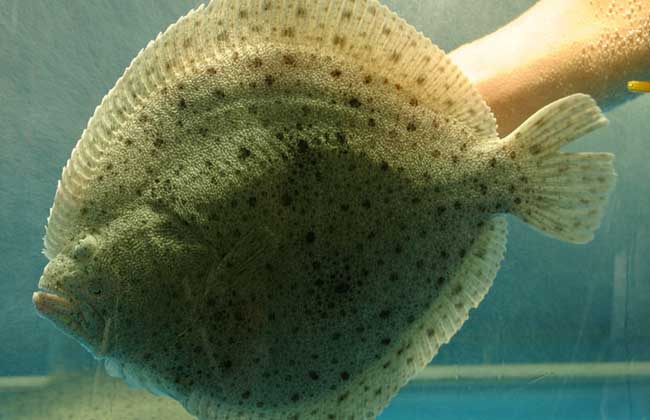
Flounder, also called plaice, is the collective name for fish of the order Pleuronectiformes in the class Osteichthyes. Turbot, flounder, and sinistral flounder are all types of flounder, and all have a subordinate relationship with flounder. Turbot, flounder, and sinistral flounder are all flounder, but the reverse is not true. Let us take a look below at their differences!
Turbot
Turbot is a fish of the genus Scophthalmus in the family Scophthalmidae, commonly known as the European flounder, and called turbot in China. In natural sea areas, adult fish can grow up to 75 cm. The body is very laterally compressed, appearing long oval, ovate, or long tongue-shaped. The eyes of young fish are on both sides of the body, while the body of adult fish is asymmetrical left and right. One eye gradually moves to the left or right, and both eyes are located on the left or right side of the head. The mouth is slightly protruding. The fins generally have no fin spines. The dorsal fin and anal fin have long bases, and may or may not be connected to the caudal fin. Both eyes are on the upward-facing side of the body, and the color of this side blends very well with the surrounding environment. The downward-facing side of the body is white. The body surface has extremely fine, dense scales.
Flounder
Flounder, also called plaice, is the collective name for fish of the order Pleuronectiformes in the class Osteichthyes. The body is very laterally compressed, appearing long oval, ovate, or long tongue-shaped, with a maximum body length of up to 5 m. The body of adult fish is asymmetrical left and right, with both eyes located on the left or right side of the head. The mouth is slightly protruding. The fins generally have no fin spines. The dorsal fin and anal fin have long bases, and may or may not be connected to the caudal fin. It is widely distributed in the warm and hot seas of the major oceans, mainly feeding on benthic invertebrates and fish.
Sinistral flounder
Sinistral flounder is a fish of the family Bothidae. It inhabits the sandy seabed of shallow seas and preys on small fish and shrimp. Fresh sinistral flounder has a brown body, and the color of its markings changes with the environment. Sinistral flounder dies as soon as it leaves the water and cannot be kept alive. It needs to live in temperate waters and is an important commercial fish in temperate sea areas.
Flatfish
Flatfish, also called high-eye flounder, has an elongated oval body, is laterally compressed, and has a narrow and long caudal peduncle. Both eyes are located on the right side of the head, with the upper eye located on the midline of the upper margin of the head. The mouth is large, anterior, and symmetrical left and right. The eyed side is mostly covered with weak ctenoid scales, sometimes mixed with cycloid scales, while the blind side is covered with cycloid scales. The lateral line is almost straight. The dorsal fin begins on the blind side. The pectoral fin on the eyed side is relatively long. The caudal fin is truncate. Most are generally about 20 cm in length and about 200 g in weight.