What is the difference between the tea plant, tea plant flowers, camellia flowers, and scented tea
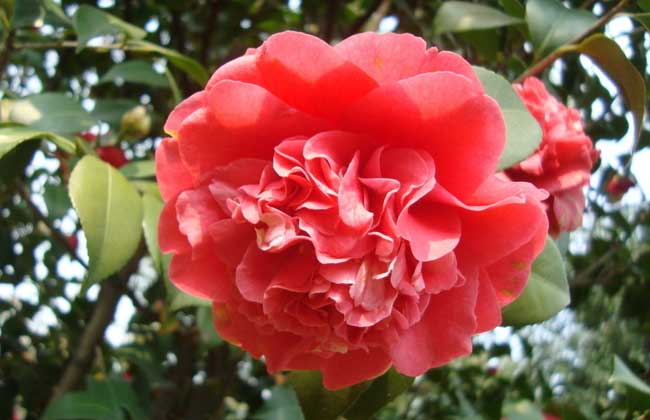
Many people think that camellia flowers are the flowers blooming on the tea plant, but that is actually incorrect. Tea plant flowers are the flowers that bloom on the tea plant. Specifically, camellia flowers and the tea plant should be two varieties of plants in the genus Camellia. So here comes the question: what about scented tea and camellia flowers? Scented tea is a general term for a type of reprocessed tea, such as jasmine scented tea. Below, let us take a look at the differences between the tea plant, tea plant flowers, camellia flowers, and scented tea!
Tea plant
The tea plant is a shrub or small tree in the family Theaceae and genus Camellia. Its young branches are hairless, and its leaves are leathery, oblong or elliptical. The leaves can be used to make tea (different from the oil tea plant), and the seeds can be pressed for oil. The tea plant's wood is fine and dense, and its wood can be used for carving. Its flowering period is from August to December, and its fruiting period is from October to November of the following year.
Tea plant flowers
Tea plant flowers have long remained obscure, and are even regarded as the "nemesis" of the tea plant, because when the flower buds grow and develop they must absorb nutrients from the tea plant, affecting the yield and quality of tea leaves. Every winter, many tea farmers want to "eliminate" them. More than 90% of them consist of substances beneficial to the human body, such as tea polyphenols, amino acids, tea polysaccharides, proteins, and saponins, and they have effects such as detoxification, lowering blood lipids, lowering blood sugar, anti-aging, anti-cancer, cancer suppression, nourishing the body, strengthening the body, nourishing the complexion, and beautifying the appearance.
Camellia flower
Camellia flower, also known as camellia, is a plant in the family Theaceae and genus Camellia. Because its plant form is elegant, its leaves are dark green and glossy, and its flowers are gorgeous and colorful, it is treasured by the world's horticultural circles. It has extremely many varieties and is a traditional ornamental flower in China, ranking eighth among the "Ten Famous Flowers." It is also one of the world's precious flowers and trees. It originated in eastern China and is widely cultivated in the Yangtze River basin, the Pearl River basin, and various places in Yunnan, as well as in Korea, Japan, Taiwan, China, and India.
Scented tea
Scented tea, also known as fragrant slices, is tea made by steeping the flowers, leaves, or fruits of plants. It is a type of reprocessed tea unique to China. It makes use of tea's ability to absorb unusual aromas by sealing fragrant fresh flowers together with new tea; after the tea absorbs the fragrance, the dried flowers are sifted out. The finished scented tea has a rich fragrance and a deep tea liquor color. It can be subdivided into herbal tea and fruit tea. It is mainly made by using green tea, black tea, or oolong tea as the tea base, matching it with fresh flowers that can release fragrance as raw materials, and using the scenting process. According to the different varieties of fragrant flowers used, it is divided into jasmine scented tea, magnolia scented tea, osmanthus scented tea, zhulan scented tea, and so on, among which jasmine scented tea has the largest output.