What are the differences between tsaoko and poppy? Learn to tell them apart at a glance
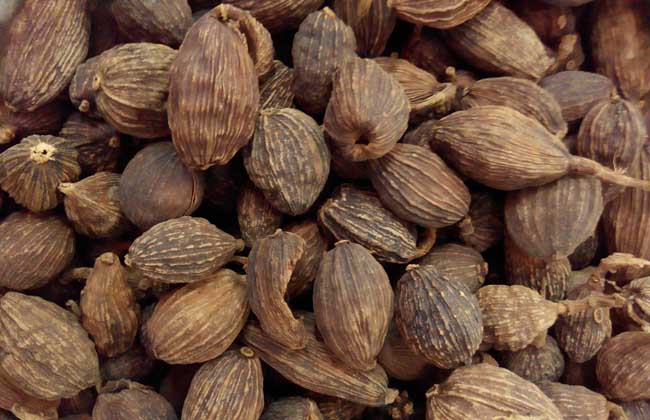
Tsaoko is the fruit of Amomum tsaoko, a plant in the ginger family (Zingiberaceae), genus Amomum, also known as tsaoko kernel or tsaoko fruit. Poppy is the general name for nearly 180 species of plants in the genus Papaver. The fruits of tsaoko and poppy are similar in appearance, and both can add fragrance. Let us take a look at their differences below!
Tsaoko and poppy belong to different families and genera
1. Tsaoko: Tsaoko is the fruit of a plant in the kingdom Plantae, phylum Angiosperms, class Monocotyledons, order Zingiberales, family Zingiberaceae, genus Amomum.
2. Poppy: Poppy is the fruit of a plant in the kingdom Plantae, phylum Angiosperms, class Dicotyledons, subclass Ranunculidae, order Papaverales, family Papaveraceae, genus Papaver.
Plant differences between tsaoko and poppy
1. Tsaoko: Tsaoko is a perennial herbaceous plant, 200-250 cm tall, with a pungent smell throughout the plant. The stem is divided into an upright stem and a rhizome. It has 12-16 leaves arranged in 2 rows, with short petioles or no petioles. The leaf blades are oblong-elliptic or narrowly oblong, about 55 cm long and up to 20 cm wide. The spike inflorescence grows from the rhizome and is spherical, with 60-120 flowers per spike. The capsule does not split open. The fruit is rich in fiber and hard in texture after drying. The fruit shape is spindle-shaped, ovoid or nearly spherical. The flowering period is April to June, and the fruiting period is September to December.
2. Poppy: Poppy is an annual herbaceous plant, with stems 30-80 cm tall, branched, and covered with spreading bristles. The leaves are alternate and pinnately deeply lobed, with lobes lanceolate or linear-lanceolate, and bristles on both sides. The flower buds are ovoid, with long pedicels, nodding before opening. The sepals are green and fall off after the flower opens. There are 4 petals, purple-red, often with dark purple blotches at the base, broadly obovate or nearly round. The anthers are yellow. The pistil is obovoid, and the stigma is radiate. The flowering and fruiting period is March to November.
Appearance differences between tsaoko and poppy
1. Tsaoko: Tsaoko is a non-splitting capsule, about the size of a chestnut, oblong, brown, with ridge lines on the shell. The shell's veins are relatively obvious, and the whole fruit is fairly "wrinkled", containing 20-66 seeds. The seeds are polygonal, about 0.4-0.7 cm long and about 0.3-0.5 cm wide. Each seed grain is wrapped in a white spongy membrane. The kernel is white and has a rich, fresh, pungent aroma.
2. Poppy: About the size of a chestnut, oblong, brown, with ridge lines on the shell, and a disc-shaped remnant stigma at the top. The ridge lines are smooth overall. There are many seeds, black or dark gray, with a honeycomb-like surface.
Differences in effects between tsaoko and poppy
1. Tsaoko: Tsaoko is pungent in taste, warm in nature, and non-toxic. It enters the spleen and stomach meridians and has the effects of drying dampness and dispelling cold, eliminating phlegm and treating malaria, strengthening the spleen and improving appetite, and promoting diuresis and reducing swelling. It mainly treats malaria, phlegm-fluid retention with fullness and distention, cold pain in the epigastrium and abdomen, nausea, vomiting, diarrhea and dysentery, food accumulation, and other conditions.
2. Poppy: Poppy is sour and astringent in taste and cold in nature. It enters the lung, kidney, and large intestine meridians and has the effects of astringing the lungs, astringing the intestines, securing the kidneys, and relieving pain. It mainly treats chronic cough and consumptive cough, panting, diarrhea, dysentery, rectal prolapse, spermatorrhea, leukorrhea, and pain in the heart, abdomen, and sinews, among other conditions.