What is the difference between Caoguo and Caodoukou? A quick guide to telling the two apart
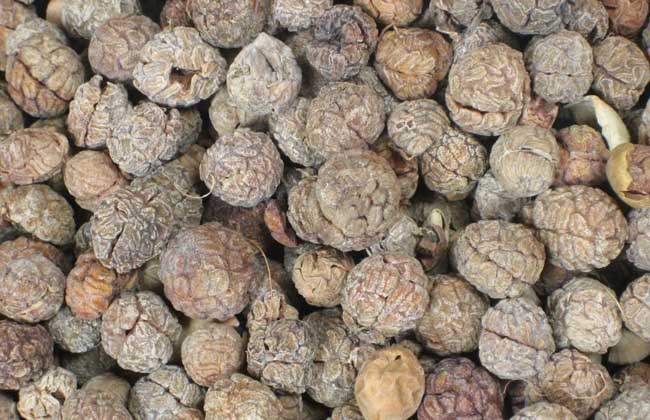
Caoguo is the fruit of Amomum tsaoko, a plant in the ginger family (Zingiberaceae) and the genus Amomum, also known as Caoguoren and Caoguizi. Caodoukou is the dried nearly mature seed of the ginger family plant Alpinia katsumadai. The Caoguo sold on the market is not a pure product and is often mixed with Caodoukou, which has a similar name and a fairly similar appearance. Let us take a look at their differences below!
Morphological characteristics of Caoguo
Caoguo is the fruit of the ginger family plant Amomum tsaoko, also known as Caoguoren and Caoguizi. The dried fruit is long-elliptical, 2 cm to 4 cm long and 1 cm to 2.5 cm in diameter, with a residual style base at the tip and a fruit stalk attached at the base. The surface is grayish white to reddish brown, with prominent longitudinal grooves and ridges. The fruit stalk is thick and tough and tears easily lengthwise. The seed mass divides into 3 segments, with a yellow-brown septum between the segments, and each segment contains 8 to 11 seeds. The seeds are conical polyhedra with a reddish brown surface, covered with a grayish white membranous aril, and have a hollow (the hilum) at the narrower end. The seeds are hard in texture and grayish white inside when broken open. The odor is faint, and a peculiar foul odor is released when the seeds are crushed; the taste is pungent and slightly bitter.
Morphological characteristics of Caodoukou
Caodoukou is the seed mass of the ginger family plant Alpinia katsumadai, also known as Doukou and Caokou. The dried seed mass is nearly spherical, 1.5 cm to 3.0 cm long and 1.5 cm to 2.7 cm in diameter, with a grayish brown surface. The seed mass divides into 3 segments, with a white septum between the segments, and each segment contains 22 to 100 seeds. The seeds are oval polyhedra covered with a layer of white transparent aril. The hilum of the seed is located on the dorsal side, and the raphe is a longitudinal groove. The seeds are hard in texture and grayish white inside when broken open, with a fragrant odor and a pungent taste.
The difference between Caoguo and Caodoukou
1. Difference in surface color: Caoguo is grayish brown to reddish brown, while Caodoukou is grayish yellow to grayish brown.
2. Difference in seed traits: for Caoguo seeds, the septum between the seed mass segments is yellow-brown in color, each segment contains 8 to 11 seeds, and there is a peculiar foul odor. For Caodoukou seeds, the septum between the seed mass segments is white in color, each segment contains 22 to 100 seeds, and the odor is fragrant.
3. Difference in nature, flavor and meridian entry: Caoguo is pungent in flavor, warm in nature and non-toxic, and enters the spleen and stomach meridians. Caodoukou is pungent in flavor and warm in nature, and enters the spleen and stomach meridians.
4. Difference in effects and actions: Caoguo has the effects of drying dampness and dispelling cold, resolving phlegm and treating malaria, strengthening the spleen and opening the appetite, and promoting diuresis and reducing swelling. Caodoukou, by contrast, has the effects of drying dampness and moving qi, and warming the middle and stopping vomiting.