What is the difference between mulberry silk and tasar silk
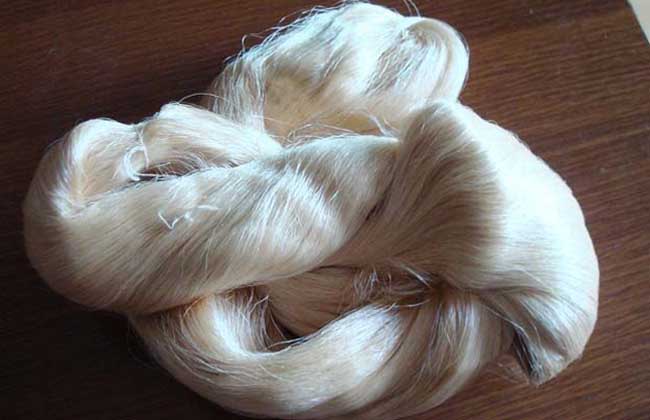
Mulberry silk and tasar silk are both silk; their formation and production methods are roughly the same. The differences are mainly caused by different places of origin and different silkworm varieties. Mulberry silk is made from mulberry silkworm cocoons, while tasar silk is made from tasar silkworm cocoons. Let us now look at the differences between mulberry silk and tasar silk and their distribution by place of origin.
Distribution of mulberry silk by place of origin
What is usually called mulberry silk is the silk drawn from the cocoons of cultivated silkworms raised on planted mulberry trees. This kind of silk is white with a slight yellow tint, feels delicate and smooth, and has a faint odor unique to animal fibers. Quilts made from mulberry silk are especially soft and cling closely to the body, and silk quilts made by hand layering are more durable.
Mulberry silk is mainly produced in East China and Southwest China, with northern Sichuan as a major production area. Among these, the relevant titles include: “Home of Silk” —— Hangzhou, “Silk Quilt Production Base” —— Tongxiang, Jiaxing, Zhejiang, China's Hometown of Cocoon Silk (the only one) —— Hai'an, Jiangsu, China's Cocoon Capital —— Fu'an, Dongtai, Jiangsu, “Hometown of Silk Quilts” —— Zhenze, Wujiang, Jiangsu and Baoning Prefecture, Sichuan, and East Silk Moves West project bases —— Ankang, Pingli, Ningshan, Xunyang, Shiquan and other places in Shaanxi,
“Hometown of Mulberry Silk —— Santai, Sichuan.
Distribution of tasar silk by place of origin
Tasar silk is drawn from tasar silkworm cocoons. The tasar silkworm, commonly known as the wild silkworm, mainly lives in northern regions. It is released and raised by people in oak forests in the wild and feeds on oak leaves.
Tasar silk is mainly produced in Henan, as well as in Liaoning, Shandong and other places in the north. Liaoning is the main production area for tasar silk quilts. Nanzhao County in Henan has been named China's “Hometown of Tasar Silkworms” and has passed the General Administration of Quality Supervision, Inspection and Quarantine's origin registration certification for “univoltine tasar silkworms.”
The cocoon colors of mulberry silkworms and tasar silkworms are different
Mulberry silkworms feed on mulberry leaves and are domesticated silkworms, belonging to insects of the family Bombycidae in the order Lepidoptera, while tasar silkworms mainly eat oak leaves and their rearing method is also closer to that of wild silkworms, belonging to insects of the family Saturniidae in the order Lepidoptera. Strictly speaking, they are two kinds of insects. Since the two originally do not belong to the same family or species, the silk cocoons they spin differ greatly. The cocoons spun by mulberry silkworms are mostly crystal-clear white, while tasar silkworm cocoons are mostly dark brown or grayish blue-green.
The processing methods for mulberry silk and tasar silk are different
Mulberry silk is naturally white, so when making silk quilts, no chemical bleaching process is needed at all. Therefore, a truly genuine, pure natural silk quilt must use mulberry silkworm cocoons as the raw material, and as the only raw material. Tasar silk (cocoons) are different. If made directly into quilts without processing, consumers usually find it hard to accept either the color or the feel. In order to make the feel and color closer to “mulberry silk,” merchants often use methods such as adding “fluorescent whitening agents” to fade and chemically bleach it, and fluorescent agents have been proven by modern science to have carcinogenic effects on the human body and harm health. For any bedding, safety and health are certainly the primary factors. Therefore, when merchants clearly inform them, the vast majority of customers would rather spend a bit more money to buy mulberry silk quilts, for a bit more peace of mind and a sense of security.
The luster of mulberry silk and tasar silk is different
Mulberry silk is naturally milky white. If you look carefully, you will also notice a faint green or yellow tint, and the overall luster is bright. Bleached tasar silk is also white, but it is a pale, lifeless white, like A4 paper: white in a very regular way, white in a very methodical way, yet white without any vitality.
The diameter of mulberry silk and tasar silk is different
The toughness and length of the fiber determine how the fiber will later be processed into a quilt. At present, there are two methods: handmade and machine-made. Mulberry silk is a long fiber, comparable to a highly elastic rubber band, with superior elasticity and toughness; it will not break even when stretched 10 times, and a small cocoon's silk floss, even when pulled to the area of an entire quilt, will not break or snap. Therefore, it is more suitable for hand-drawn silk quilts. Tasar silk fiber is shorter and has poorer elasticity and toughness, so “machine-made silk floss quilts” mostly use tasar silk.