How to tell mint and agastache apart? A quick guide to distinguishing the two
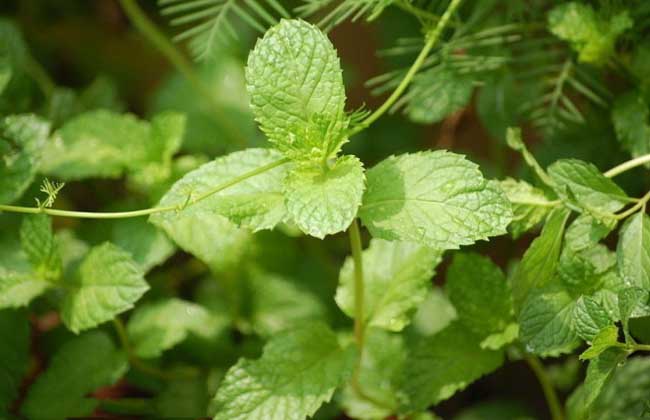
Mint, commonly known as yindancao, is a perennial herb in the Lamiaceae family and an aromatic crop of special economic value. Agastache is also a perennial herb in the Lamiaceae family, with effects of transforming turbidity with its aroma, harmonizing the middle and stopping vomiting, and releasing the exterior and relieving summer-heat. Do you know the differences between mint and agastache? Let's take a look together below!
Mint and agastache belong to different genera
1. Mint: Mint is a perennial herb in the plant kingdom, Angiosperms, Dicotyledoneae, Sympetalae, Tubiflorae, Lamiaceae, Lamioideae, Mentheae, genus Mentha.
2. Agastache: Agastache is a perennial herb in the plant kingdom, Angiosperms, Dicotyledoneae, Sympetalae, Tubiflorae, Lamiaceae, Lamioideae, Nepeteae, genus Agastache.
Differences between the stems and leaves of mint and agastache
1. Mint: The stem is erect, 30-60 cm tall, with several lower nodes bearing slender fibrous roots and horizontal creeping rhizomes, sharply four-angled, with four grooves, the upper part covered with recurved puberulent hairs, the lower part puberulent only along the angles, much branched. The leaf blade is oblong-lanceolate, 3-5 cm long, 0.8-3 cm wide, apex acute, base cuneate to nearly rounded, petiole 2-10 mm long, concave above and convex below, puberulent.
2. Agastache: The stem is erect, 50-150 m tall, four-angled, up to 7-8 mm thick, the upper part covered with extremely short fine hairs, the lower part hairless, with fertile branches in the upper part. The leaves are cordate-ovate to oblong-lanceolate, 4.5-11 cm long, 3-6.5 cm wide, gradually smaller upward, apex caudate-long-acuminate, petiole 1.5-3.5 cm long.
Differences between the flowers and fruits of mint and agastache
1. Mint: The flowers of mint are small and pale purple, labiate; after flowering they form small dark purple-brown seed-like fruits with small glandular pits. The flowering period is July-September, and the fruiting period is October.
2. Agastache: The corolla of agastache is pale purple-blue, about 8 mm long; the mature nutlets are ovoid-oblong, about 1.8 mm long and about 1.1 mm wide. The flowering period is June-September, and the fruiting period is September-November.
Mint and agastache have different medicinal effects
1. Mint: Mint is pungent in flavor and cool in nature, entering the Lung and Liver meridians. It has effects such as dispersing wind-heat, clearing and soothing the throat, promoting eruption and resolving toxins, soothing the liver and relieving depression, and relieving itching. It is suitable for conditions such as cold with fever, headache, sore and swollen throat, absence of sweating, red eyes due to wind-fire, rubella, itchy skin, hernia pain, dysentery, and scrofula. When used externally, it has a mild analgesic effect and is used for neuralgia and so on.
2. Agastache: Agastache is pungent in flavor and slightly warm in nature, entering the Spleen, Stomach, and Lung meridians. It has effects of transforming dampness, relieving summer-heat, and stopping vomiting. It is suitable for conditions such as dampness obstructing the middle jiao, distension and oppression in the epigastrium and abdomen, nausea and poor appetite, summer-heat dampness, damp-warmth, and vomiting due to rebellious stomach qi.