What is the difference between white magnolia and white champaca? A quick guide to tell them apart
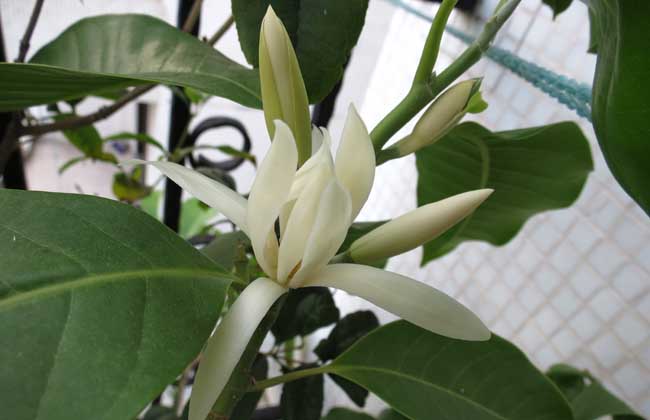
White magnolia is a variety of magnolia that bears white flowers, while white champaca is an evergreen tree in the genus Michelia of the family Magnoliaceae. Their names are very similar, and many people simply assume they are the same flower. In fact, white magnolia and white champaca are different. Let us take a look below at exactly how white magnolia and white champaca differ!
White magnolia and white champaca belong to different families and genera
1. White magnolia: Plantae, Angiosperms, Dicotyledoneae, Magnoliales, Magnoliaceae, Magnolia, subgenus Yulania.
2. White champaca: Plantae, Angiosperms, Dicotyledoneae, Archichlamydeae, Ranunculales, Magnoliaceae, Magnolieae, Michelia.
The difference in flowering period between white magnolia and white champaca
1. White magnolia: white magnolia blooms in March, flowering once a year, with flowers appearing before the leaves, and the flowers are pale white.
2. White champaca: white champaca generally blooms twice, the first time in summer and the second time in autumn. There are more flowers in summer, and the flower color is generally creamy white.
White magnolia and white champaca have different habits
1. White magnolia: white magnolia is suitable for growing in a warm and humid climate and in fertile, loose soil. It likes light and is tolerant of neither drought nor waterlogging. Its roots die after being submerged for 2-3 days. It is relatively sensitive to toxic gases such as sulfur dioxide and chlorine and has poor resistance.
2. White champaca: white champaca likes light, fears high temperatures, and is not cold-tolerant. It is suitable for slightly acidic soil, likes warmth and humidity, and is not tolerant of drought or waterlogging. It is relatively sensitive to toxic gases such as sulfur dioxide and chlorine and has poor resistance.
The difference in characteristics between white magnolia and white champaca
1. White magnolia: white magnolia flowers open before the leaves, are terminal and large, with a diameter of 12-15 cm. The perianth has 9 segments and is bell-shaped, radially symmetrical, with a rose-like corolla, distinct stamens, apocarpous pistils, and a superior ovary.
2. White champaca: white champaca is white and extremely fragrant. The perianth segments number 10 and are lanceolate, 3-4 cm long and 3-5 mm wide. The connective of the stamens extends into a long pointed tip. The gynoecium is covered with fine pubescence, and the gynophore is about 4 mm long. There are many carpels, usually some of which do not develop. At maturity, as the receptacle extends, they form an aggregate fruit of loosely arranged follicles, and the follicles are bright red when ripe.
White magnolia and white champaca have different medicinal effects
1. White magnolia: white magnolia is pungent in taste and warm in nature. It has the effects of dispelling wind and dispersing cold, unblocking the orifices, and ventilating the lungs and nose. It can be used for symptoms such as headache, blood-stasis-type dysmenorrhea, nasal congestion, acute and chronic sinusitis, and allergic rhinitis.
2. White champaca: white champaca is bitter and pungent in taste and slightly warm in nature. It has the effects of warming the lungs and stopping cough and resolving turbidity. It is mainly used for chronic bronchitis, prostatitis, white turbidity, and leukorrhea in women.