What is the difference between ginkgo nuts and pistachios?
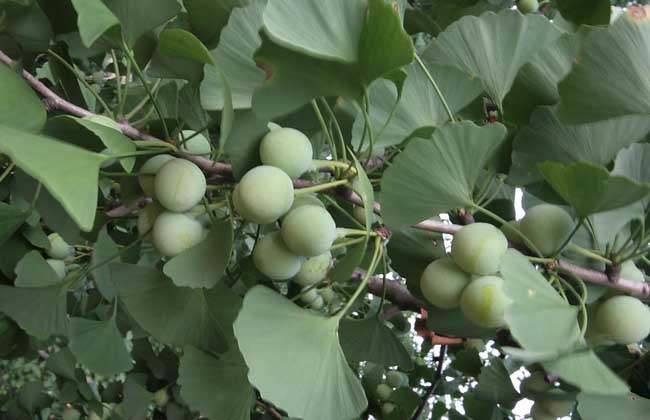
Pistachios and ginkgo nuts are two completely different fruits, but their appearance is very similar, so people who have never eaten ginkgo nuts often confuse them. Ginkgo nuts are the seed kernels of the ginkgo tree, while pistachios are also known as "wu ming zi" and resemble ginkgo nuts, but they split open with a crack and differ from ginkgo nuts. Let's take a look at how they differ!
Ginkgo nuts and pistachios belong to different families and genera
1. Pistachio: Plantae, Angiosperms, Dicotyledons, Sapindales, Anacardiaceae, Pistacia, pistachio species.
2. Ginkgo nut: Plantae, Spermatophyta, Gymnospermae, Ginkgopsida, Ginkgoales, Ginkgoaceae, Ginkgo, ginkgo species.
Differences in appearance between ginkgo nuts and pistachios
1. Pistachio: The fruit of the pistachio is oval or broadly oval, slightly flattened, 1.3-2.2 cm long and about 1 cm wide, brownish-yellow to purplish-red, pointed at the tip, truncate at the base, with residual fruit stalk marks, and the surface has longitudinally slightly twisted ridge stripes and intermittent dot-like protrusions. The pericarp splits easily. The nut is 1.2-2 cm long, oval or elliptical, pointed at the tip, smooth, grayish-white, with a hard shell about 1 mm thick. The seed coat is grayish-brown or purplish-red, and the hilum at the base is rectangular and scar-like, about 3 mm long. The interior is green to pale green, with a slight odor and a mildly sweet fragrance.
2. Ginkgo nut: The ginkgo nut is elliptical, 1.5-2.5 cm long, 1-2 cm wide and about 1 cm thick. Its surface is yellowish-white or pale yellowish-brown, smooth and hard, slightly pointed at one end and blunt at the other, with 2-3 ridge lines along the edge. The mesosperm (shell) is hard, and the endosperm membrane is membranous. One end is pale brown and the other end is golden yellow. The seed kernel is farinaceous, with a small core in the middle, and tastes sweet and slightly bitter.
Nutritional differences between ginkgo nuts and pistachios
1. Pistachio: Every 100 grams of pistachio kernels contain 20 micrograms of vitamin A, 59 micrograms of folic acid, 3 mg of iron, 440 mg of phosphorus, 970 mg of potassium, 270 mg of sodium, and 120 mg of calcium, and also contain niacin, pantothenic acid, minerals, and more. The oil content of the kernel is as high as 45.1%.
2. Ginkgo nut: Every 100 grams of ginkgo nut kernels contain 355 kcal of calories, 72.6 g of carbohydrates, 54 mg of calcium, 24.7 mg of vitamin E, 23 mg of phosphorus, 17.5 mg of sodium, 17 mg of potassium, 14.5 micrograms of selenium, 13.2 g of protein, 2.03 mg of manganese, 1.3 g of fat, 0.69 mg of zinc, 0.45 mg of copper, and 0.2 mg of iron.
Differences in effects between ginkgo nuts and pistachios
1. Pistachio: Pistachios are warm in nature and pungent and astringent in taste. They have the effects of warming the kidneys and spleen, tonifying deficiency and damage, and regulating the middle burner and smoothing qi. They can treat neurasthenia, edema, anemia, malnutrition, chronic diarrhea and dysentery, and other conditions.
2. Ginkgo nut: Ginkgo nuts are warm in nature and sweet in taste, slightly bitter and astringent, and slightly toxic. They have the effects of warming the lungs and benefiting qi, relieving asthma and cough, reducing urination, stopping abnormal vaginal discharge, stopping diarrhea, and benefiting the spleen.