Use these 4 kinds of household wastewater to grow flowers, and Aunt Zhang's flowers get more and more beautiful
More and more people are growing flowers. Whether it's flowering plants like clivias, wax begonias, and anthuriums, or foliage plants like money trees, pothos, and spider plants, every home can always use a bit of color and greenery. Growing flowers isn't just about ornamental value; more importantly, it adds fun to life. This is probably the life many people long for most: when there's nothing to do, grow some flowers, read a book, go fishing. In fact, as an indispensable part of life, growing flowers is also a branch of knowledge.
Those who grow them well have beautiful blooms, while those who don't either get yellow leaves, withered plants, or no flowers at all. But life is never short of people who are good at discovering things and good at growing flowers. For example, the several kinds of household "wastewater" shared below can actually be used to water flowers, and the flowers may even become more and more beautiful because of it!
1. Use vegetable-washing water to water flowers
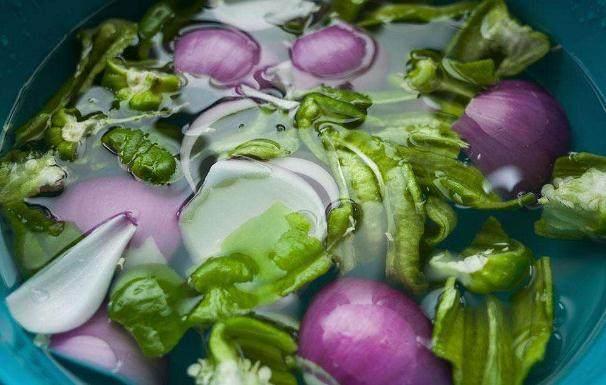
Three meals a day, and you always wash quite a few vegetables every day, right? For gardening friends who grow flowers, vegetable-washing water is a treasure. This kind of water mostly contains the essence of vegetables, as well as some leftover leaves. Using it to water flowers lets the nutrients and trace elements inside be quickly absorbed by the roots of plants and flowers. Quite a few gardening friends left me messages a few days ago saying they had been watering flowers with vegetable-washing water for more than five or six years, saving water while also growing beautiful potted flowers. Isn't that killing two birds with one stone?
2. Use expired milk to water flowers
Milk only stays fresh for a few days, and once that time passes without being finished, it expires. In the past, many people just poured expired milk straight down the drain. Little did they know that expired milk is rich in calcium, iron, and various other trace elements. Research has found that when plants lack trace elements, they are most prone to shriveled roots, making it impossible to obtain nutrients from the soil, which then leads to yellow leaves. But when using expired milk to water flowers, be sure to remember to dilute it first. Or you can first pour a small amount of milk into the flower pot, then add some water.
3. Use water that has soaked soybeans to water flowers
As a common kind of household "wastewater," the water left over from soaking soybeans is also often poured straight down the drain by many people. But because the soybeans have been soaked for a long time, the water becomes rich in soybean isoflavone micro-substances. This component helps flower leaves become brighter and plant roots and stems thicker. Therefore, water that has soaked soybeans is quite suitable for watering flowers. Besides soybeans, water that has soaked peanuts, red beans, and corn kernels can all be used to grow flowers. Over time, you'll find that the flowering period of the flowers you grow begins to lengthen.
4. Use rice-washing water to water flowers
The reason rice-washing water is used to water flowers is simple: after fermentation, rice-washing water becomes slightly acidic, which can effectively regulate the pH of the soil, letting acid-loving plants such as clivias, Chinese roses, gardenias, and spider plants grow better. In addition, rice-washing water also contains quite a few trace substances. Over the long term, basically more than ninety percent of gardening friends have watered flowers with rice-washing water, and the general feedback is that the effect is decent. This is actually a kind of thrifty behavior too. Reusing waste can also add a lot of fun to life.
That's all for the knowledge about using household "wastewater" to grow and water flowers. In fact, there are still many little tricks in life that can be used to grow flowers. I hope the gardening friends who see this article can grow their flowers even more beautifully. If you have other tips for caring for flowers and plants, you can mention them in the comments below, so more gardening friends can learn your methods!
Remember to like and share~