What is the difference between ginseng, codonopsis, American ginseng and prince ginseng?
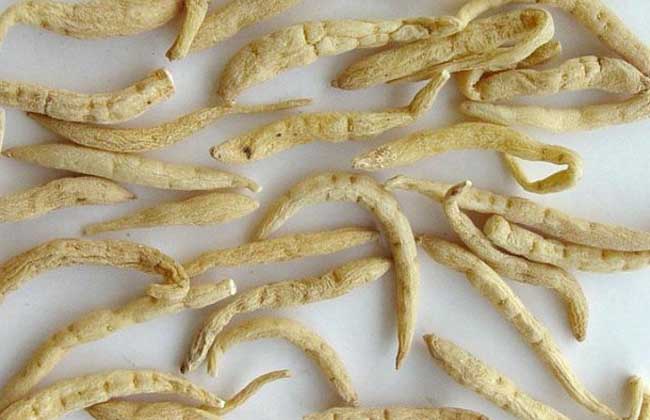
Ginseng, codonopsis, American ginseng and prince ginseng all belong to the qi-tonifying medicines and all have the effect of tonifying qi and promoting fluid production, but in practical application there are still many differences. Ginseng, codonopsis and prince ginseng can all be used to treat spleen and lung qi deficiency. Ginseng has a strong qi-tonifying power and also has the effect of calming the mind and improving intelligence. Codonopsis can tonify both qi and blood. Prince ginseng can also tonify the yin of the spleen and lung. American ginseng is mainly used for lung qi deficiency and lung yin deficiency patterns, and also has the effect of clearing heat.
Prince ginseng
Prince ginseng is the dried tuberous root of Pseudostellaria heterophylla of the carnation family. It has the effects of tonifying qi and strengthening the spleen, promoting fluid production and moistening the lungs. It is often used for spleen deficiency with bodily fatigue, poor appetite, weakness after illness, deficiency of qi and yin, spontaneous sweating and thirst, and dry cough due to lung dryness. It is distributed in Liaoning, Inner Mongolia, Hebei, Shaanxi, Shandong, Jiangsu, Anhui, Zhejiang, Jiangxi, Henan, Hubei, Hunan, Sichuan and other places.
Ginseng
Ginseng is a perennial herbaceous plant. Its fleshy root is a famous tonic. It is suitable for regulating blood pressure, restoring heart function, neurasthenia and physical weakness and other conditions, and also has effects such as expelling phlegm, strengthening the stomach, diuresis and stimulation. It is distributed in eastern Liaoning, the eastern half of Jilin and eastern Heilongjiang, and has been introduced for cultivation in Hebei, Shanxi and Shandong. It is also widely cultivated in the Soviet Union, Korea and Japan.
Codonopsis
Codonopsis is the dried root of Codonopsis pilosula, Codonopsis pilosula var. modesta, or Codonopsis tangshen and others of the bellflower family. It tonifies the middle and boosts qi, quenches thirst, strengthens the spleen and benefits the lungs, nourishes blood and promotes fluid production. It is used for spleen and lung qi deficiency, poor appetite and fatigue, cough and asthmatic deficiency, qi and blood insufficiency, sallow complexion, palpitations and shortness of breath, fluid damage and thirst, and internal heat with wasting-thirst. It is mostly produced in southeastern Tibet, western Sichuan, northwestern Yunnan, eastern and southern Gansu, southern Shaanxi, Guizhou, Ningxia, eastern Qinghai, Henan, Shandong, Shanxi, Hebei, Inner Mongolia and the Northeast and other regions of China. It is also found in Korea, Mongolia and the Far East region of the Soviet Union. There is large-scale cultivation throughout the country.
American ginseng
American ginseng is a perennial herbaceous plant of the genus Panax in the Araliaceae family. It tonifies qi and nourishes yin, clears heat and promotes fluid production. It is used for qi deficiency and yin depletion, internal heat, cough and asthma with blood-streaked phlegm, deficiency heat with restlessness and fatigue, wasting-thirst, and dry mouth and throat. It is native to Greater Quebec in Canada and Wisconsin in the United States, and is also cultivated in Huairou in Beijing, Changbai Mountain and other places in China. The Canadian-produced one is called American ginseng, and the United States-produced one is called huaqishen.
The differences between ginseng, codonopsis, American ginseng and prince ginseng
Category Prince ginseng Ginseng Codonopsis American ginseng Nature and flavor Sweet, slightly bitter, neutral in nature Sweet, slightly bitter, warm and neutral in nature Sweet, neutral in nature Sweet, slightly bitter, cool in nature Meridian tropism Spleen and lung meridians Spleen, lung and heart meridians Spleen and lung meridians Heart, lung and kidney meridians Effects Tonify qi, strengthen the spleen, promote fluid production, moisten the lungs Tonify qi, prevent collapse, promote fluid production, calm the mind, improve intelligence Tonify the middle, boost qi, promote fluid production Tonify qi, nourish yin, clear heat, promote fluid production Indications Spleen deficiency with bodily fatigue, poor appetite, weakness after illness, deficiency of qi and yin, spontaneous sweating and thirst, dry cough due to lung dryness Body deficiency with impending collapse, cold limbs and faint pulse, spleen deficiency with poor appetite, lung deficiency with cough and asthma, fluid damage and thirst, internal heat with wasting-thirst, chronic illness with extreme emaciation, palpitations and insomnia, impotence and cold uterus, heart failure, cardiogenic shock Weak spleen and stomach, deficiency of both qi and blood, bodily fatigue and weakness, poor appetite, thirst, chronic diarrhea, rectal prolapse Qi deficiency and yin depletion, internal heat, cough and asthma with blood-streaked phlegm, deficiency heat with restlessness and fatigue, wasting-thirst, dry mouth and throat Dosage 9-30 g 5-10 g 9-30 g 3-6 g