What is the difference between raw licorice and honey-fried licorice?
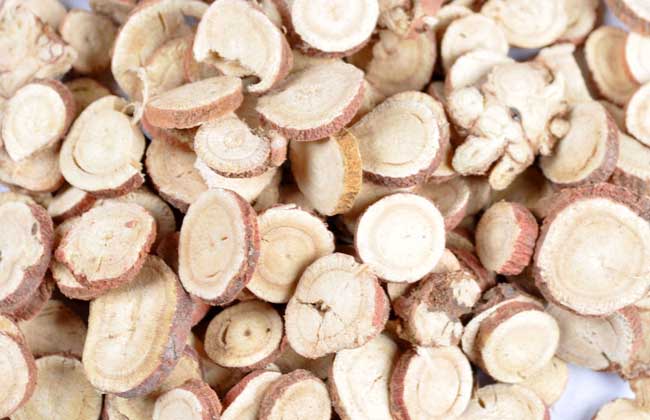
Licorice is known as the "national elder" among herbs, and enjoys the fine reputation of "nine out of ten formulas contain licorice." It is used in a large number of clinical formulas. At the pharmacy, when we buy licorice, we encounter the question of whether to buy raw licorice or honey-fried licorice. So what is the difference between raw licorice and honey-fried licorice? Let's take a look below!
What is raw licorice?
Raw licorice is also called meicao, migan (honey-sweet), micao, guolao, fencao, tiancao, tiangenzi, and bangcao. It is a perennial herbaceous plant of the Fabaceae family, with effects of clearing heat and detoxifying, eliminating phlegm and relieving cough, and treating the epigastrium and abdomen. It prefers dark, damp conditions and dry climates with long sunshine hours and low temperatures, and mostly grows in arid and semi-arid desert steppes, desert margins, and loess hilly areas.
What is honey-fried licorice?
Honey-fried licorice is licorice roasted with honey. That is, honey is placed in a pot and refined into medium honey, then raw licorice slices are added and stir-fried evenly over gentle heat, removed from the pot after 3 to 5 minutes, placed in a drying room or oven at 60~C until no longer sticky, then taken out and left to cool. It is a subrounded or oval slice, with a reddish-brown or grayish-brown surface, slightly glossy, and a yellow to dark yellow cut surface, with an obvious cambium ring and radial rays. It has the effects of boosting qi and nourishing yin, and unblocking yang and restoring the pulse.
The difference between honey-fried licorice and raw licorice
1. Raw licorice: sweet in flavor and neutral in nature, entering the heart, spleen, lung, and stomach meridians. It has effects such as tonifying the spleen and boosting qi, clearing heat and detoxifying, eliminating phlegm and relieving cough, relieving acute pain, and harmonizing various medicines. It mainly treats sore throat, painful abscesses and sores, gastrointestinal ulcers, food poisoning, cramping pain in the limbs, and reducing the toxicity and harshness of drugs.
2. Honey-fried licorice: sweet in flavor and neutral in nature, entering the heart, spleen, lung, and stomach meridians. It has effects such as tonifying the spleen and harmonizing the stomach, and boosting qi and restoring the pulse. It mainly treats decreased spleen and stomach function, loose stools, fatigue and fever, as well as cough, palpitations, and knotted or intermittent pulse, and can counteract the toxicity of fuzi.
Note: The effects and applications of raw licorice and honey-fried licorice are different. In particular, in ancient formulas, the distinction between the use of raw licorice and honey-fried licorice is obvious, and they must not be used interchangeably.