What Are the Prospects for Wild Goose Farming? An Analysis to Help You Decide
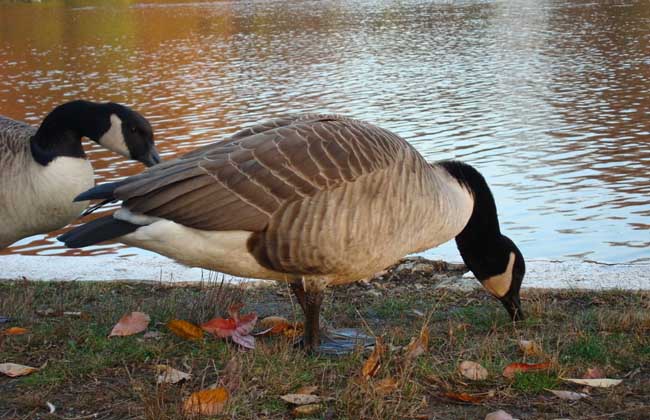
Farming wild geese artificially has very high market prospects. Under artificial farming, the growth rate and reproduction rate of wild geese are both greatly improved. As market demand gradually increases, sale prices also rise step by step. Let's take a look together at the farming prospects of wild geese!
The Farming Prospects of Wild Geese
There is an old saying in China: “Better to eat four ounces of fowl than a jin of beast.” As the saying goes: “Smell the fragrance of goose meat, and even the immortals would pine for it.” The success of free-range wild goose farming has fulfilled people's dream of craving fine food. Wild goose meat is a delicacy among meats, because free-range wild geese grow up in a natural food chain environment. During flight, the fat in their bodies is burned away almost completely, which promotes the synthesis of active substances in the muscles as well as cold resistance, endurance and other nutrients, fully endowing this fowl with extremely high nutritional and medicinal value.
The development of modern Chinese dietary culture is: “In the 1980s, eat your fill; in the 1990s, eat well; in the 21st century, eat healthy.” Wild geese are herbivorous animals and are a safe meat source. At present, the Ministry of Agriculture is stepping up efforts to carry out industrial restructuring, reducing the proportion of animal farming that competes with people for grain, and vigorously developing the proportion of herbivorous animal farming. Because wild geese are raised in a wild state, their meat is fresh and delicious, and is natural, green, pollution-free, ecological, environmentally friendly and gamey. Wild goose meat is loved by people not only because of its high nutritional value, but also because its meat is crisp and tender, not greasy or harsh, with a delicate, pure and fragrant taste, a unique delicious flavor and a rich gamey taste. After cooking, it has a striking aroma, a lasting fresh fragrance, a rich and fragrant smell and a long aftertaste. It is truly the “king of meats.”
Wild goose meat is not only delicious and tender, but its fat also has a very low melting point, generally melting at 28 degrees, making it easy for the human body to digest and absorb. The fat of other animals, however, needs to reach above 38 degrees to melt, so it is difficult for the human body to digest and absorb; instead, it deposits cholesterol on the inner walls of human blood vessels, causing arteriosclerosis. Therefore, foreign countries regard wild goose meat as the preferred green health food of the 21st century. Thus the market prospects for wild geese are very broad.
The Farming Value of Wild Geese
1. The economic value of wild geese: Every part of a wild goose is valuable. Goose fatty liver contains nutrients essential for human growth and development, such as lecithin, triglycerides and deoxyribonucleic acid, and is regarded by Europeans and Americans as a rare delicacy. Each kilogram of goose fatty liver can sell for 35 US dollars, and it is often unavailable even at a price, with a huge shortfall. Wild goose meat sells for about 80 to 100 yuan per kilogram. The hard feathers of wild geese can be made into handicrafts. The down is a high-grade filling material for down jackets, at about 700 yuan per kilogram. The income from plucking feathers from a single goose can reach more than 30 yuan. Therefore, the economic benefits of wild goose farming are very high.
2. The medicinal value of wild geese
① Besides its unique delicious taste, wild goose meat also has many medicinal and tonic functions. It can greatly tonify the five internal organs, nourish yin and boost qi, warm the stomach and promote fluid production, and strengthen the body. Its meat is sweet and neutral in nature, and enters the lung, kidney and liver meridians. It has the effects of activating blood and dispelling wind, clearing heat and detoxifying, dispelling wind-cold, strengthening bones and muscles, boosting yang qi and warming the internal organs. It can treat rheumatism, rheumatoid arthritis, kidney deficiency, decline of yang, insufficiency of qi and blood, shortness of breath and fatigue, anemia, hair loss and other conditions. Its gallbladder has the functions of clearing heat, treating cough and eliminating hemorrhoids. Wild goose blood, foot skin and so on can all be used medicinally, and are medicinal raw materials eagerly sought by major pharmaceutical factories.
② Regularly eating wild goose meat not only has health benefits such as enhancing body immunity, promoting human growth and development, beautifying the face and prolonging life, and preventing aging. It also has significant effects on lowering blood pressure, lowering blood lipids, degrading cholesterol, preventing coronary heart disease, cerebral thrombosis and vascular sclerosis, and preventing and controlling diabetes and other conditions.
③ Wild goose meat has a good anti-cancer effect. Modern scientific research has proven that only 2 kinds of animals in the world do not get cancer: one is the shark in the ocean, and the other is the wild goose. Scientific research has found that the reason wild geese do not get cancer is not only that they contain large amounts of unsaturated fatty acids, iron, zinc, selenium and more than a dozen amino acids and trace elements such as vitamin A, B2, niacin, lysine and methionine, but mainly that they contain large amounts of active substances such as immunoglobulins, linoleic acid and anti-cancer factors, which other animals have none or very little of. At present, wild geese have been designated by the medical field as the main raw material for researching and extracting anti-cancer factor components, and are widely used in the clinical treatment of cancer and other diseases. In particular, the human body itself cannot synthesize linoleic acid and can only obtain it from food. Therefore, regularly eating wild goose meat can increase the human body's anti-cancer factors and has special medical effects on enhancing body immunity, preventing cancer and preventing the “three highs.”
3. The nutritional value of wild geese: Wild goose meat is not only very delicious, but also has very high nutritional and medicinal value. Wild goose meat is rich in essential mineral elements such as iron, calcium, phosphorus, zinc and selenium, and more than a dozen amino acids such as lysine and methionine, as well as various vitamin nutrients essential for human growth and development such as lecithin, triglycerides and deoxyribonucleic acid. In every 100 grams of wild goose meat, the lecithin content is as high as 4.7-8 grams, deoxyribonucleic acid and ribonucleic acid 9-13.5 grams, protein 20.98 grams, fat 11.62 grams, phosphorus 196.5 milligrams, calcium 48.05 milligrams, iron 8.71 milligrams, zinc 1.36 milligrams, selenium 17.68 micrograms, inorganic salts 1.17 grams, and more than a dozen trace elements such as vitamin A, potassium and sodium. The unsaturated fatty acid content of goose fatty liver is as high as 65-68%, of which palmitic acid is 21-22%, linoleic acid 1-2%, hexadecenoic acid 3-4%, and myristic acid 1%. Scientific analysis fully shows that wild goose meat is extremely rich in nutrition, far higher than the nutrition of any other animal, and is the ideal best green animal-source health food with high protein and low fat and low cholesterol. Therefore, wild goose meat is listed by the World Health Organization as the first among green foods.
The Farming Advantages of Wild Geese
Wild goose farming requires little investment and is easy to raise. Its farming shed is very simple, and idle land in front of and behind houses, open spaces among trees, orchards and barren hills can all be used for raising them. It is best to build a wild goose farm by a reservoir, because wild geese are water-loving poultry. If it is family-style farming, a few thousand yuan is enough to get started. If you want to set up a wild goose farm, it depends on the scale. For small-scale wild goose farming, an investment of 10,000-20,000 yuan is enough; for medium scale, 50,000-200,000 yuan; for a large wild goose farming base, it will be between 500,000 and 2 million yuan. If your financial capacity is limited, our Kaijin Wild Goose Farming Base suggests that you start with a small-scale wild goose farm. Once your farming techniques and sales channels have matured, then expand the scale.
1. Wild goose farming yields quick results: In the wild state, wild geese take three years to reach sexual maturity, with one male paired with one female, producing 4-8 eggs per year. Under artificial farming, one male can be paired with multiple females, sexual maturity takes 8-9 months, and the annual egg production is about 25 eggs for first-time layers. Wild geese grow quickly: goslings can grow to 1.25 kg from hatching to 30 days of age, to 2.5 kg at 60 days of age, and to 3.5-4.5 kg at 90 days of age. They can be marketed as commercial geese in 4-6 months. Commercial geese can sell for 420 yuan, about 60 yuan per jin. Of course, the most important thing is based on your local situation. If there are very few people farming wild geese in your city, then your price can also be raised.
2. Low feeding cost for wild goose farming: Feed costs are low, and sources are abundant (70%-90% straw powder, dried grass powder). Wild geese have broad adaptability to food. From various green grasses, green vegetables and wild vegetables to reeds and green straw, from wheat straw, corn stalks and bean stalks to various weed dry powders, all can become their primary feed, as long as it is not green and not spiky. In addition, only 10%-30% concentrate and a small amount of additives need to be added. On average, one goose is fed 3 to 4 liang (calculated by rice; feeding complete feed is better). Commercial geese are fed once to twice a day; if the pasture is good, only one meal a day is needed. Feed 1 to 2 liang per day. After they can all fly, at about four to five months of age, they enter the fattening period. If the pasture is good, only feed once in the evening, about 2 liang of rice per day. If the pasture is not good, feed twice a day, 3 to 4 liang of rice per bird per day. One month of fattening is enough for market sale.
3. Wild geese have extremely strong disease resistance: Extremely strong disease resistance. They rarely get sick. Wild geese feed on plant-based food and have extremely strong disease resistance. Among all poultry farming, wild geese are the type least prone to illness. If individuals with loss of appetite or that have left the flock are found during rearing, feeding an appropriate amount of sulfonamide drugs is enough. Treating the wounds of injured individuals is also relatively simple, and there is rarely any contagion.
4. Low labor intensity in wild goose farming: Wild wild geese are very afraid of people, but artificially domesticated wild geese are docile and affectionate. They can not only be raised in pens but also free-range. One person can free-range nearly a thousand of them, and it saves time and effort. In the lush season on the grassland, free-ranging for one hour each morning and one hour each afternoon is enough.
5. Wild goose farming is a new type of industry: Wild geese are a special poultry that has only just begun to be domesticated in our country. It has only just started domestically and is currently at the stage of selling breeding stock. Abroad, it is still a blank, and the market gap is large. Whoever seizes the business opportunity possesses wealth. It is one of the most promising projects in current farming. In short, wild goose farming has economic benefits a hundred times higher than raising cattle, sheep, chickens, pigs and other livestock. The economic benefits are obvious. It is a good current project for getting rich and a sunrise industry of the country. Raise wild geese, and easily set foot on the road to wealth.