Why do wild geese fly south? Explaining the reasons for bird migration
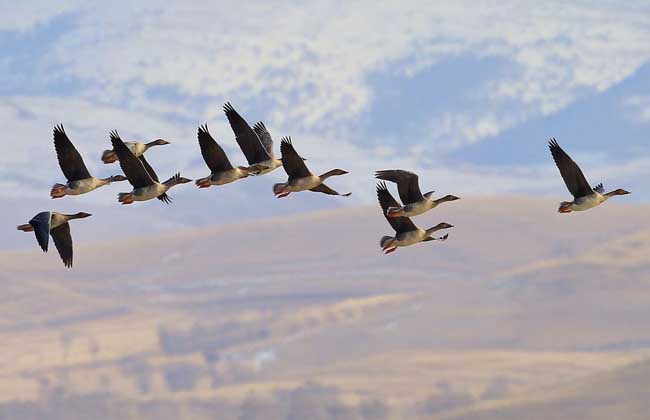
The wild goose is one of the best-known migratory birds. During migration they always gather in groups of dozens, hundreds, or even thousands, flying in formation close behind one another. The ancients called this a “goose formation,” but do you know why wild geese fly south? Let us take a look together below!
Why do wild geese fly south?
Wild geese fly south to spend the winter. The south has a tropical climate and is warmer than the north, with more abundant food than the north. Wild geese are migratory birds, and flying south is for overwintering. Migratory birds generally are birds with migratory habits that move regularly with the changing seasons between wintering grounds and breeding grounds. Their flocks are large, and the timing and locations of their comings and goings are highly regular, with fixed wintering sites, breeding grounds, and migration locations.
Wild geese are birds with very strong flying ability
The wild goose is an outstanding aerial traveler. Every autumn and winter, they fly in flocks in a mighty procession from their home range in the Siberia region to the south of our country to spend the winter. The following spring, after a long journey, they return to Siberia to lay eggs and breed. Wild geese fly very fast, able to fly 68 to 90 kilometers per hour, and the long journey of several thousand kilometers takes one to two months.
During the long journey, the goose flock is organized very tightly. They often line up in a V shape or a straight line, and while flying they constantly make “honk, honk” calls. These calls of the wild goose serve as signals for looking after one another, calling, taking off, and resting.
Why do wild geese line up in a “straight line” or a “V”?
Wild geese fly in a “V” shape or a “straight line” because they fly all day long, and the strength of a single goose is not enough. They must help one another to fly fast and far. When a strong goose flaps its wings in flight, the wingtips stir up a gust of wind that pushes upward from below, gently lifting the young geese, so the young geese on the long trek will not fall behind.
Generally the geese in front are very strong and experienced. Because the leading goose flaps its wings, it drives the airflow, and if they fly in a “V” shape or a “straight line,” the geese behind can fly very easily and do not need to rest many times. During flight the leading goose forms a low-pressure zone behind it, and the geese closely following can use this low-pressure zone to reduce air resistance. This helps the whole flock sustain its flying ability.
In addition, wild geese lining up in a neat V shape or straight line is also a manifestation of flocking instinct. This is because it helps defend against enemies. The goose flock always has an experienced old goose as the “leader,” flying at the front of the formation. During flight, the leading goose consumes energy heavily, so it often swaps positions with other geese. Young birds and weak birds are mostly placed in the middle of the formation. When resting by the water searching for food and aquatic plants, an experienced old goose always serves as the sentry. If a lone goose flies south, it risks being eaten by enemies.