What is the difference between wild geese and wild goose geese? A quick guide to telling them apart
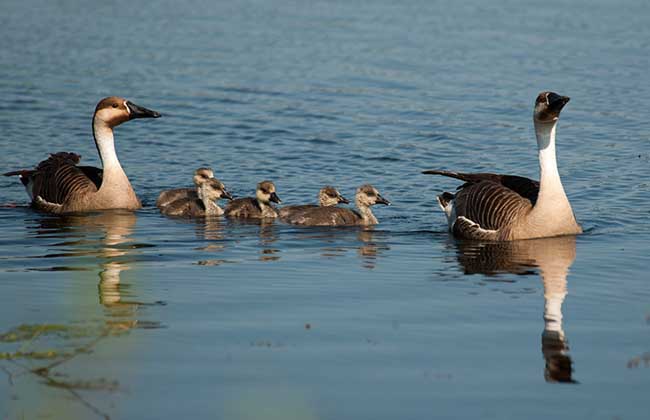
Is the wild goose goose a wild goose? In fact, many people are not clear about this, and many may even think that the wild goose goose is a wild goose. In reality, the wild goose goose and the wild goose have no necessary connection, and their prices on the market are worlds apart. Let us take a look below at what the differences are between wild geese and wild goose geese!
What is a wild goose?
The wild goose is the general name for the various species of the subfamily Anserinae, a type of large swimming bird. Its shape is somewhat like that of a domestic goose, though some are smaller. The bill is broad and thick, the bill nail is relatively broad, and the biting edges have rather blunt comb-like projections. Males and females have similar plumage colors, mostly light grayish-brown, with markings. Wild geese live in groups by the water, often in flocks of hundreds or thousands. When roosting at night, some geese are specially assigned to stand guard around them, and if an attack occurs, they call out as a warning. They mainly eat tender leaves, fine roots, and seeds, and occasionally peck at grain in farmland. After the Spring Equinox each year they fly back north to breed, and after the Autumn Equinox they fly south to overwinter. When a flock of geese flies, they line up in a “one” shape or a “person” shape, which people call the “goose character,” and because the ranks are neat, people call it a “goose formation.” The flight path of wild geese is straight.
Common ones in China include the swan goose, the bean goose, and the white-fronted goose. Goose teams form in groups of 6, or in multiples of 6, and a goose flock is made up of some families, or rather an aggregation of some families.
What is a wild goose goose?
The wild goose goose is the Landes goose. It originated in Landes Province in southern France and is the best goose breed in the world for producing goose fatty liver. Because its feathers are mainly gray, it is sometimes also called the gray goose. As for why some people in China call it the wild goose goose after it was introduced, it is very likely out of a need for seed-sales publicity. In fact, it has no relationship with wild geese, let alone being any kind of “rare and precious animal.” Without considering goose fatty liver production, its meat quality and nutrition are not much different from those of local geese.
The difference between wild geese and wild goose geese
1. The goose bill is flesh-red (if the bill is wolfberry-red, then it is a Landes goose), and the neck is long but not thick, which makes flight easier.
2. The wild goose has a small body, and the tail of the wild goose does not turn upward but is slightly pressed down, which is the result of the wild goose's long-term flight.
3. The rump of the wild goose does not droop but is tucked in; if the rump droops and is tucked in, then it is a Landes goose.
4. The wild goose has a relatively good streamlined figure, just like a bird; if it looks like a goose, then it is a Landes goose.
5. A wild goose can lay 20 eggs per year, while a Landes goose can lay more than 50 eggs per year.
6. Wild geese can fly, and their maximum body weight is around 8 jin; Landes geese cannot fly, and their body weight exceeds 10 jin.