Differences Between Raw Banxia, Qing Banxia, Jiang Banxia, and Fa Banxia
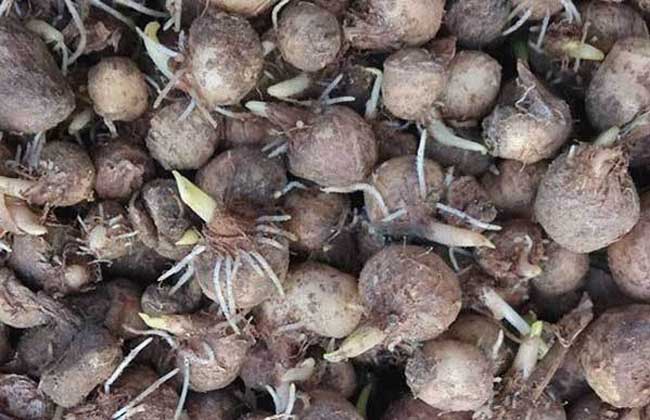
After being processed by different methods, the traditional Chinese medicine decoction pieces obtained from Banxia (Pinellia ternata) each have their own emphasis in efficacy. Raw Banxia is mostly used externally to reduce swelling and dissipate nodules, Qing Banxia is good at drying dampness and transforming phlegm, Jiang Banxia tends to descend adverse qi and stop vomiting, and Fa Banxia is good at harmonizing the stomach and drying dampness. Depending on the processing technique, the finished products also differ slightly in their characteristics. Let us now take a look at their differences!
Raw Banxia
Raw Banxia is the tuber of Pinellia ternata, a perennial herb of the Araceae family. Its effects are to dry dampness and transform phlegm, descend adverse qi and stop vomiting, and relieve distension and dissipate nodules. It is used for cough and asthma with profuse phlegm, phlegm-fluid dizziness and palpitations, wind-phlegm vertigo, phlegm syncope headache, vomiting and retching, chest and epigastric distension and stuffiness, globus hystericus, and so on. However, raw Banxia is toxic, and is mostly used externally to reduce swelling and dissipate nodules.
Fa Banxia
Fa Banxia is also known as Fa Xia, Huang Fa Xia, Jing Fa Xia, Jing Xia, and Jing Banxia. It is raw Banxia processed with white alum, licorice, and lime before being used as medicine. It has low toxicity and a strong phlegm-transforming effect. Fa Banxia has a relatively mild drying nature. In addition to drying dampness and transforming phlegm, it also has the effect of regulating the spleen and harmonizing the stomach. It is often used for patterns of spleen deficiency with dampness encumbrance and internal retention of phlegm-fluid, taking advantage of its effects of clearing phlegm and transforming fluid, and regulating the spleen and harmonizing the stomach.
Jiang Banxia
Jiang Banxia is also known as Jiang Xia and Jiang Xia slices. It is made from raw Banxia soaked in water, bleached until only a pungent numbing taste remains when tasted, boiled thoroughly with fresh ginger and white alum, taken out and dried until 60-70% dry, moistened, sliced, and dried for medicinal use. Jiang Banxia's toxicity has already been reduced, and its nature tends toward warm and drying. It has the effects of drying dampness and transforming phlegm, and descending adverse qi and stopping vomiting. It is suitable for those with spleen deficiency and abundant phlegm drool causing vomiting, or those with cold phlegm cough and counterflow.
Qing Banxia
Qing Banxia is also known as Qingshui Banxia, Qing Xia, and Qing Xia slices. It is raw Banxia processed with white alum before being used as medicine. Qing Banxia's toxicity and pungent-drying nature are reduced, and its phlegm-transforming effect is enhanced. It is suitable for those who are weak and have profuse phlegm, with relatively mild cold-dampness.
Xian Banxia
Xian Banxia is also known as Xianlu Banxia. It is raw Banxia soaked in the decocted juice of 14 Chinese medicines including licorice, Schisandra chinensis, green tangerine peel, bitter orange, immature bitter orange, Ligusticum chuanxiong, and agarwood. After the medicinal juice is absorbed dry, it is then dried for medicinal use. Xian Banxia has reduced toxicity and an enhanced effect of regulating qi and transforming phlegm.
Qingyan Banxia
Qingyan Banxia is also known as Yan Banxia. It is Qing Banxia soaked and mixed with green salt water, then sun-dried for medicinal use. Qingyan Banxia has reduced toxicity and an enhanced effect of clearing heat and transforming phlegm. It is mostly used to treat scrofula and phlegm nodules, globus hystericus, and other conditions, and can achieve the effect of dissipating phlegm and nodules.
Zhuli Banxia
Zhuli Banxia is Qing Banxia sprinkled and mixed evenly with fresh bamboo sap, and after the bamboo sap is fully absorbed, it is sun-dried for medicinal use. Zhuli Banxia has an enhanced effect of clearing heat, transforming phlegm, and stopping cough. It is suitable for stomach-heat vomiting, or lung-heat cough with phlegm that is yellow, thick, and sticky, or phlegm-heat internally closed with inability to speak after stroke, and other patterns.
Su Banxia
Su Banxia is also known as Su Xia. It is Qing Banxia further soaked in water with added ginger, mirabilite, licorice, and Chinese honeylocust, then taken out and further processed with licorice, green salt, Codonopsis pilosula, Fritillaria cirrhosa, and others, then air-dried for medicinal use. Su Banxia has an enhanced effect of descending qi, transforming phlegm, and calming asthma. It is suitable for disharmony of the spleen and stomach, restless sleep at night, or food stagnation and phlegm obstruction in children with cough, asthma, and vomiting.