What are the natural predators of the king cobra? Let us take you through its nemeses
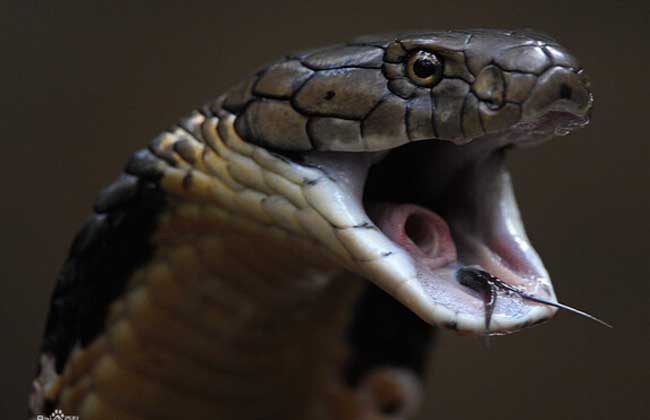
The king cobra is not a member of the genus Naja (true cobras) but belongs to its own separate genus Ophiophagus. Compared with other cobras, it has a fiercer temperament, extremely agile reactions, a flexible head and neck that can turn freely, and a large venom output, making it one of the most dangerous snakes in the world. So does the king cobra actually have any natural predators? Let us take a look together below!
Mongoose
Is the mongoose a natural predator? Of course it cannot be put that way, but in a true one-on-one fight against a wild king cobra, the mongoose has no guarantee of victory. An adult king cobra is enormous in size, with some reaching 6 m in length, and the mongoose is also very wary of the king cobra. Usually the mongoose attacks snakes 3-4 m long, but when it encounters a large king cobra, the mongoose is also helpless, because a single strike from the king cobra can also be fatal to the mongoose.
If in an open area a king cobra encounters a group of mongooses (because mongooses often stay together in small numbers, and in most cases it is a female mongoose leading a group of young ones), then it will be very difficult for the king cobra to escape safely, and there is a very high probability that it will become a meal for the mongooses.
Secretarybird
The secretarybird is born to be a nemesis of snakes, living in the wild plains of Africa. Its legs are long like those of a stork, but its talons are as sharp as an eagle's. Because of its long legs, its height reaches 1.2 m. Most snakes are on its menu. Of course, the secretarybird will not attack a large snake like the king cobra, but if a fight really broke out, even for the king cobra, the probability of winning would be pitifully low. Secretarybirds are monogamous, and during their breeding season, if a snake carelessly enters their nesting area, no matter what kind of snake it is, it will receive a fatal blow.
There was once a record of a cobra that crawled under a tree where a secretarybird had built its nest. The result was that the secretarybird launched an “outer-perimeter attack,” and that 4 m long cobra became a meal for the secretarybird.
The secretarybird's method of attack is something snakes cannot withstand. It often uses its talons to stomp viciously on the snake's body, and its toes, sharp as knives, will easily pierce the snake's body. Usually a few kicks will leave the snake covered in wounds and unable to crawl. When attacking, the secretarybird will spread its two very large wings, striking with its black-and-white feathers, which distracts the snake's attention. If the king cobra can only bite the secretarybird's feathers, then it is doomed. The secretarybird's wing beating will dazzle the snake so that it cannot tell the direction of the attack, because the snake's eyesight is not very good, and the secretarybird's long legs are covered in hard scales, making it very difficult for the snake to bite the secretarybird.
Eagle
Eagles will also defeat the king cobra. Eagles have many ways to attack snakes, directly grabbing the snake into the sky and then throwing it to the ground, so that the snake is smashed as stiff as a zombie. Of course, for a large snake like the king cobra, usually only top-tier birds of prey such as eagles (large raptors) will attack it.
The eagle is a very intelligent hunter. It often launches attacks from the air, and it always attacks the head of its prey, accompanied by wing strikes. When an eagle swoops down to attack, its speed is incredibly fast. A powerful strike from an aerial dive carries great force, and the king cobra has long since had no time to prepare. Under the huge impact force, the king cobra has no order to its movements, and the eagle's sharp talons pierce through the king cobra's body in one strike. At the same time, when it catches its prey, the eagle will also instantly beat its wings to dodge the prey's counterbite, and in that instant it will break the snake's back in the middle. The king cobra is no exception.
Humans
The editor will not explain this to everyone, and there is no need to explain it. Humans are the natural predator of all animals. This should be a consensus throughout the animal kingdom. Imagine the scene of the great animal army marching with slogans such as “We want to protest.”