What are the common types of greenhouse insulation quilts?
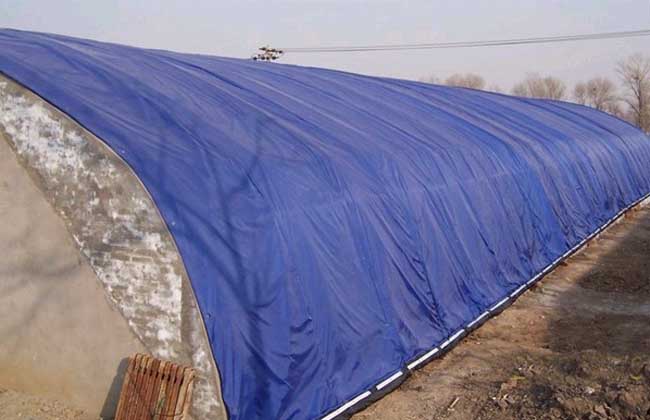
An ideal greenhouse insulation quilt should possess insulation, light transmission, moisture resistance, easy rolling and unrolling, and a long service life. With the rapid development of the greenhouse planting industry, greenhouse insulation quilts are gradually being accepted by farmers. Now let us take a look at the common types of greenhouse insulation quilts along with their advantages and disadvantages!
Needle-punched felt insulation quilt
[Advantages] Needle-punched felt insulation quilts are made by reprocessing old scrap threads (cloth) and other materials after certain treatment. They have low cost and good insulation performance. Needle-punched felt insulation quilts use needle-punched felt as the main cold-proof and insulation material, and can also use aluminized film and chemical fiber cloth alternately sewn together as the facing material on one side, made by stitching. This kind of insulation quilt is heavier than composite insulation quilts and has good windproof and insulation performance.
[Disadvantages] The biggest disadvantage of needle-punched felt insulation quilts is poor waterproofness. However, if Oxford rainproof cloth is used on the surface, it can be made into a rainproof insulation quilt. In addition, before the insulation quilt is rolled up and stored, a large area is needed for drying. It can only be stored after it is thoroughly dried.
Composite insulation quilt
[Advantages] Composite insulation quilts are made of 2 layers of 2 mm thick honeycomb plastic film, plus 2 layers of non-woven fabric, and sewn together with chemical fiber cloth. They have the advantages of being lightweight and having good insulation performance, and are suitable for mechanical rolling and unrolling.
[Disadvantages] The disadvantage of composite insulation quilts is that the honeycomb plastic film and non-woven fabric inside are easily broken after being rolled and pressed by machinery.
Acrylic cotton insulation quilt
[Advantages] Acrylic cotton insulation quilts use acrylic cotton and space cotton as the main cold-proof materials, with non-woven fabric as the facing material, made by stitching.
[Disadvantages] Acrylic cotton insulation quilts can meet the requirements in terms of insulation performance, but their durability is poor. The non-woven fabric will quickly be damaged after being rolled and pressed by machinery several times. In addition, because it is made by stitching, when it rains (or snows), water will seep inside through the needle holes.
Cotton felt insulation quilt
[Advantages] Cotton felt insulation quilts use cotton felt as the main cold-proof material, with waterproof kraft paper covering both sides. Their insulation performance is similar to needle-punched felt insulation quilts. Because kraft paper is low in price, this kind of insulation quilt is relatively low in price.
[Disadvantages] Cotton felt insulation quilts have a relatively short service life.
Foam insulation quilt
[Advantages] This foam insulation quilt uses microporous foam as the main material, with chemical fiber cloth as the facing material on both the upper and lower sides. The main material has the characteristics of being lightweight, soft, insulating, waterproof, resistant to chemical corrosion and aging. After processing and treatment, the insulation quilt not only has lasting insulation performance, but also has excellent waterproofness, is easy to store, and has good durability.
[Disadvantages] The disadvantage of foam insulation quilts is that they are too light in weight, so the problem of wind resistance needs to be solved well.
Concrete insulation quilt
[Advantages] Low thermal conductivity, good insulation performance, especially outstanding when temperature differences vary greatly, low water absorption, good moisture resistance, good tensile and compressive properties, convenient to use, simple to construct, with suitable external dimensions, odorless and non-toxic.
[Disadvantages] Inconvenient for secondary renovation, greatly affected by outdoor climate, and large day-night temperature differences and winter-summer temperature differences can easily cause wall cracking.
Fireproof insulation quilt
The fireproof and heat-insulating quilt is formed by bonding fireproof cloth and aluminum foil to the upper and lower sides of felt respectively. A polyethylene foam layer can also be bonded between the felt and the fireproof cloth. Its advantages are reasonable design, simple structure, good waterproof, fireproof and insulation performance, tensile strength, mechanized transmission operation, labor and effort saving, and long service cycle.
Greenhouse insulation quilt
Greenhouse insulation quilts are made by multi-layer composite processing of super-strong, high-insulation new materials. They have functions such as being lightweight, waterproof, anti-aging, insulation and heat preservation, and reflecting far-infrared rays. Their service life can reach more than 5-9 years, and the insulation effect is good. Under the same conditions, the covering temperature can be increased by 10 degrees compared with straw curtain covering. They are easy to store and keep. This product is suitable for insulation covering of solar greenhouses, multi-span greenhouses, ecological restaurants, long-distance transport vehicles, plastic greenhouses, etc., and is the best substitute for straw curtains and paper quilts.
Wool greenhouse insulation quilt
100% wool greenhouse insulation quilts have functions such as being lightweight, waterproof, anti-aging, insulation and heat preservation, have a longer service life, and have the best insulation effect. Wool drains water and has good natural crimp, can remain fluffy for a long time, and ranks first in insulation. High quality, low price, manufacturers directly facing greenhouse growers, many types of facing materials (optional), width 2. m. The length is made according to the actual greenhouse, without waste.