How Is Hail Formed? A Detailed Explanation of the Principle and Process
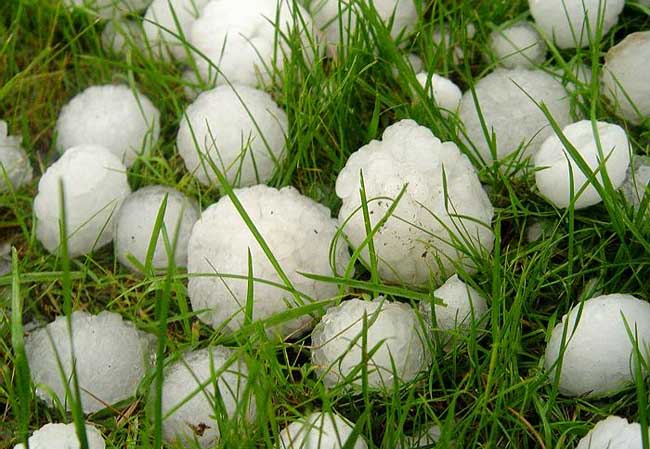
Hail is one of the common natural disasters. Usually in the hot summer, suddenly dark clouds roll in, lightning flashes and thunder roars, and in an instant, rain mixed with hail comes crashing down everywhere. The hail falling from the clouds is as small as beans or as large as eggs, destroying crops and fruit trees and causing casualties among people and livestock. Do you know how hail is formed?
In fact, hail and thunderstorms come from the same source, both originating in cumulonimbus clouds. It is just that the updrafts and downdrafts in the cumulonimbus clouds that produce hail are especially strong. This kind of cumulonimbus cloud is called a hail cloud.
Cumulonimbus clouds are caused by strong air convection and are the product of very unstable air. Hail clouds are very thick and can reach more than ten kilometers, and the temperature at the cloud top is very low, below -40°C. At that time, the air contains a lot of water vapor, and the lower atmosphere is heated by the ground warmed by the sun, forming a very unstable air column that is hot below and cold above, producing strong convection.
The updrafts in hail clouds are very strong and can reach more than 15-20 meters per second. As the air in the cloud rises, its temperature drops, and a large amount of water vapor condenses into water droplets. The water droplets keep growing and freezing to form transparent ice balls. This is a kind of hail embryo.
The updrafts are enough to support the growing hail embryos in the cloud. As the air currents rise and fall, they continuously merge with snowflakes and small water droplets along the way, forming ice blocks with alternating transparent and opaque layers. When they grow to a certain extent and the updrafts can no longer support them, they fall to the ground. This is the principle of hail.
Alright, that is all the editor has to introduce about how hail is formed. For more related information, please continue to follow Qiannongwang!