Are Bats Birds or Mammals? Understanding Bat Classification in One Article
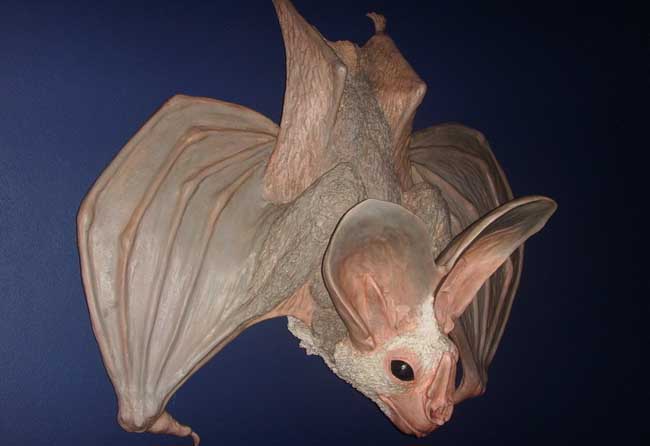
Bats can fly, so some people cannot help but ask whether bats are birds. In fact, bats are not birds but the collective name for animals of the order Chiroptera, which is the second-largest group of mammals after rodents. There are currently 19 families, 185 genera and 962 living species, distributed throughout the world except for the polar regions and some oceanic islands.
Bats are the only truly flying mammals. Although they lack the feathers and wings of birds and are far less capable fliers than birds, their forelimbs are highly developed: the upper arm, forearm, metacarpals and phalanges are all exceptionally long, and a thin, hairy, soft yet tough membrane of skin stretching from the tips of the phalanges to the humerus, the sides of the body, the hind limbs and the tail forms the bat's unique flight organ—the wing hand.
Bats use waves to judge whether there are obstacles ahead and use them to change their flight path. Many people used to say that bats have poor eyesight, but this is actually a huge misconception. Quite a few scientists have pointed out that bats' eyesight is not poor; different species of bats have different eyesight, and bats' use of ultrasound has no necessary connection with their eyesight.
Although bats have wings and look very much like birds, they have no feathers and do not lay eggs. They have mammalian characteristics such as females giving birth to live young and nursing them with milk, so bats are not birds but mammals.