How to hook bloodworms? Sharing several practical hooking techniques
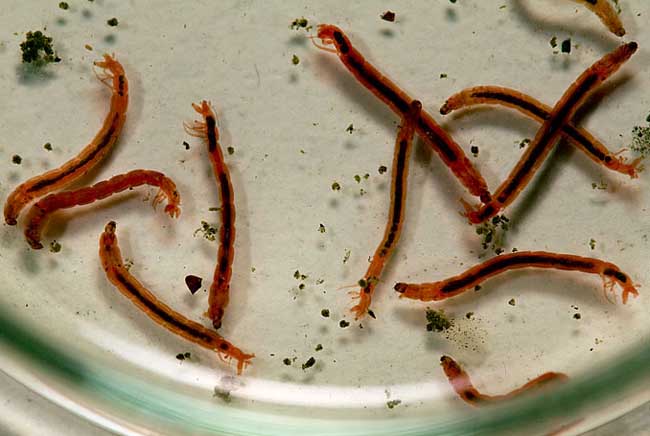
Bloodworms are the larvae of chironomid midges. They are excellent natural bait for many kinds of fish and a top choice for anglers. However, because bloodworms are very small, they are hard to hook. Are there any good ways to hook bloodworms? Below, the editor will introduce how to hook bloodworms!
Direct hooking method
The specific method of direct hooking is to hook live bloodworms directly onto the hook horizontally. You can hook one at a time or several at once. Note the situations for single and multiple hooking:
1. When fishing for small fish, hook a single worm; when fishing for big fish, hook multiple. A single worm is easier for small fish to suck into their mouths, while multiple worms give big fish a more substantial meal;
2. When fish are plentiful, hook a single worm; when fish are scarce, hook multiple. When fish are plentiful, focus on catching, and a single worm saves time to catch more fish. When fish are scarce, you should attract and fish at the same time, and multiple bloodworms can draw the “fish”'s attention.
3. When using bloodworms directly on the hook for fishing, be sure to use male worms, not female worms! Male worms have thick flesh and hold their shape on the hook, while female worms have thin flesh and release a stream of fluid when hooked, soon leaving only a layer of skin on the hook.
Bundling method
When bundling, you can tie the bloodworms directly together with red thread, or use a bloodworm clip to secure them with a rubber band. For bundling bloodworms, you can use male worms or female worms, but using male worms is less economical than using female worms. Also, because male worms are short and thick while female worms are slender, bundling male worms is less convenient and quick than bundling female worms.
Bundled bloodworms are most suitable for catching large crucian carp and larger common carp. In early spring and late autumn, when using a sea rod with a string hook to catch large crucian carp or large common carp, bundled bloodworms are indispensable.
The greatest advantage of bundled bloodworms is that they do not damage the skin and flesh and stay fresh and lively as usual. However, if you bundle bloodworms in advance and do not use them all while fishing, and then continue to keep them when you get home, it is relatively difficult to get them to be “free” again.
Bloodworm and dough bait mixing method
The bloodworm and dough bait mixing method is to mix bloodworms with dry powdered dough bait in a certain ratio, then add water and knead the bait for hooking. This method can make a kneaded bait, or you can add a certain proportion of stretching powder to make a pull bait (commonly known as “bloodworm pull bait”).
The greatest advantage of the bloodworm and dough bait mixing method is using the shared “clouding” effect of bloodworms and dough bait, plus the sweet fragrance of the dough bait, to attract fish. Not only is the fish-attracting effect good, but the fish also get a more substantial meal, and the fish caught are often larger in size.
In addition, this bait has another feature: in winter and spring, it can both attract big fish and at the same time resist small miscellaneous fish from disturbing the hook.
Wrapping method
The wrapping method is to hook bloodworms on the hook and wrap dough bait on the outside. The dough bait can be kneaded around the bloodworms, or “pulled” around them. The specific method is: first hook a few bloodworms on the hook, then gently wrap the mixed, looser dough bait around the outside of the bloodworms, or place the double hook with bloodworms on a pull-bait tray, then use the mixed stretching bait to press down on the double hook and slowly pull outward.
The advantage of the wrapping method is using the clouding effect and scent of the dough bait to attract fish, and then using the palatability of the bloodworms to make the fish swallow the hook.
Stretching bloodworm method
The specific method of the stretching bloodworm method is to spread a certain amount of bloodworms flat on the bottom of a bait basin, then evenly sprinkle an appropriate amount of bloodworm companion (or use bloodworm glue) over the bloodworms. These are sold in fishing tackle shops with detailed instructions. Then stir evenly, and finally gather them together and place them on a pull-bait tray to use as pull bait. This method is also called “pulling bloodworms.”
“Stretching bloodworms” must be distinguished from the “bloodworm pull bait” mentioned above. In “bloodworm pull bait,” commercial dough bait is the main component and bloodworms are auxiliary, while “stretching bloodworm” bait is made of pure bloodworms stuck together with bloodworm glue.
Alright, that is the introduction to the five bloodworm hooking methods. Each hooking method has its own unique advantages, and how to choose depends on each angler's own choice.